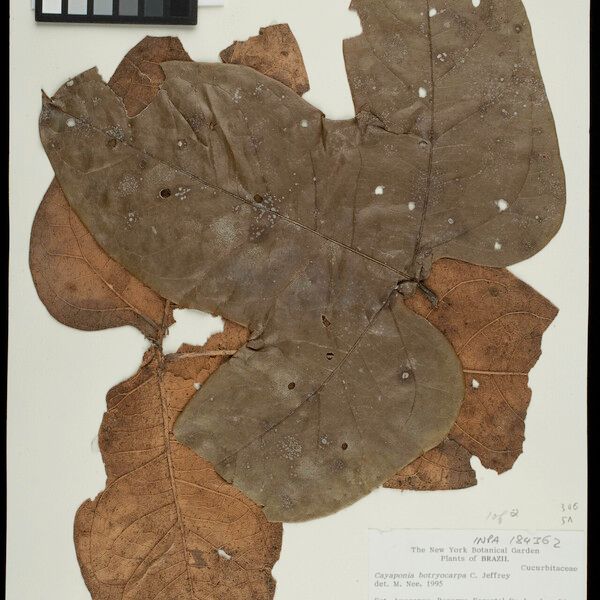
Plant Overview
Known as a vigorous climber from the tropical forests of South America, Cayaponia caulobotrys is a member of the cucumber family that behaves quite differently from your garden zucchini. It is often nicknamed the "Stem-flowering Gourd" because of its unusual habit of producing clusters of flowers and fruits directly from its old, woody stems. In its native habitat, it weaves through the canopy like a living green rope, adding a touch of prehistoric mystery to the landscape.
🔍 How to Identify
- 🌿 Climbing Nature: A powerful, woody vine (liana) that uses specialized tendrils to scale tall trees and forest structures with surprising speed.
- 🌸 Stem-Flowers: It exhibits "cauliflory," meaning the small, pale-green or white flowers sprout directly from the thick, older bark rather than just the new green tips.
- 🟢 Globose Fruits: Produces small, berry-like round fruits that look like miniature watermelons. These typically start green and may transition to a darker hue as they ripen.
🏡 In Your Garden
- 🌎 Tropical Origin: This plant thrives in high-humidity environments. In a garden setting, it mimics its Atlantic Forest origins, preferring "dappled" sunlight and a sturdy structure—like a pergola or a large tree—to climb.
- 🌱 Root and Soil: It hates "wet feet" despite its love for moisture. It requires well-draining, nutrient-rich soil that mimics the organic-heavy floor of a rainforest.
- 🦋 Eco-Role: In the wild, it is a significant part of the ecosystem, providing dense vertical cover for nesting birds and serving as a host for various tropical insects.
⚠️ Safety & Toxicity
- 🚫 Non-Edible: While it belongs to the same family as cucumbers and melons, the fruits are not edible for humans.
- 🤢 Chemical Defense: Like many wild cucurbits, it contains bitter compounds known as cucurbitacins. These are highly purgative; if ingested, they can cause severe stomach cramps, vomiting, and diarrhea.
- 🐾 Pet Safety: Keep this plant away from curious dogs or cats. Ingesting any part of the vine or fruit can lead to significant gastrointestinal distress for pets.
✨ Fun Fact
The name Caulobotrys is derived from the Greek words kaulos (stem) and botrys (cluster of grapes). It perfectly describes the plant's unique "grape-like" clusters of flowers that appear to grow straight out of the wood!

Detailed Care Instructions







