Plant Overview
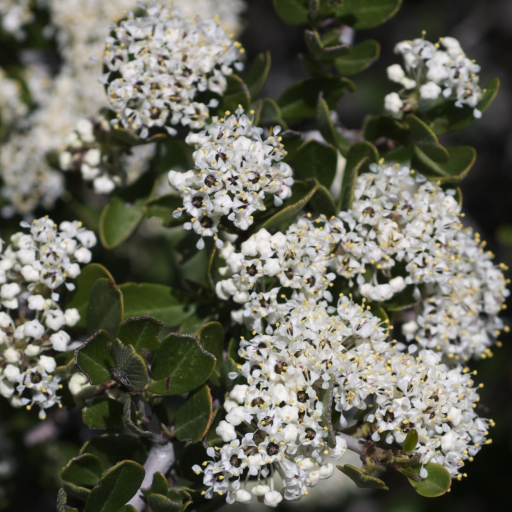
Known as the Buckbrush, Ceanothus cuneatus is a rugged champion of the North American chaparral. This evergreen shrub is famous for its cloud-like white blooms that signal the arrival of spring in rocky, dry terrains. It is a plant that thrives where others struggle, acting as a vital "pioneer" species that improves soil quality for the rest of the wild community.
🔍 How to Identify
- 🍃 Wedge-Shaped Foliage: The leaves are tiny, leathery, and distinctly wedge-shaped (broad at the tip and narrowing at the base). They are typically a dull olive green on top and paler underneath.
- ☁️ Frothy Blooms: In late winter or early spring, it produces dense, rounded clusters of tiny flowers. While usually creamy white, they can sometimes display a faint, ghostly lavender tint.
- 🦯 Rigid Architecture: The branches are stiff, greyish, and often interlock to form a dense, "twiggy" thicket. Older specimens develop a beautiful, weathered bark that looks like a miniature ancient tree.
🏡 In Your Garden
- 🏜️ Drought Specialist: This is a "plant it and forget it" species for dry climates. It possesses a deep taproot that seeks moisture far below the surface, meaning it actively dislikes being overwatered once it has settled into your garden.
- 🦅 Wildlife Magnet: Buckbrush is a five-star hotel for nature. Its dense structure provides perfect nesting sites for small birds, while its nectar-rich flowers are a favorite stop for early-season butterflies and native bees.
- 🌱 Soil Improver: Like many members of the Ceanothus family, it has a symbiotic relationship with soil bacteria that allows it to "fix" nitrogen. This actually enriches the ground it grows in, making it a great choice for restoring "tired" or rocky soil.
⚠️ Safety & Toxicity
- ✅ Safe for All: Buckbrush is considered non-toxic to humans, dogs, and cats. It is a very safe choice for landscapes where curious pets or children play.
- 🧤 Stiff Branches: While it doesn't have true thorns, the terminal twigs can become very hard and pointy as they age. If you are pruning a mature bush, wearing sturdy gardening gloves will save your hands from scratches.
✨ Fun Fact
The flowers of the Buckbrush contain natural compounds called saponins. If you pick a handful of fresh blossoms, add a little water, and rub your hands together, they will create a gentle, fragrant lather that can be used as a natural soap!

Detailed Care Instructions
| Humidity | Normal |
| Difficulty | Medium |
| Temperature | 18°C - 30°C |
| Hardiness Zones | 8 - 11 |
To grow a Ceanothus cuneatus plant, follow these steps:
- Select a suitable location: Choose a spot that receives full sun to partial shade. Ceanothus cuneatus prefers well-drained soil but can tolerate various soil types, including clay.
- Prepare the soil: Loosen the soil and remove any weeds or grass. Add organic matter, such as compost, to improve soil drainage and fertility.
- Planting: Dig a hole that is slightly larger than the plant's root ball. Place the plant in the hole and backfill with soil, ensuring the crown is at the same level as the surrounding ground. Tamp down the soil gently to remove any air pockets.
- Watering: Water the plant thoroughly after planting and continue to water regularly in the first year to help establish strong roots. Once established, Ceanothus cuneatus plants are drought-tolerant and only need occasional watering during dry spells.
- Mulching: Apply a layer of organic mulch around the base of the plant to help retain moisture, suppress weeds, and regulate soil temperature.
- Pruning: Ceanothus cuneatus generally requires minimal pruning. However, you can trim dead or damaged branches as necessary to maintain a tidy appearance.
- Fertilizing: Ceanothus cuneatus typically does not require regular fertilization. If desired, you can apply a balanced, slow-release fertilizer in early spring.
- Protecting from pests: Monitor for common pests like aphids or spider mites. If necessary, treat with organic pest control methods or consult a professional.
- Propagation: Ceanothus cuneatus can be propagated from softwood cuttings in late spring or early summer. Take 3-4 inches long cuttings from the tips of healthy branches, remove the lower leaves, and dip the end in rooting hormone before planting in a well-draining medium.
Remember to check your local gardening zone for specific care instructions and to ensure Ceanothus cuneatus is suitable for your region.

Place in a bright room that is sun drenched almost all day. Or directly in a south-facing window.

Ceanothus cuneatus is a plant that requires regular watering to thrive. When watering this plant, it's important to keep the soil consistently moist but not waterlogged, as this can cause root rot.
To water Ceanothus cuneatus, start by checking the soil moisture level. Stick your finger into the soil up to about an inch deep. If the soil feels dry at this depth, it's time to water.
Use a watering can or hose with a gentle spray attachment to water the plant. Try to avoid getting water on the leaves, as this can increase the risk of disease.
Slowly water around the base of the plant, taking care to saturate the soil to a depth of at least 6 inches. If the soil is particularly dry or compacted, you may need to water for a longer period until the soil is evenly moist.
After watering, monitor the soil moisture level regularly and adjust your watering schedule as needed based on the plant's needs and the weather conditions in your area. Avoid letting the soil dry out completely, but also be careful not to overwater, as this can cause the plant's roots to suffocate and rot.
To fertilize this plant, apply a balanced fertilizer with an NPK ratio of 10-10-10 or 20-20-20 in the spring, before new growth begins. Mix the fertilizer according to the instructions on the package and apply it evenly around the base of the plant, avoiding contact with the leaves or stems. Water thoroughly after fertilizing to help the plant absorb the nutrients. Avoid fertilizing in the fall or winter, as this can stimulate new growth that may be damaged by cold temperatures.
For optimal growth and health of the plant, it is important to use a well-draining soil that is rich in nutrients. The ideal soil consists of a sandy loam that is light but also retains moisture. Organic matter can also be added to the soil to improve its fertility. It is important to avoid heavy, clay soils as they can cause drainage issues that can lead to root rot. Additionally, a pH of 6 to 7 is ideal for this plant species. It is also crucial to plant the Ceanothus Cuneatus in a location that receives full sun exposure.
To propagate this plant, you will need to take semi-hardwood cuttings in the summer. Choose healthy stems that are neither too soft nor too woody, and cut them into 4-6 inch sections. Remove the bottom leaves, leaving only a few at the top. Dip the cut ends into rooting hormone and place them in moist, well-draining soil. Cover with a plastic bag to create a mini greenhouse. Keep the soil moist and in a warm, bright location, but out of direct sunlight. Roots should begin to form in 4-6 weeks. Once the roots are established, repot the cuttings into larger containers or plant them outside in well-draining soil.








