Plant Overview
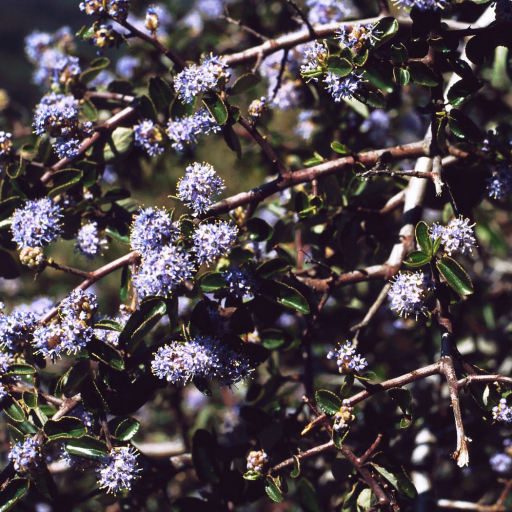
Known as the Wavy-leaf Ceanothus, this California native is a rugged beauty that transforms coastal hillsides into "oceans" of sapphire blue every spring. Often referred to as "Wild Lilac," it is a favorite for gardeners looking to support local wildlife while adding a touch of wild, untamed elegance to their landscape.
🔍 How to Identify
- 🍃 The Foliage: The leaves are incredibly tiny, dark green, and glossy, with distinctively "crinkled" or wavy edges that give the plant its name.
- 🪻 The Blooms: It produces dense, rounded clusters of flowers that range from a deep electric blue to a soft, misty lavender.
- 🪵 Growth Style: It typically grows as a low-spreading mound or a medium shrub, often hugging the ground in wind-swept coastal areas or standing tall in protected canyons.
🏡 In Your Garden
- 🏜️ Summer Dormancy: This plant is a true drought-warrior. It is adapted to long, dry summers and actually dislikes being watered during the hottest months; too much "garden love" (excess water) can lead to root rot.
- 🧪 Self-Fertilizing: It possesses a unique ability to "fix" nitrogen in the soil through its roots. This means it can thrive in poor, rocky soils where other plants might struggle, effectively fertilizing itself and its neighbors.
- 🐝 Pollinator Magnet: If you want a garden buzzing with life, this is the plant for you. It is a critical early-season food source for native bees, butterflies, and hoverflies.
⚠️ Safety & Toxicity
- ✅ Safe for All: Ceanothus foliosus is generally considered non-toxic to humans, dogs, and cats.
- 🧤 Garden Comfort: Unlike some scrubland plants, it has no thorns or irritating hairs, making it a very "friendly" shrub to plant near walkways or play areas.
✨ Fun Fact
Native American tribes and early settlers discovered that the flowers of the Ceanothus contain natural compounds called saponins. If you crush a handful of the blossoms with a little water, they create a gentle, fragrant lather that can be used as a natural soap!

Detailed Care Instructions
To grow Ceanothus Foliosus, also known as the California lilac, you can follow these steps:
- Choose the right location: Ceanothus Foliosus prefers full sun to partial shade. Make sure the planting area has well-drained soil.
- Prepare the soil: Before planting, loosen the soil and mix in compost or organic matter to improve drainage and nutrient content.
- Planting: Dig a hole larger and deeper than the root ball of the plant. Place the plant in the hole, ensuring it sits at the same depth as it was in the container. Backfill the hole with soil and gently firm it around the plant.
- Watering: After planting, thoroughly water the plant to settle the soil. Water regularly, keeping the soil moist but not waterlogged. During hot or dry periods, increase watering.
- Mulching: Apply a layer of organic mulch around the base of the plant to conserve moisture, suppress weeds, and improve soil conditions.
- Pruning: Ceanothus Foliosus generally does not require much pruning, but you can remove dead or damaged branches to maintain its shape. Prune after flowering, usually in late spring or early summer.
- Fertilizing: Ceanothus is a nitrogen-fixing plant and can flourish without supplemental fertilizers. However, if the plant appears weak or lacking nutrients, you can use a balanced fertilizer in early spring.
- Protection: Monitor the plant for any pests or diseases and take appropriate measures to control them. Additionally, provide protection during cold winters by covering the plant with frost cloth or burlap if necessary.
Remember that Ceanothus Foliosus is native to California and thrives in its natural environment. Providing conditions similar to its native region will help ensure the plant's successful growth.

Place in a bright room that is sun drenched almost all day. Or directly in a south-facing window.

To water this plant, it is important to check the moisture level of the soil regularly. Before watering, stick your finger into the soil around 1 inch deep to see if the soil feels moist or dry. If it feels dry, water the plant deeply and thoroughly until water starts to drain out of the drainage holes at the bottom of the pot.
It is important to note that this plant prefers well-draining soil and does not like to sit in waterlogged soil for extended periods of time. Therefore, make sure the pot has proper drainage holes and remove any excess water that collects in the saucer or tray under the pot.
During the growing season, which is typically from spring to fall, this plant may require watering every 2-3 days depending on the environmental conditions. However, during the dormant season, which is usually in the winter, watering can be reduced to once a week or even less.
It is also important to water this plant from the base rather than from overhead to avoid water getting on the leaves and causing fungal diseases. To do this, simply pour water directly onto the soil around the base of the plant.
Overall, it is essential to monitor the plant's moisture levels regularly and adjust watering accordingly to ensure that it stays healthy and thriving.
To fertilize this plant, apply a balanced fertilizer formula with a ratio of 10-10-10 or 20-20-20 in the early spring before the new growth appears. The fertilizer should be evenly spread around the root zone of the plant, but not direct to the stem or foliage. Water the plant deeply immediately after fertilizing to allow the nutrients to reach the roots. Avoid over-fertilizing as it may lead to excessive vegetative growth and reduce its flowering potential.
Ceanothus Foliosus plant thrives best in well-draining soil with a pH level between 6 and 7. The soil should be a mix of sandy loam, humus, and peat moss to provide adequate drainage and organic matter. It is essential to avoid heavy, clay soils, as they tend to retain water and can cause root rot. The plant also prefers soil moderately rich in nutrients, so incorporating slow-release fertilizer or compost into the soil during planting is recommended. Furthermore, Ceanothus Foliosus can adapt to a wide range of soil types, including alkaline, sandy, and rocky soils, as long as they are well-draining and not waterlogged.
One method to propagate this plant is by taking cuttings. Select a healthy stem with a few leaves and cut it at an angle. Remove all leaves except the ones at the top of the stem. Dip the end of the stem in rooting hormone and plant it in a pot with well-draining soil. Water the cutting and place it in a warm area with bright, indirect light. Keep the soil moist and mist the cutting occasionally. After a few weeks, roots should start to develop and new growth will appear. Once the cutting has established roots, it can be transplanted to a larger pot or planted outdoors in a suitable location.








