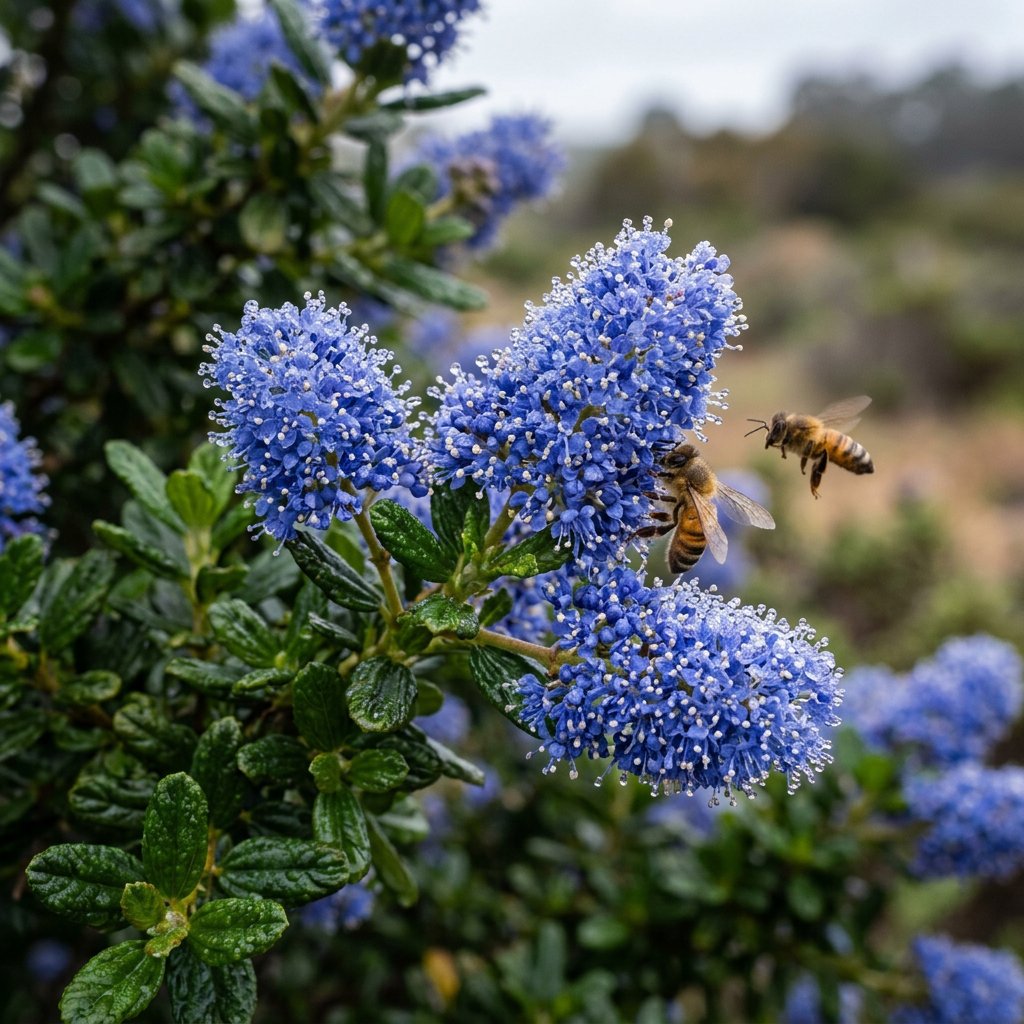
Plant Overview
Known as the "Blueblossom" or the "California Lilac," this evergreen beauty is the crown jewel of the West Coast wildlands. It transforms from a glossy green shrub into a shimmering cloud of electric blue every spring, acting as a high-traffic highway for bees and butterflies. Despite its delicate, puffy appearance, it is a rugged survivalist built to thrive on rocky hillsides and withstand salty coastal breezes.
🔍 How to Identify
- 🌿 The Foliage: Small, oval leaves that are dark green and remarkably glossy. If you flip a leaf over, you’ll notice three distinct, prominent veins running from the base to the tip.
- 🪻 The Blooms: Tiny, individual flowers are packed into dense, cone-shaped clusters called "thyrses." They range in color from a pale sky blue to a deep, royal sapphire.
- 🌲 Growth Habit: It typically grows as a large, upright shrub or small tree, though some garden varieties are bred to be low-growing groundcovers.
🏡 In Your Garden
- 💧 The "Tough Love" Rule: This plant thrives on neglect. It is highly drought-tolerant and actually prefers lean, sandy soil. Giving it too much water or rich fertilizer in the summer can lead to a premature death.
- 🌱 Root Sensitivity: Blueblossoms hate being moved. Because they have sensitive root systems, it is best to choose their "forever home" carefully, as transplanting an established shrub often results in failure.
- 🐝 The Pollinator Magnet: It is one of the most important nectar sources for native bees and the striking California Tortoiseshell butterfly. If you plant one, expect your garden to buzz with life.
⚠️ Safety & Toxicity
- ✅ Status: Generally non-toxic and safe for residential landscapes.
- 🐾 Details: It is considered safe for cats, dogs, and children. While not meant to be eaten, it lacks the harsh alkaloids found in many other ornamental shrubs. It is also frequently cited as "deer-resistant" due to its leathery leaf texture.
✨ Fun Fact
The flowers and seed pods of the Ceanothus contain natural compounds called saponins. If you crush the fresh flowers with a little bit of water in your hands, they will actually produce a gentle, fragrant lather that can be used as a natural soap!

Detailed Care Instructions
To grow Ceanothus Thyrsiflorus, also known as California lilac or blueblossom, follow these steps:
- Choose the right location: Ceanothus prefers full sun, although it can tolerate partial shade. Ensure that the site has well-draining soil.
- Prepare the soil: Amend the soil with compost to improve its fertility and drainage. Ceanothus usually thrives in slightly acidic to neutral soil conditions.
- Planting: Dig a hole that is slightly wider and deeper than the plant's root ball. Place the plant in the hole, ensuring that the top of the root ball is level with the surrounding soil. Fill in the hole with soil and gently firm it around the plant.
- Watering: Water the plant deeply after planting to help the roots establish. After that, water the Ceanothus regularly, especially during dry periods. However, avoid overwatering, as it can lead to root rot.
- Mulching: Apply a layer of organic mulch around the base of the plant to conserve moisture and prevent weed growth. Leave a gap between the mulch and the plant's stems to avoid excessive moisture around the base.
- Pruning: Prune the plant after flowering to maintain its shape and promote better growth. Remove any dead or damaged branches during the pruning process.
- Fertilizing: Ceanothus generally doesn't require heavy fertilization. However, if the plant appears weak or lacks vigor, you can apply a balanced, slow-release fertilizer in spring or early summer.
- Protecting from frost: In areas with frost, protect young Ceanothus plants by covering them with a frost blanket or using other frost protection methods.
- Pests and diseases: Ceanothus is generally resistant to pests and diseases. However, occasional issues with aphids or powdery mildew may arise. Regularly inspect the plant and take appropriate measures if required, such as using insecticidal soap for aphids or a fungicide for powdery mildew.
Remember that Ceanothus Thyrsiflorus is a native Californian plant, so it may perform best within its natural range, which includes coastal and foothill regions of California. With proper care, it can be a beautiful addition to your garden.

Place in a bright room that is sun drenched almost all day. Or directly in a south-facing window.

To water this particular plant, it is important to thoroughly soak the soil around the base of the plant. This should be done once or twice a week depending on the weather and soil conditions. It is important to avoid getting too much water on the leaves and stems, as this can lead to fungal diseases.
When watering, it is best to use a hose or watering can rather than a sprinkler system, as this allows for more targeted watering. It is also important to avoid watering late in the day, as this can increase the risk of fungal diseases.
In addition to regular watering, it is important to mulch around the base of the plant to help retain moisture in the soil. This can also help regulate soil temperature and prevent weeds from growing.
Overall, it is important to provide consistent and appropriate watering for this plant in order to promote healthy growth and ensure its overall success in the garden.
To fertilize this plant, apply a slow-release fertilizer in the early spring. Use a balanced fertilizer with a ratio of 10-10-10 or 16-16-16. Apply the fertilizer at a rate of 1 pound per 100 square feet of planting area. Water the plant well after fertilizing to help the nutrients penetrate the soil. Avoid over-fertilizing, as this can lead to excessive growth and reduce the plant's overall health.
Ceanothus thyrsiflorus requires a well-draining soil with a neutral to slightly acidic pH level. The soil should be rich in organic matter and the plant prefers loamy soil with good water retention. Sandy soils, on the other hand, drain too fast and may not provide enough nutrients for the plant to thrive. Adding compost or aged manure to the soil before planting can help to improve soil structure and nutrient content. It is important not to plant the shrub in heavy clay soils as this may cause waterlogging and root rot. Additionally, the plant prefers a site with good air circulation and full sun exposure, ensuring optimal growth and flowering.
To propagate this plant, you can take semi-hardwood cuttings in the summer or fall. Cuttings should be about 4-6 inches long and have at least 2-3 sets of leaves. Remove the lower leaves and dip the cut end in a rooting hormone powder. Plant the cutting in a well-draining soil mix, and keep it moist. Place the pot in a shaded location and mist it regularly. Roots should develop in a few weeks.
Common pests of the blueblossom include Scale insect, aphids. Make a habit of checking your blueblossom frequently for pests so that any infestations can be caught and managed early.








