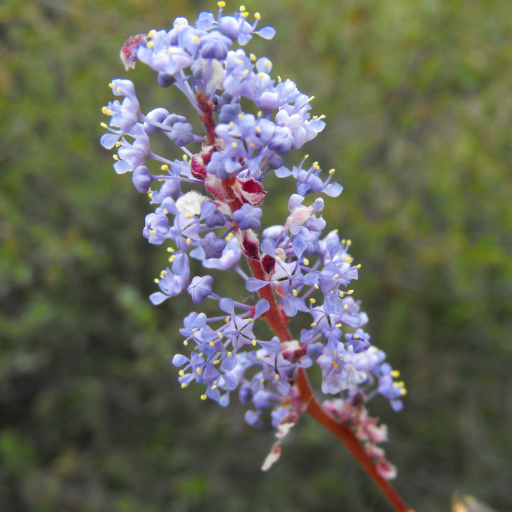
Plant Overview
Often called the Woollyleaf Ceanothus or "Woolly Mountain Lilac," this California native is a standout in drought-tolerant landscapes. Known for its hazy blue blooms that look like a piece of the sky fell onto a bush, it plays a vital role in chaparral ecosystems. It is a favorite for gardeners looking to invite a flurry of pollinators into a water-wise or "wild" garden setting.
🔍 How to Identify
- 🌸 Azure Clusters: Features dense, rounded clusters of tiny flowers that range from a deep, electric blue to a soft, misty lavender.
- 🍃 Woolly Undersides: The small, oval-shaped leaves are dark green and glossy on top, but have a distinctive soft, grayish "felt" or woolly texture underneath.
- 🪵 Arching Form: An upright, multi-branched evergreen shrub that can reach heights of 6 to 10 feet, often creating a thick, protective screen.
🏡 In Your Garden
- 🏜️ The Drainage Rule: This plant has evolved for dry slopes and "hates wet feet." If your soil is heavy clay, plant it on a slight mound to ensure water drains away from the crown, otherwise, it may succumb to root rot.
- 🦋 Pollinator Powerhouse: It acts as a critical early-season nectar source for native bees and is a host plant for several butterfly species, including the striking California Tortoiseshell.
- ✂️ Light Touch Pruning: It prefers light shaping rather than heavy hacking. Only prune lightly after the blooms have faded to maintain its shape without stressing the plant’s natural growth cycle.
⚠️ Safety & Toxicity
- ✅ Generally Safe: Ceanothus tomentosus is considered non-toxic to humans and does not pose a threat if touched.
- 🐾 Pet Friendly: There are no known toxic effects for cats, dogs, or horses, making it an excellent choice for a pet-friendly "wildlife" backyard.
- 🧼 Saponin Content: The flowers and seed pods contain natural saponins. While not dangerous, they can cause a mild soapy lather if crushed and rubbed with water.
✨ Fun Fact
The flowers of this plant are often called "Mountain Lilac Soap." Native American tribes once used the blossoms as a natural cleanser; by simply rubbing the fresh flowers between wet hands, you can create a gentle, fragrant lather to wash with!

Detailed Care Instructions
Here are some steps to help you grow Ceanothus tomentosus plants:
- Choose the right location: Ceanothus tomentosus plants prefer full sun to partial shade. Make sure the location you select has well-draining soil.
- Prepare the soil: Before planting, prepare the soil by removing any weeds or grass. Loosen the soil to a depth of about 12 inches and mix in organic matter like compost or well-rotted manure.
- Planting: Dig a hole slightly larger than the root ball of the plant. Gently place the plant in the hole and backfill it with soil, ensuring that the top of the root ball is at ground level. Water the plant thoroughly after planting.
- Watering: Ceanothus tomentosus plants are drought-tolerant once established but need regular watering during the first growing season. Water deeply once a week or when the soil feels dry. Avoid overwatering, as it can cause root rot.
- Mulching: Apply a layer of organic mulch around the base of the plant to help retain moisture, suppress weed growth, and provide insulation during extreme temperatures.
- Pruning: Prune your Ceanothus tomentosus plants in early spring to maintain their shape and promote bushier growth. Remove any dead or diseased branches and thin out overcrowded areas to improve air circulation.
- Fertilizing: Generally, Ceanothus tomentosus plants do not require much fertilizer. However, if your soil is poor, you can apply a balanced slow-release fertilizer in early spring.
- Pests and diseases: Ceanothus tomentosus plants are generally resistant to pests and diseases. However, they can occasionally be affected by aphids or powdery mildew. Monitor your plants regularly and take appropriate measures if you notice any issues.
Remember that each plant is different, so it's always a good idea to research and understand the specific growing requirements of your Ceanothus tomentosus plant to ensure its optimal health and growth.

Place in a bright room that is sun drenched almost all day. Or directly in a south-facing window.

Ceanothus Tomentosus is a plant that requires a specific method of watering to ensure its optimal growth and health. Here are some detailed instructions on how to water this plant effectively:
1. Judge the moisture level: Before watering the Ceanothus Tomentosus plant, check the soil moisture to determine if it actually needs watering. Insert your finger about an inch deep into the soil near the root ball and gauge the wetness. If the soil feels dry to the touch, it's an indication that watering is required.
2. Choose the right time: Water the plant during cooler parts of the day, preferably in the morning or evening. This helps prevent excessive evaporation due to high temperatures, ensuring the water reaches the roots more effectively.
3. Use a gentle stream: When applying water to the Ceanothus Tomentosus plant, it's crucial to use a gentle stream or a watering can with a fine rose attachment. Direct the water near the base of the plant, allowing it to slowly soak into the soil without causing erosion or damaging the foliage.
4. Water deeply: Ensure the water penetrates the root zone, which is usually the top 6-12 inches of soil. Applying water deeply encourages the plant's roots to grow down, resulting in a stronger and more drought-tolerant plant.
5. Be mindful of clay soils: If the Ceanothus Tomentosus is planted in clay soil, be cautious not to overwater as clay tends to retain moisture for longer periods. Overwatering can lead to root rot or other water-related problems. Adjust the frequency of watering according to soil type and local weather conditions.
6. Regularity of watering: Rather than providing frequent shallow waterings, it is generally better to water less frequently but more thoroughly. Allow the soil to dry slightly between waterings to prevent waterlogging and root suffocation.
7. Monitor moisture retention: Keep an eye on how long the soil retains moisture after watering. This can vary depending on various factors such as temperature, soil type, and drainage. Ensure the soil is moist but not saturated and adjust the future watering frequency accordingly.
By following these detailed watering instructions, you can assist in maintaining the health and vitality of your Ceanothus Tomentosus plant.
To fertilize the Ceanothus Tomentosus plant, use a balanced, slow-release fertilizer in early spring. Follow the instructions on the fertilizer packaging for the appropriate dosage. Apply the fertilizer evenly around the base of the plant, avoiding direct contact with the stems or leaves. Gently work the fertilizer into the top inch of soil. Water the plant thoroughly after fertilizing to help the nutrients penetrate into the root zone. Avoid over-fertilizing, as it can harm the plant. Monitor the plant's growth and adjust the fertilization schedule accordingly, typically fertilizing once or twice a year should be sufficient.
Ceanothus tomentosus, a species of flowering plant, thrives in well-draining soil that is moderately fertile and loose in texture. It is recommended to use a soil mix that consists of a combination of organic matter such as compost or well-rotted manure, sand, and loam. The organic matter helps provide essential nutrients to the plant, while the sand improves drainage and the loam ensures a good balance of water retention and aeration.
The ideal pH range for the soil should be slightly acidic to neutral, between 6.0 and 7.0. This type of soil acidity helps the plant absorb necessary nutrients efficiently. It is beneficial to test the soil's pH level periodically and make adjustments if needed using soil amendments.
When planting Ceanothus tomentosus, it is important to ensure the root ball is planted at the same depth as it was in the nursery container. The soil should be gently pressed around the roots, avoiding compaction, to provide stability for the plant while also allowing root expansion.
Proper soil moisture management is crucial for the health of Ceanothus tomentosus. It is recommended to water deeply but infrequently, allowing the top few inches of soil to dry out between watering sessions. Overwatering should be avoided to prevent root rot, while allowing the soil to completely dry out can lead to stress for the plant.
Applying a layer of organic mulch around the base of the plant helps conserve moisture, suppress weed growth, and protect the roots from extreme temperature fluctuations. Mulch made of materials such as wood chips, straw, or leaves can be used.
Regularly monitoring the soil moisture levels, ensuring proper drainage, and providing adequate nutrients are key to creating an ideal soil environment for Ceanothus tomentosus to promote healthy growth and abundant flowering.
To propagate Ceanothus tomentosus, follow these steps:
- Start by gathering mature seeds from the plant. Look for seedpods that have turned brownish in color and are beginning to split open.
- Open the seedpods and carefully collect the small, black seeds. Clean them by removing any debris or remaining seedpods.
- Place the seeds in a container filled with warm water and let them soak for 24 hours. This process, known as stratification, helps to break the seed's dormancy.
- After soaking, fill small seed trays or pots with a well-draining potting mix. Moisten the soil until it feels damp but not soggy.
- Spread the seeds evenly over the soil surface, pressing them gently into the soil, but avoid burying them too deeply.
- Cover the trays or pots with a clear plastic wrap or place them in a propagator to create a humid environment. This will help retain moisture and enhance germination.
- Place the trays or pots in a warm location with indirect sunlight. Maintain a temperature of around 65-75°F (18-24°C).
- Check the soil regularly and mist it lightly as needed to keep it slightly moist. Avoid overwatering, as excessive moisture can lead to fungal diseases.
- Germination can take anywhere from a few weeks to a few months. Once seedlings sprout, remove the plastic covering and continue to provide them with bright, indirect light.
- When the seedlings are large enough to handle, carefully transfer them into individual pots, allowing ample space for root growth.
- Keep the newly potted seedlings in a protected, semi-shaded location for a few weeks to acclimate them to outdoor conditions.
- As the plants grow, gradually expose them to increasing amounts of sunlight. Transplant them into their permanent location in the garden in spring, when the danger of frost has passed.
Remember that propagating Ceanothus tomentosus from seeds can be a slow and sometimes challenging process. It's worth noting that this particular Ceanothus species is better known by its common names, such as Woolly California Lilac or Catalina Mountain Lilac, which can help in understanding its characteristics, growth habits, and care requirements.








