Plant Overview
The Cecropia hololeuca, affectionately known as the Silver Cecropia or Embaúba-branca, is a true showstopper of the Brazilian rainforest. It looks like something plucked straight from a prehistoric landscape, characterized by massive, shimmering silver leaves that can catch the light from miles away. As a "pioneer species," it is nature’s first responder, quickly colonizing open spaces to provide shade and protection for slower-growing trees to follow.
🔍 How to Identify
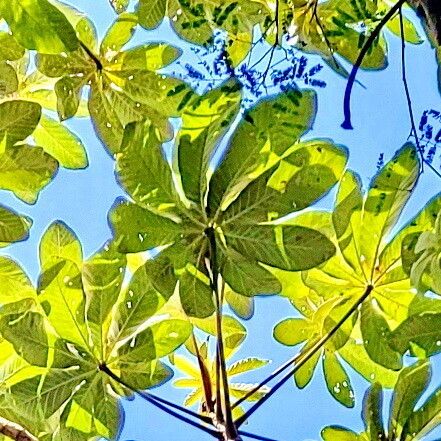
- ☁️ The Leaves: The most striking feature is the giant, palmate (hand-shaped) leaves. While many Cecropia are green, the hololeuca variety is famous for its intense, velvety white-silver coating on both sides, making the tree appear to "glow" against the green forest.
- 🎋 The Trunk: The bark is light gray and marked with distinct rings, resembling a thick stalk of bamboo. The interior of the trunk is hollow and divided into chambers.
- ⛱️ Growth Habit: It typically grows with a high, umbrella-like canopy. Because it reaches for the sun, the lower trunk is often bare, topped with a dramatic explosion of silver foliage.
🏡 In Your Garden
- ☀️ Light & Space: This is not a plant for small spaces or dark corners. It craves full sun to maintain its silver luster. If you plant one, ensure it has plenty of vertical room, as it can skyrocket toward the clouds in just a few seasons.
- 💧 Soil & Water: Coming from the humid tropics, it prefers well-draining soil but appreciates consistent moisture. However, be mindful of its roots; like many pioneer trees, its root system can be vigorous, so it’s best kept away from underground pipes or foundations.
- 🌬️ Wind Protection: Because the leaves are so large, they can act like sails in a storm. Planting it in a spot protected from heavy gusts will prevent the beautiful foliage from shredding.
⚠️ Safety & Toxicity
- ✅ Status: Generally non-toxic and safe for homes and gardens.
- 🧤 Details: While not poisonous to pets or children, the leaves have a very rough, sandpaper-like texture. If you are pruning or handling the plant, the sap and the leaf surface can occasionally cause mild skin irritation for those with sensitive skin.
✨ Fun Fact
In its native Brazil, the name "Embaúba" translates to "hollow tree." While many Cecropia species have a famous "bodyguard" relationship with biting Aztec ants that live inside these hollow stems, Cecropia hololeuca is one of the few in the genus that often lives "ant-free," relying on its unique leaf chemistry and rapid growth instead of an insect army for protection!

Detailed Care Instructions

Place in a bright room that is sun drenched almost all day. Or directly in a south-facing window.

Some plants require more regular watering than others, which should be done every few days. It's critical to maintain the soil moist all of the time. The water requirements of the same plant placed in pots with varying sizes will differ. Because the water in the smaller pot evaporates faster than the water in the larger pot, it will require more watering. Regardless of pot size, the surface should constantly be maintained moist.







