Plant Overview
Commonly known as the Giant Cecropia or the Trumpet Tree, this towering tropical icon is the architectural superstar of Central and South American rainforests. Characterized by its massive, umbrella-like leaves, it is a "pioneer species," meaning it is often the first to reclaim open spaces in the jungle, reaching for the sun with incredible speed.
🔍 How to Identify
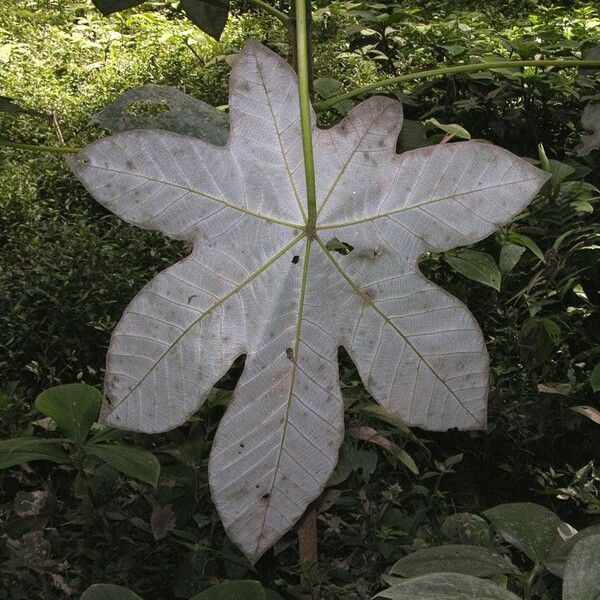
- 🍃 Colossal Leaves: The leaves are deeply lobed and shield-shaped (peltate), often growing up to three feet across, resembling a giant, green hand.
- 🎋 Hollow Stems: The trunk is remarkably straight and segmented like bamboo; these hollow chambers often serve as "apartments" for protective ant colonies in the wild.
- ⚪ Silver Undersides: When the wind blows, the tree seems to change color as the pale, almost silvery-white undersides of the leaves are revealed against the deep green tops.
🏡 In Your Garden
- ☀️ Light Chaser: This plant is biologically programmed for speed. It requires intense, direct light to thrive and will quickly become "leggy" or weak if kept in the shade or a dim corner of a greenhouse.
- 💧 Thirsty Pioneer: Because it grows so rapidly, it has a high metabolic rate. It prefers consistently moist soil and high humidity; if the air is too dry, the leaf tips will quickly turn brown and crispy.
⚠️ Safety & Toxicity
- 🧤 Mild Irritant: While not considered deadly, the milky sap found inside the stems can cause skin irritation or dermatitis in sensitive individuals.
- 🐾 Pet Caution: It is generally not listed as highly toxic to cats or dogs, but ingesting the fibrous, tough leaves can lead to digestive upset or vomiting. It is best kept as an ornamental piece out of reach.
✨ Fun Fact
🦥 The Sloth’s Snack: In the wild, Cecropia insignis is the favorite grocery store for Three-toed Sloths. They love the leaves because they are relatively easy to digest and provide the high moisture content these slow-moving mammals need to stay hydrated.

Detailed Care Instructions








