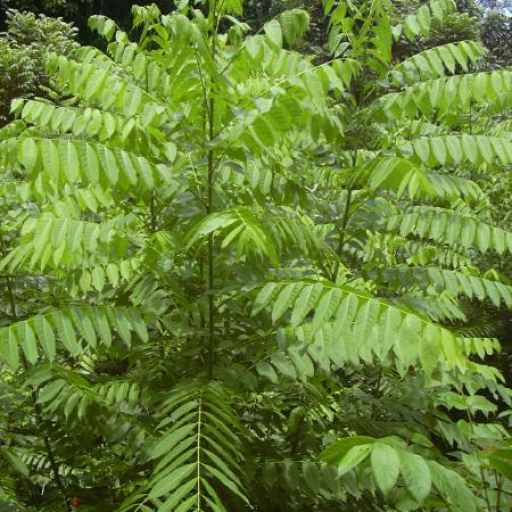
Plant Overview
Commonly known as Spanish Cedar or Cigar-box Cedar, this tree is a bit of a biological imposter—it isn’t a true cedar at all, but rather a prestigious member of the Mahogany family. Native to the tropical regions of the Americas, it has been prized for centuries for its aromatic, rot-resistant wood and its role in the legendary "cigar box" scent. In folklore, its fragrant wood was often used to craft sacred objects and chests to protect precious textiles from moths.
🔍 How to Identify
- 🌿 Feathery Foliage: It features large, pinnate (feather-like) leaves that can reach up to 20 inches in length, usually composed of 10 to 22 pointed leaflets.
- 🪵 Fissured Bark: As the tree matures, its bark transforms from smooth and grey to a deeply furrowed, reddish-brown texture with vertical cracks.
- 🌰 Star-Shaped Pods: It produces woody, pear-shaped fruit capsules that split open into five distinct sections, resembling a wooden star, to release winged seeds.
🏡 In Your Garden
- 🌬️ Drainage is Key: This tree is highly sensitive to waterlogged soil. It thrives in well-drained, fertile ground and will shed its leaves (deciduous behavior) during dry spells to conserve energy.
- 🌳 The Taproot Rule: Like its mahogany cousins, it develops a deep, sensitive taproot early in life. It "hates" being transplanted; moving a sapling even a few feet can lead to stunted growth or failure to thrive.
⚠️ Safety & Toxicity
- ✅ Non-Toxic: Cedrela odorata is generally considered safe for humans, cats, and dogs in a garden setting.
- 👃 Respiratory Nuance: While the tree isn't poisonous, the fresh-cut wood and crushed leaves emit a very potent, garlic-like or "cedar" aroma. For some individuals with sensitive respiratory systems, this strong scent can occasionally trigger mild irritation or allergies.
✨ Fun Fact
The natural oils found in Spanish Cedar wood are a powerful insect repellent. This is exactly why the wood is the world-standard material for lining cigar humidors—it keeps tobacco-eating beetles away while imparting a spicy, sophisticated flavor to the cigars!

Detailed Care Instructions
To grow Cedrela Odorata or Spanish Cedar, follow these steps:
- Choose the right climate: Spanish Cedar prefers tropical or subtropical climates. It thrives in USDA hardiness zones 10-11. Ensure that you have the appropriate conditions for its growth in terms of temperature and humidity.
- Select a suitable planting location: Choose a spot that receives full to partial sunlight, preferably with some protection from strong winds. The soil should be well-draining, rich in organic matter, and slightly acidic (pH 5.5-6.5).
- Germinate the seeds: Soak the seeds in water for 24 hours to promote germination. Then, sow the seeds in seed-starting trays or pots filled with seed-starting mix. Place the trays in a warm location with indirect sunlight. Maintain soil moisture by misting or watering lightly.
- Transplant the seedlings: After the seedlings reach a height of about 6 inches, they can be transplanted into larger pots or directly into the ground. Ensure that the soil is prepared properly by loosening it and adding well-rotted compost or organic matter.
- Provide proper care: Regularly water the plants, ensuring that the soil remains moist but not soggy. Install a drip irrigation system or use mulch to help maintain moisture levels. Fertilize Spanish Cedar every six months with a balanced, slow-release fertilizer. Prune any dead or damaged branches to encourage healthy growth.
- Protect from pests and diseases: Spanish Cedar is generally resistant to most pests and diseases. However, you may occasionally encounter issues like aphids, mealybugs, or fungal diseases. Regularly inspect the plant for any signs of pests or disease and take appropriate measures such as using insecticidal soap or fungicides if needed.
- Monitor growth and provide support if necessary: As the tree grows, ensure that it has enough space to spread its branches. With time and proper care, Spanish Cedar can reach a height of around 50-70 feet. If necessary, provide stakes or support to help the plant grow straight and strong.
Remember, growing Spanish Cedar from seeds can be a slow process, taking several years for the tree to reach maturity. Patience and consistent care will be key to successfully growing Cedrela Odorata.

Place in a bright room that is sun drenched almost all day. Or directly in a south-facing window.

The best way to water this plant is to deeply saturate the soil around the root system without letting the water pool on top of the soil. It is important to allow the topsoil to become slightly dry before giving it a good watering, as over-watering can lead to root rot and other problems. During hot weather or if the plant is located in full sun, it may need more frequent watering. It is also important to avoid getting water on the leaves, as this can lead to fungal growth. A good practice is to water in the morning or evening when the sun is less intense.
To fertilize this plant, you should apply a balanced slow-release fertilizer in the spring and again in the fall. Avoid applying too much fertilizer as it can lead to excessive foliage growth and a weakened plant. Additionally, ensure that the soil is well-draining and moist before fertilizing.
The ideal type of soil for the Cedrela Odorata plant should be well-draining, slightly acidic, and rich in organic matter. It should be able to retain moisture without becoming water-logged. The pH level of the soil should be within the range of 5.5 to 6.5. A mixture of loam, sand, and peat moss can provide ideal conditions for the plant's growth. Fertilizer can be added to the soil to boost its nutrient content. It is also recommended to amend the soil with compost or other organic matter to enhance soil fertility and promote healthy root growth.
- Gather materials: You will need a pair of pruning shears, a sterile cutting tool, rooting hormone powder, a small pot, and potting soil.
- Choose healthy stem cuttings: Look for a stem that is about 5-6 inches long and has several leaves. Make sure the stem is healthy, firm, and not wilted.
- Cut the stem: Using the pruning shears or sterile cutting tool, make a clean cut just below a leaf node. Remove any leaves from the bottom few inches of the stem.
- Apply rooting hormone powder: Dip the cut end of the stem into rooting hormone powder. Tap off any excess powder.
- Plant the cutting: Fill a small pot with moist potting soil. Make a small hole in the soil and insert the cutting. Firmly press the soil around the stem to hold it upright.
- Water the cutting: Water the soil around the stem until it is evenly moist. Do not overwater.
- Cover the cutting: Use a plastic bag to cover the pot and create a humid environment. Place the pot in a bright, indirect light location. Do not expose the cutting to direct sunlight.
- Wait for roots to develop: Check the cutting regularly to make sure it is moist. In 4-6 weeks, roots should begin to develop. You can gently tug on the stem to check for resistance, which indicates root growth.
- Transplant the cutting: Once the cutting has developed roots, you can transplant it into a larger pot or directly into the ground. Continue to care for the plant as you would for a mature Cedrela Odorata plant.








