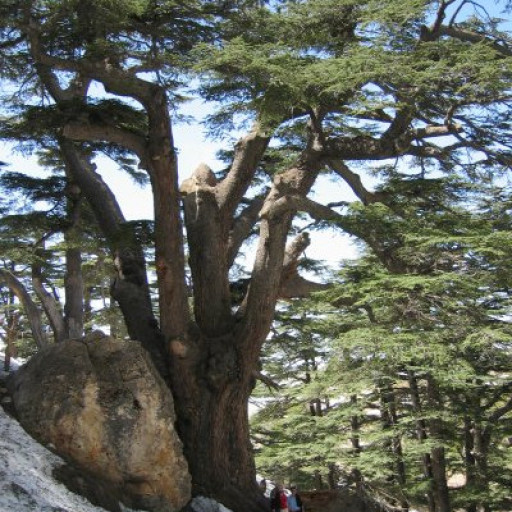
Plant Overview
Known as the "King of Trees," the Cedar of Lebanon is an ancient giant that has watched civilizations rise and fall. It is the national symbol of Lebanon, gracing their flag and representing eternal strength and endurance. Its distinctive silhouette, with massive horizontal branches spreading out like platforms, makes it one of the most recognizable and majestic conifers in the world.
🔍 How to Identify
- 🌲 Growth Habit: Look for its unique "tiered" appearance. While young trees are conical, mature specimens develop a broad, flat-topped crown with massive branches that grow strictly horizontal.
- 🪡 Needle Clusters: The dark green to glaucous-blue needles are short and stiff, growing in dense, spiraled tufts of 20 to 35 on short spur shoots.
- 🪵 Upright Cones: Unlike many pines where cones hang down, these barrel-shaped cones sit vertically on top of the branches like small, resinous candles. They turn from purple-grey to brown as they mature.
🏡 In Your Garden
- 🏰 Demand for Space: This is a legacy tree, not a foundation plant. It requires immense space to spread its "wings." Planting it too close to a home or power lines is a common mistake, as its lateral reach can eventually span 50 feet or more.
- ☀️ Sun & Drainage: It is a child of the mountains, meaning it craves full sun and absolutely demands well-draining soil. While it is remarkably drought-tolerant once established, it will struggle and likely succumb to root rot in heavy, waterlogged clay.
⚠️ Safety & Toxicity
- ✅ Low Risk: The Cedar of Lebanon is generally considered non-toxic to humans, dogs, and cats. It is a safe choice for family landscapes.
- 🧤 Mechanical Irritation: The needles are quite stiff and sharp. While not chemically toxic, they can cause minor scratches or skin irritation if you are pruning or if children are climbing among the lower boughs.
✨ Fun Fact
📜 Ancient Engineering: The aromatic and rot-resistant wood of Cedrus libani was the most prized building material of the ancient world. It was used by King Solomon to build the First Temple in Jerusalem and by the Phoenicians to construct the legendary seafaring fleets that dominated the Mediterranean.

Detailed Care Instructions
The tree is known for its longevity—it can live 600 years or more.
What climate does Lebanese cedar grow in?
In its native mountain climate the tree gets lots of precipitation in the winter, mainly as snow. and it withstands drought in the summer.
What's the growth rate of the Lebanese cedar?
The tree grows slowly, only adding about 10 to 15 inches a year in height.
| Lighting | Full Sun |
| Native Area | It Originally Comes From The Mediterranean Region. |
| Hardiness Zones | Zones 5-9 |
Growing Cedrus Libani, commonly known as Cedar of Lebanon, requires several steps and specific conditions. Here's a guide to help you grow this plant:
- Climate and soil requirements: Cedar of Lebanon thrives in a Mediterranean climate with hot, dry summers and mild, wet winters. However, it can tolerate a wider range of climates. The plant prefers well-draining soil with a pH range of 6.0 to 7.5.
- Seed collection: Obtain Cedar of Lebanon seeds from a reputable source or harvest them from mature cones found on existing trees. Collect seeds in the fall when the cones have fully ripened.
- Seed preparation: To increase germination rates, it's recommended to stratify the seeds. This can be done by placing the seeds in a plastic bag with a mixture of moist sand or vermiculite. Store the bag in the refrigerator for about 60-90 days.
- Sowing the seeds: Once stratification is complete, sow the seeds in pots or containers filled with a well-draining potting mix. Plant each seed horizontally, about one inch deep.
- Germination and growth: Place the pots in a sunny location with temperatures around 70-80°F (21-27°C). Keep the soil consistently moist, but avoid overwatering. Seed germination can take anywhere from several weeks to several months.
- Transplanting: When the seedlings are about 6-8 inches tall, typically after the first growing season, they can be transplanted outdoors. Choose a sunny spot with well-draining soil.
- Care and maintenance: Water the young trees regularly, especially during dry periods, until they establish a strong root system. Applying a layer of organic mulch around the base can help conserve moisture and control weed growth. Prune any dead or damaged branches and shape the tree as desired.
- Pest and disease management: Cedar of Lebanon is generally resilient against pests and diseases. However, keep an eye out for common problems such as aphids, scale insects, or fungal issues. Treat if necessary, using appropriate organic or chemical solutions.
It's important to note that Cedrus Libani is a large tree that can reach heights of 40-70 feet (12-21 meters) and spread up to 30 feet (9 meters). Ensure you have enough space for the tree's mature size before planting.
Additionally, local regulations may apply when growing certain tree species, so it's always a good idea to check with local authorities or gardening professionals.

Place in a bright room that is sun drenched almost all day. Or directly in a south-facing window.

To water this plant, ensure that the soil is completely dry before watering. When watering, choose a spot away from the plant's trunk and water thoroughly, allowing the water to soak into the soil. Avoid getting water on the foliage or branches of the plant. During periods of drought or extreme heat, increase the frequency of watering. However, do not overwater as this can lead to root rot and other issues.
To fertilize this plant, first, identify the appropriate fertilizer based on its nitrogen-phosphorus-potassium (NPK) ratio. Choose a slow-release granular fertilizer with an NPK ratio of around 10-8-6. Apply the fertilizer in the spring, just before new growth appears. Spread the granules evenly on the soil surface around the plant at a rate of 1 pound per square foot. Water the soil immediately after fertilizing to help activate the nutrients. Repeat this process annually for optimal growth.
The optimal soil for Cedrus Libani (a species of tree) should have good drainage and be rich in nutrients. It should have a pH level between 6.0 to 7.5, which is slightly acidic to neutral. The ideal soil type would be loamy soil, which is a combination of sand, silt, and clay in equal proportions. This type of soil retains moisture well while also allowing for proper drainage.
The tree prefers soil that is well-aerated, meaning that air can easily circulate through the soil. To achieve this, the soil should be light and fluffy, which can be achieved through the addition of organic matter such as compost. The soil should also be free of any debris or rocks that could impede root growth or cause damage to the plant.
It is important to note that Cedrus Libani is a relatively tolerant plant that can grow in a variety of soil types, as long as it is well-drained and contains enough nutrients to support growth and development. However, using the correct soil type will help ensure the best possible growth and minimize the risk of any problems that may arise.
The propagation of this particular plant involves taking cuttings from mature and healthy plants during the dormant season. The cuttings should be approximately 8-10 inches in length and taken from the current year's growth. The bottom part of the cutting should be treated with a rooting hormone and planted in a well-draining rooting medium.
The cuttings should then be placed in a shaded area and watered regularly until roots develop. Once roots have formed, the plant can be transplanted into a larger pot or directly into the ground.
Propagation can also be done through seeds, which can be collected from mature cones during the autumn season. The seeds should be stratified in a cool, moist environment for several weeks before planting in a well-draining medium.
Both methods of propagation require patience and careful attention to ensure the success of the new plants.
Common pests of the cedar of lebanon include Scale insect, spider mites, aphids. Make a habit of checking your cedar of lebanon frequently for pests so that any infestations can be caught and managed early.








