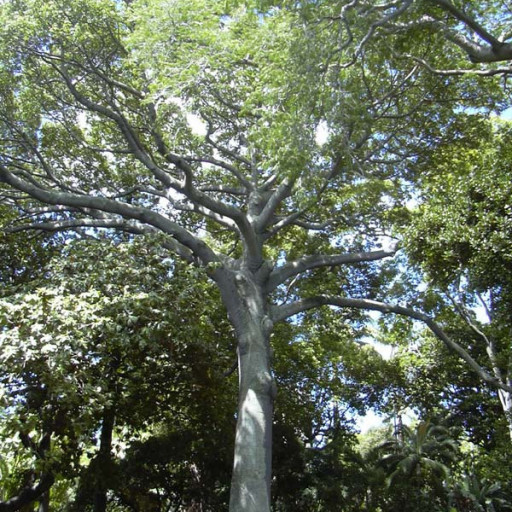
Plant Overview
Known as the "Sacred Tree of Life" by the ancient Maya, Ceiba pentandra is a true titan of the tropical rainforest. Often called the Kapok Tree, it serves as a biological skyscraper, frequently emerging above the canopy to reach staggering heights. In folklore, its roots were believed to reach the underworld, while its massive crown supported the very heavens.
🔍 How to Identify
- 🌳 Buttress Roots: Mature trees develop enormous, plank-like roots that spread out from the base, providing stability in shallow tropical soils and creating a dramatic, architectural silhouette.
- 🌵 Thorny Armor: When young, the trunk and branches are heavily studded with large, conical spines to deter climbing animals. These thorns often fade or smooth out as the tree reaches massive proportions.
- 🍃 Palmate Leaves: The foliage is "palmately compound," featuring 5 to 9 leaflets that radiate from a central point like the fingers on a hand.
- ☁️ Silk Pods: After flowering, the tree produces woody pods filled with seeds nestled in a dense, yellowish fluff known as "Kapok" or "Silk Cotton."
🏡 In Your Garden
- 🏗️ Scale and Space: While it can be grown as a unique bonsai or a container plant for a few years, the Kapok tree is a giant that eventually requires immense space. It is generally unsuitable for standard residential yards due to its aggressive root system.
- 🦇 Pollination Strategy: In its native habitat, the tree produces cream-colored flowers that open at night. They emit a pungent odor specifically designed to attract bats, who act as the tree’s primary pollinators.
- 🍂 Seasonal Habits: This tree is drought-deciduous, meaning it will often drop its leaves during dry periods to conserve moisture, often blooming while the branches are completely bare.
⚠️ Safety & Toxicity
- 🟢 Non-Toxic Status: Ceiba pentandra is generally considered non-toxic to humans, cats, and dogs. It has a long history of traditional medicinal use in various cultures.
- 🛡️ Physical Risk: The primary safety concern is the sharp, heavy spines found on the trunk of younger specimens. These can cause deep puncture wounds if handled carelessly.
- ☁️ Respiratory Note: The fluffy kapok fiber from the seed pods is highly flammable and can be a mild respiratory irritant for those with sensitive allergies if it becomes airborne in large quantities.
✨ Fun Fact
The "Kapok" fiber found in the seed pods is incredibly buoyant and water-resistant. Before the invention of synthetic foams, these fibers were the gold standard for stuffing life jackets, as they can support up to 30 times their own weight in water!

Detailed Care Instructions
| Color | Pale Gray Bark With Green Foliage And White To Pink Flowers |
| Soil Ph | 5.5-6.5 |
| Lighting | Full Sun |
| Toxicity | Non-Toxic |
| Soil Type | Fertile, Moist, Well-Draining, Loamy, Clay, Sandy |
| Bloom Time | Winter To Spring, During The Dry Season |
| Plant Type | Deciduous Tree |
| Mature Size | Up To 200 Feet Tall And 75 Feet Wide |
| Native Area | Mexico, West Africa, Central America, Northern South America, The Caribbean |
| Sun Exposure | Full Sun |
| Hardiness Zones | 10-12 |
To grow a Ceiba Pentandra plant, also known as the Silk Cotton tree or Kapok tree, follow these steps:
- Climate and location: Ceiba Pentandra is native to tropical regions, so it requires a warm and humid climate. It needs full sun exposure for at least 6-8 hours a day. Choose a location that is protected from strong winds.
- Soil: The plant prefers well-draining soil that is rich in organic matter. It can tolerate a wide range of soil types, including sandy or loamy soil. Ensure the soil pH is between 6.0 and 7.5.
- Planting: Start by obtaining Ceiba Pentandra seeds or seedlings from a reputable nursery or supplier. Plant the seeds or seedlings in a large planting hole, approximately twice the size of the root ball. The hole should be deep enough to provide stability for the tree. Space multiple trees at least 15-20 feet apart to allow for proper growth.
- Watering: Provide regular watering during the establishment phase, keeping the soil evenly moist. However, once the tree is established, it can tolerate periods of drought.
- Fertilizer: Ceiba Pentandra generally does not require much fertilization. However, if the soil is poor, you can apply a slow-release balanced fertilizer in early spring. Follow the package instructions for dosage.
- Pruning: Minimal pruning is required for Ceiba Pentandra. Remove any dead, damaged, or crossing branches. Prune for shaping during the early years of growth if necessary.
- Mulching: Applying a layer of organic mulch around the base of the tree can help retain moisture, suppress weeds, and provide nutrients as it decomposes.
- Pests and diseases: Ceiba Pentandra is relatively resistant to pests and diseases. However, be on the lookout for any signs of infestation or disease, such as aphids or fungal infections, and take appropriate measures if necessary.
- Growth and maintenance: Ceiba Pentandra is a fast-growing tree, reaching heights of 60-150 feet. As it grows, provide support and tie the tree to a stake to ensure straight and upright growth. Regularly check the stability of the stake to avoid damaging the trunk.
- Patience and care: Growing a Ceiba Pentandra tree requires patience, as it may take several years to reach maturity and start producing its distinctive kapok cotton. Provide regular care, including watering, mulching, and occasional fertilization, to give the tree the best chance of thriving.
Remember, Ceiba Pentandra is a large tree and may not be suitable for all garden sizes. Consider the available space and potential impact on structures or nearby plants before planting.

Place in a bright room that is sun drenched almost all day. Or directly in a south-facing window.

To water the plant with the botanical name Ceiba Pentandra, you should first check the soil moisture level by inserting your finger about one inch deep into the soil. If the soil feels dry, it's time to water the plant. However, if the soil is still moist, hold off on watering for a few days.
When watering, make sure to give the plant a thorough soak, allowing the water to penetrate the roots. You can water the plant from the top or fill the saucer underneath the pot with water and allow the soil to absorb it from the bottom.
Avoid overwatering the plant as it can lead to root rot. On the other hand, if underwatered, the leaves may turn brown and fall off. It's crucial to maintain adequate soil moisture levels to keep the plant healthy.
Finally, consider the environmental conditions the plant is in. If it's hot or the humidity is low, the plant will require more frequent watering. In contrast, if it's cooler or more humid, you can water less frequently.
To fertilize this plant, first ensure that the soil is moist. Then, mix a balanced, slow-release fertilizer into the top few inches of soil around the base of the plant. Apply the fertilizer once every two months during the growing season, which is usually from spring to fall. Be careful not to over-fertilize, as this can damage the plant's delicate root system. Additionally, if you notice any yellowing or wilting of the leaves, it may be a sign of nutrient deficiencies, so consider adjusting the fertilizer accordingly.
Ceiba Pentandra plant requires a well-draining soil that is rich in nutrients. It prefers a soil that is slightly acidic to neutral, with a pH range of 6.0 to 7.5. The soil should be loamy, meaning it contains a mixture of sand, silt, and clay in relatively equal proportions.
When choosing soil for your Ceiba Pentandra plant, make sure that it is free of heavy clay, as this can cause drainage issues that may harm the roots. Additionally, avoid soils that are overly sandy, as they tend to drain too quickly and may not retain enough moisture for the plant.
Instead, opt for a soil that has a good balance of all three components, as this will provide ideal conditions for the roots to grow and thrive. You may also want to consider using a soil that contains organic matter, such as compost or manure, as this will help to enrich the soil and improve its overall quality.
When planting your Ceiba Pentandra plant, make sure to prepare the soil by digging a hole that is slightly larger than the rootball. Backfill the hole with the prepared soil, gently pressing down to ensure good contact between the roots and the soil. Water the plant thoroughly after planting to help settle the soil around the roots.
Ceiba pentandra plant propagation can be done by using stem cuttings or seeds. To propagate using stem cuttings, select a healthy and mature stem from the plant and make a clean cut just below a node. Remove any leaves from the lower part of the stem and dip it in rooting hormone. Plant the cutting in a well-draining potting mix and keep it in a warm, humid location. Water the plant regularly and monitor its growth.
To propagate using seeds, collect the seeds from a mature plant and remove any remaining fruit or pulp. Soak the seeds in water for 24 hours to help facilitate germination. Plant the seeds in a well-draining potting mix and keep the soil moist. Germination usually occurs within 2-4 weeks. Once the seeds have sprouted, transplant the seedlings to individual pots and provide them with adequate sunlight and moisture.
Propagation can also be done by air layering or grafting, but these methods require more skill and experience. It is important to note that Ceiba pentandra plant propagation requires patience and care, as it may take several months for the cuttings or seedlings to develop into mature plants.








