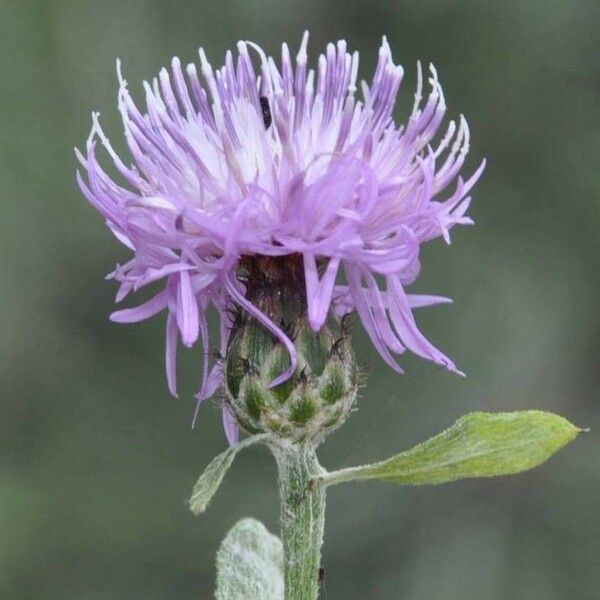
Plant Overview
Commonly known as the Wedge-leaf Knapweed, this resilient beauty hails from the rocky slopes and sun-drenched meadows of Southeastern Europe. With its thistle-like blooms and silvery, textured foliage, it carries the rugged charm of the Mediterranean wilderness. It is a master of survival, often found thriving where other plants might wilt under the pressure of poor soil and intense heat.
🔍 How to Identify
- 🌸 The Bloom: Features striking, fringed flower heads that range from vibrant pink to deep purple. Each flower sits atop a scaly, pinecone-shaped base (involucre) typical of the knapweed family.
- 🍃 Wedge-shaped Leaves: Its name cuneifolia refers to the unique, "wedge-shaped" lower leaves. These are often deeply lobed and covered in fine, silvery hairs that give the plant a dusty, sage-green appearance.
- 🌿 Growth Habit: A wiry and branching perennial that stands tall and airy, allowing it to sway gracefully in the wind without snapping.
🏡 In Your Garden
- ☀️ The "Tough Love" Perennial: This plant thrives on neglect. It prefers lean, well-draining soil—if the soil is too rich or stays too wet, the plant may become "floppy" or suffer from root rot.
- 🦋 A Pollinator Magnet: In a garden setting, it acts as a bustling airport for local biodiversity. Bees and butterflies are highly attracted to its nectar-rich florets, making it a great choice for wilder, eco-friendly landscapes.
⚠️ Safety & Toxicity
- 🟢 Status: Generally considered non-toxic to humans and pets.
- 🧤 Skin Irritation: While not poisonous, the stems and leaves can be quite rough and scratchy. If you have sensitive skin, you might experience mild redness after pruning, so wearing gardening gloves is always a smart move.
✨ Fun Fact
The genus name Centaurea is rooted in Greek mythology. It is named after Chiron the Centaur, who was famous for his knowledge of medicinal herbs and supposedly used plants from this family to heal a wound dealt by an arrow dipped in Hydra's venom!

Detailed Care Instructions








