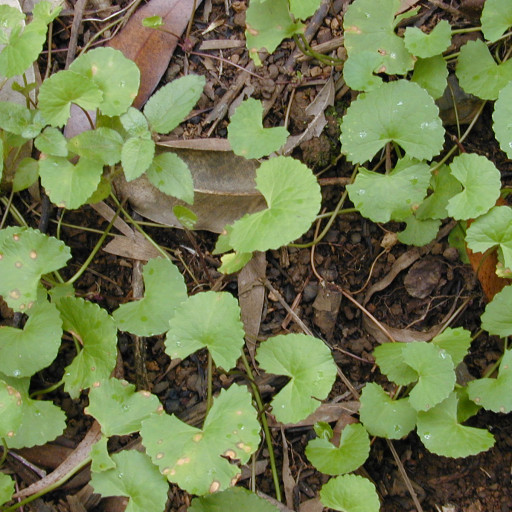
Plant Overview
Known as the "herb of longevity" and "Tiger Grass," Centella asiatica is a powerhouse in both ancient medicine and modern skincare. This humble creeping perennial earned its nickname from legends of injured Bengal tigers rolling in its leaves to heal their wounds. Whether found in a soothing face cream or a swampy garden corner, it is a resilient plant with a rich history in Ayurveda and Traditional Chinese Medicine.
🔍 How to Identify
- 🍃 Leaf Shape: Look for distinctive kidney-shaped or spade-like leaves with scalloped, wavy edges that resemble small green fans.
- 🌱 Creeping Habit: It grows as a low-lying groundcover, spreading through long, slender runners (stolons) that take root wherever they touch moist soil.
- 🌸 Subtle Flowers: It produces tiny, inconspicuous clusters of white or dusky-pink flowers that are often hidden beneath the canopy of its lush leaves.
🏡 In Your Garden
- 💧 Thirsty Roots: This plant is semi-aquatic by nature and thrives in "mucky" conditions. It is the perfect choice for the edges of a garden pond or that one soggy spot in your yard where nothing else will grow.
- 🪴 Spreading Spirit: Because it roots at every node, it can become invasive in some climates. If you want to enjoy its beauty without it taking over your lawn, it performs exceptionally well in wide, shallow pots or hanging baskets.
⚠️ Safety & Toxicity
- 🟢 General Safety: It is generally considered non-toxic to humans and is widely used in culinary dishes like "Pennywort drink" or salads in Southeast Asia.
- 🐾 Pet Context: While not listed as a major toxin for pets, ingestion of large amounts by curious cats or dogs may cause mild stomach upset.
- 🛑 Soil Quality Warning: Centella is a "hyperaccumulator," meaning it absorbs heavy metals and pollutants from its environment. Never consume plants found growing near roadsides, industrial areas, or chemically treated lawns.
✨ Fun Fact
- ✨ According to legend, a famous Chinese herbalist named Li Ching-Yuen lived to the staggering age of 256 years, a feat he attributed to his daily habit of drinking a tea made from Gotu Kola and other wild herbs!

Detailed Care Instructions
| Humidity | Normal |
| Lighting | Part Sun |
| Soil Type | Acid, Neutral And Basic – Sandy And Damp Soil Such As Paddy Fields |
| Bloom Time | Summer (July To August) (Pink To Red Flowers) |
| Difficulty | Medium |
| Mature Size | Approximately 8 Inches Tall And Over 3 Feet In The Spread |
| Native Area | East Asia, China, Japan, And Australia |
| Temperature | 18°C - 24°C |
| Sun Exposure | Full Or Partial Sun |
| Hardiness Zones | Min 8A |
To grow a Centella Asiatica plant, also known as gotu kola or Indian pennywort, you can follow these steps:
- Purchase seeds or a starter plant: You can either obtain seeds online or from a reputable nursery. Alternatively, you can find a young Centella Asiatica plant to transplant.
- Choose a suitable location: Centella Asiatica prefers a partially shaded area with moist and well-drained soil. It is not tolerant of extreme heat or direct sunlight.
- Prepare the soil: The soil should be rich in organic matter and slightly acidic with a pH around 6.0 to 7.0. Add compost or well-rotted manure to improve the soil's fertility.
- Plant the seeds or the starter plant: If using seeds, sprinkle them evenly on the soil surface and lightly cover with a thin layer of soil. If using a starter plant, dig a hole slightly larger than the root ball and carefully place the plant in the hole. Backfill with soil and gently firm it around the roots.
- Water regularly: Keep the soil consistently moist, but not waterlogged. Water whenever the top inch of soil becomes dry. Be careful not to overwater as this can cause root rot.
- Mulch the soil: Applying a layer of organic mulch, such as straw or wood chips, around the plant can help retain moisture and control weed growth.
- Prune as needed: Centella Asiatica spreads by runners and can become invasive. Regularly trim back the plant to control its spread and maintain a more compact growth habit.
- Harvest leaves as desired: You can start harvesting the leaves once the plant has become established. Pinch or cut off the outer leaves, leaving the inner leaves to continue growing.
- Protect from pests and diseases: Centella Asiatica is generally not prone to significant pest or disease issues. However, watch out for slugs, snails, and fungal diseases. Address any problems promptly using organic control methods if necessary.
By following these steps, you should be able to successfully grow Centella Asiatica and enjoy its medicinal and culinary benefits.

Place in a window with dappled sun or a spot in the middle of a room. Or directly in a window facing west or east.

To ensure the proper watering schedule for this particular plant, one should consider its sunlight intake, the soil it is planted in, the temperature in the environment it is in, and the level of humidity it is exposed to. Before watering, one should make sure that the soil is completely dry, and then it should be watered slowly and carefully. Over-watering or letting the soil remain wet for too long can cause the roots to rot and damage the plant. In addition, it is important to note that this plant prefers a high level of humidity and should be misted regularly to maintain a healthy level of moisture in the environment.
To fertilize this plant, use a balanced fertilizer with equal amounts of nitrogen, phosphorus, and potassium. Apply the fertilizer every two weeks during the growing season. Avoid over-fertilizing, as this can harm the plant. Water the plant thoroughly after fertilizing to help the nutrients reach the roots.
Centella Asiatica is a plant that prefers soil with good drainage and high moisture content. The ideal soil for this plant is a mixture of peat moss, sand, and loamy soil. This combination provides the necessary porosity for roots to breathe and moisture for the plant to thrive.
An appropriate soil pH range for Centella Asiatica is between 5.5 to 7.0. It is essential to avoid using heavy and compacted soil, as it may cause root rot.
To prepare the soil, mix equal amounts of peat moss, sand, and loamy soil. If drainage is poor in the planting area, add perlite or vermiculite to the soil mix. Mix it well and wet it before planting.
It is also important to maintain the soil moisture levels throughout the growing season. Avoid over-watering the plant, which can cause root rot, but make sure to keep the soil consistently moist.
In summary, Centella Asiatica thrives in well-draining, moist soil with a pH range of 5.5 to 7.0. A soil mix of peat moss, sand, and loamy soil will provide adequate drainage and moisture. Avoid heavy and compacted soil, which may cause root rot.
To propagate this particular plant, you can take stem cuttings from an established plant. Choose a healthy stem with multiple nodes, and cut it with a sharp, clean pair of scissors. Remove any leaves or flowers from the bottom two-thirds of the stem, leaving only a few at the top. Dip the cut end into rooting hormone, and plant it into moist potting soil. Keep the soil consistently moist and in a warm, bright location. After a few weeks, new roots should start to form, indicating successful propagation.
Common pests of the asiatic pennywort include Spider mites, larvae. Make a habit of checking your asiatic pennywort frequently for pests so that any infestations can be caught and managed early.








