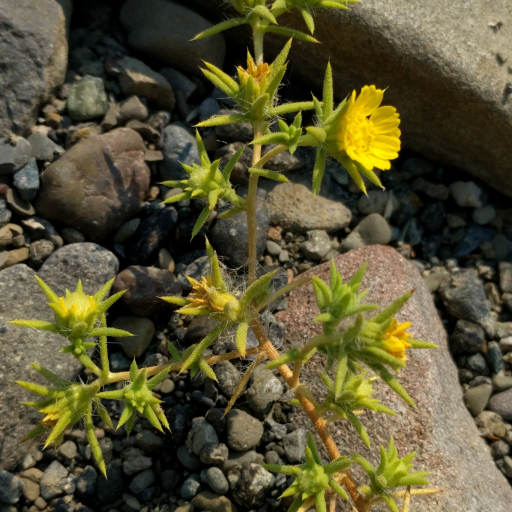
Plant Overview
Known as Parry's Tarweed, this resilient California native is a true survivor of the summer heat. While many wildflowers wither under the scorching sun, this "tarweed" thrives by coating its leaves in a sticky, aromatic resin that smells like a blend of pine and balsamic. Historically found in coastal grasslands and salty marshes, it is a master of adaptation in environments where other plants simply cannot compete.
🔍 How to Identify
- 🌼 Golden Blooms: It features small, daisy-like flower heads with bright yellow ray petals that surround a central cluster of yellow disk florets.
- 🍯 Resinous Texture: The entire plant is covered in glandular hairs that exude a thick, sticky "tar." If you touch it, your fingers will feel tacky and carry a strong, pungent scent.
- 🌵 Spiny Foliage: The leaves are narrow and stiff, often ending in a sharp, prickly point that helps deter herbivores from taking a bite.
🏡 In Your Garden
- 🧂 Alkaline Specialist: Unlike most garden plants that demand rich, loamy soil, Parry’s Tarweed excels in "difficult" spots. It is highly tolerant of saline and alkaline soils, making it an excellent choice for restoration projects or coastal gardens.
- 🐝 Late-Season Life: Because it blooms from mid-summer into the fall—long after spring wildflowers have faded—it acts as a critical "nectar bridge," providing a vital food source for native bees and butterflies when little else is available.
⚠️ Safety & Toxicity
- 🛡️ General Status: This plant is considered non-toxic to humans, dogs, and cats. It does not contain the volatile oils found in plants like poison ivy.
- 🧤 Sticky Situation: While safe, the resin is incredibly stubborn and difficult to wash off skin or clothing. It can also mat into the fur of long-haired pets, so it’s best to keep curious dogs away from dense patches or wear gloves when weeding.
✨ Fun Fact
The "tar" on this plant actually serves as a natural sunscreen! The sticky resin reflects UV rays and creates a physical barrier that prevents the plant's internal moisture from evaporating in the intense California heat.

Detailed Care Instructions
To grow Centromadia Parryi (commonly known as Parry's centromadia), you can follow these steps:
- Obtain seeds or seedlings: Centromadia Parryi seeds can be purchased from seed suppliers or collected from mature plants. Alternatively, you can purchase seedlings or young plants from a local nursery.
- Choose the right location: Centromadia Parryi prefers full sun and well-draining soil. Select a location in your garden that receives at least 6-8 hours of direct sunlight each day.
- Prepare the soil: Centromadia Parryi thrives in sandy or loamy soil. Ensure that the soil is well-draining and slightly acidic. You can amend the soil with organic matter such as compost to improve its fertility and moisture-holding capacity.
- Plant the seeds or seedlings: If using seeds, sow them directly into the prepared soil in the early spring or fall. Lightly cover the seeds with a thin layer of soil and press them gently. Keep the soil evenly moist until the seeds germinate. If using seedlings, dig a hole slightly larger than the root ball of the plant and place it in the hole. Backfill with soil and gently firm the soil around the plant.
- Watering: Water the newly planted seeds or seedlings regularly to keep the soil consistently moist but not waterlogged. Once established, Centromadia Parryi is drought-tolerant and only requires occasional watering during prolonged dry spells.
- Mulch: Mulch around the plants with a layer of organic mulch, such as wood chips or straw. Mulching helps conserve moisture, suppress weed growth, and regulate soil temperature.
- Pruning: Centromadia Parryi generally does not require extensive pruning. However, regular deadheading of faded flowers can encourage continuous blooming and prolong the plant's lifespan.
- Fertilization: Centromadia Parryi is not a heavy feeder and does not require frequent fertilization. If your soil is particularly poor, you can apply a balanced, slow-release fertilizer during the growing season.
- Pest and disease control: Centromadia Parryi is generally resistant to common pests and diseases. However, you should still monitor for any signs of pest infestations, such as aphids or slugs, and take appropriate measures if necessary.
- Enjoy the blooms: Centromadia Parryi typically blooms from late spring to early summer, producing bright yellow flowers. Enjoy the vibrant display of flowers and provide support or stakes if needed to keep the plants upright.
By following these guidelines, you can successfully grow Centromadia Parryi in your garden and enjoy their beautiful blooms.

Place in a bright room that is sun drenched almost all day. Or directly in a south-facing window.

To effectively water the Centromadia Parryi plant, it is necessary to understand its specific requirements. Below are detailed instructions:
1. Observe the Soil Moisture: Before watering, assess the moisture levels in the soil. Gently stick your finger into the soil, about 2-3 inches deep. If the soil feels dry at this depth, it is an indication that the plant requires watering. However, if the soil feels slightly damp, it is recommended to wait a few more days before irrigating.
2. Watering Frequency: Centromadia Parryi plants prefer a well-draining soil, which means they should not be kept constantly wet. Generally, these plants benefit from infrequent, yet deep watering sessions rather than frequent shallow watering. Provide water to the plant only when the soil has completely dried out.
3. Water Volume: When watering, ensure that you thoroughly saturate the soil around the plant. The goal is to moisten the top few inches of the soil, allowing the plant's roots to access the water effectively. Avoid overwatering, as it can lead to root rot or other moisture-related problems.
4. Watering Technique: Watering directly at the base of the plant, near the soil, is the most effective way to deliver moisture. Use a watering can or a gentle hose attachment to avoid applying excessive force that could damage the plant or displace soil.
5. Time of Day: It is generally recommended to water Centromadia Parryi plants in the early morning or late afternoon. Watering during these times ensures that the plant can absorb the moisture before evaporation becomes excessive. Avoid watering in the evening or at night, as extended periods of moisture can lead to fungal growth or disease.
6. Adjustments during Seasons: As the seasons change, the watering needs of the Centromadia Parryi plant may also vary. During the plant's active growth period, which is typically in spring and early summer, it may require more frequent watering to support its increased metabolic activity. Conversely, during dormant periods, such as winter or extreme heat, reduce watering to prevent excessive moisture.
By following these guidelines, you can ensure proper watering for the Centromadia Parryi plant, promoting its health and growth while preventing water-related issues.
To fertilize Centromadia Parryi, follow these instructions:
- Use a balanced, slow-release granular fertilizer or an organic fertilizer specifically formulated for native wildflowers and perennials.
- Apply the fertilizer in early spring, just as new growth begins to emerge.
- Measure the amount of fertilizer recommended on the product label for the square footage of your planting area.
- Sprinkle the fertilizer evenly over the soil surface, ensuring coverage over the entire planting area.
- Gently work the fertilizer into the top inch of soil using a garden rake or cultivator, being careful not to disturb the roots of the Centromadia Parryi plant.
- Water the area thoroughly after fertilizing to help dissolve the nutrients and promote their absorption into the soil.
- Avoid over-fertilizing, as this can lead to excessive growth or nutrient imbalances, negatively impacting the health of the plant.
- Repeat the fertilization process every spring to provide essential nutrients for the ongoing growth and development of Centromadia Parryi.
Centromadia parryi, a plant native to California, requires a specific type of soil to thrive. It prefers well-draining soil that is rich in organic matter. The ideal pH range for the soil is slightly acidic to neutral, around 6.0 to 7.0.
To create a suitable soil mixture for Centromadia parryi, it is recommended to combine equal parts of sandy loam soil, peat moss, and organic compost. Sandy loam provides the necessary drainage, while peat moss helps retain moisture and improves the soil structure. Organic compost enriches the soil with nutrients necessary for healthy plant growth.
Additionally, it is beneficial to incorporate some perlite or pumice in the soil mix to enhance drainage further. This helps prevent waterlogging, which can lead to root rot and other growth issues.
Before planting Centromadia parryi, it is essential to prepare the soil thoroughly by removing any weeds, rocks, or debris. It is also recommended to loosen the soil using a garden fork or tiller to ensure proper aeration.
Proper soil preparation is crucial for Centromadia parryi to establish a robust root system and thrive in its growing environment.
Centromadia Parryi is a perennial plant species that can be propagated through different methods. Here are the details on how to propagate this plant:
- Seed Propagation: The most common and successful method of propagating Centromadia Parryi is through seeds. Follow these steps:
a. Collect seeds: Harvest mature seeds from the plant when the seed heads turn brown and dry. Use your fingers or scissors to cut the seed heads carefully.
b. Seed cleaning: Separate the seeds from the dried seed heads. You can do this by gently crushing the heads or rubbing them between your hands. Winnow the seeds by blowing gently to remove any remaining debris.
c. Seed storage: Place the cleaned seeds in a labeled envelope or a jar with a tight-fitting lid. Store them in a cool, dry place until you are ready to sow them.
d. Seed stratification: Centromadia Parryi seeds require a period of cold stratification to break their dormancy. To achieve this, place the seeds in a damp paper towel or a plastic bag filled with damp vermiculite. Store them in the refrigerator for about four to eight weeks.
e. Sowing seeds: After the stratification period, sow the seeds in well-draining seed trays or small pots. Ensure the seeds are covered with a thin layer of fine soil or vermiculite. Moisten the soil lightly.
f. Germination: Place the trays or pots in a bright location, but avoid direct sunlight. Maintain a consistent moisture level by misting the soil occasionally. Germination usually occurs within two to four weeks.
g. Transplanting: When the seedlings have developed a few sets of true leaves, carefully transplant them into individual pots filled with a well-draining potting mix. Allow them to grow in these pots until they reach a suitable size for transplanting outdoors.
h. Outdoor transplantation: After the Centromadia Parryi seedlings have grown and the weather is suitable, transplant them into a well-prepared garden bed. Ensure the soil is fertile, well-draining, and located in a sunny spot.
- Division: Another propagation method for Centromadia Parryi is division, which involves separating mature plants into smaller sections. This method is typically performed during the plant's dormant period (in late fall or early spring).
a. Digging up the plant: Gently dig up the entire Centromadia Parryi plant, taking care not to damage the roots. Shake off excess soil and carefully separate the plant into smaller clumps using your hands or a clean, sharp knife.
b. Replanting divisions: Choose a suitable location for each divided section in a well-draining soil bed. Dig a hole that is slightly larger than the root size of each division. Place the divided plant into the hole, ensuring the roots are positioned properly, and cover with soil. Water thoroughly.
c. Care: Provide regular watering to the newly divided sections and monitor their progress. They will establish themselves and grow into individual plants over time.
Propagation of Centromadia Parryi through either seed or division methods allows you to expand your plant collection and contribute to the conservation of this species.








