Plant Overview
Often called "Hardy Leadwort," this stunning groundcover is a late-season superstar that brings a rare jolt of electric blue to the garden. Originating from western China, it is beloved for its "best of both worlds" personality—offering cooling summer blooms followed by a fiery autumn foliage show. It’s the perfect plant for those who want a low-maintenance landscape that changes its "outfit" with the seasons.
🔍 How to Identify
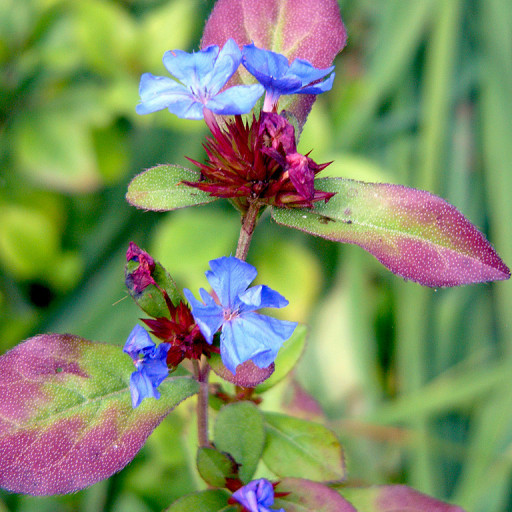
- 💙 The Blooms: Small, five-petaled flowers in an intense, vivid cobalt blue. They resemble phlox blossoms and appear in clusters from mid-summer until the first frost.
- 🍃 The Foliage: Glossy, oval-shaped green leaves with slightly wavy margins. The leaves have a unique texture, feeling slightly bristly or hairy to the touch.
- 🎨 Autumn Color: As the nights cool down, the green leaves transform into a dramatic, glowing mahogany or reddish-bronze, often while the blue flowers are still blooming.
🏡 In Your Garden
- 🌱 The Sleepyhead: Don't panic in April! This plant is one of the last perennials to emerge in the spring. It stays dormant much longer than its neighbors, so be careful not to accidentally dig it up while spring cleaning.
- ☀️ Light & Soil: It is incredibly versatile, thriving in full sun to partial shade. However, the more sun it gets, the more intense its autumn "fire" will be. It prefers well-drained soil and, once established, is surprisingly drought-tolerant.
- 🧹 Natural Mulch: Because it spreads via underground rhizomes, it creates a dense mat that naturally chokes out weeds. It’s an excellent choice for filling gaps under taller, leggy shrubs or lining a walkway.
⚠️ Safety & Toxicity
- ✅ Safe for Pets: Ceratostigma plumbaginoides is generally considered non-toxic to dogs, cats, and horses, making it a "worry-free" choice for family backyards.
- 👐 Mild Irritation: While not poisonous, the stiff hairs on the stems and leaves can occasionally cause very mild skin irritation for people with high sensitivity. Wearing gloves during major pruning is a good idea.
✨ Fun Fact
- 🦋 Butterfly Fuel: Because this plant peaks in late summer and autumn, it serves as a vital "rest stop" for migrating butterflies like the Monarch, providing high-quality nectar when many other flowers have already gone to seed.

Detailed Care Instructions
| Color | Blue |
| Soil Ph | 5-9 |
| Humidity | Normal |
| Lighting | Full Sun |
| Soil Type | Slightly Acidic Soil |
| Bloom Time | Summer And Fall |
| Difficulty | Easy |
| Plant Type | Perennial |
| Hibernation | Cold Period |
| Mature Size | 6-12 Inches Tall, 12-18 Inches Wide |
| Native Area | China |
| Temperature | 5°C - 15°C |
| Sun Exposure | Part Sun |
| Hardiness Zones | This Shrub Can Be Planted In Zones 9 To 11 And Sheltered Locations In Zone 8. It Originally Comes From South Africa. |
To grow Ceratostigma plumbaginoides, also known as Leadwort, follow these steps:
- Choose an appropriate location: Select a spot that receives partial shade to full sun. The plant can tolerate a wide range of soil types but prefers well-draining soil.
- Prepare the soil: Loosen the soil with a garden fork or tiller and remove any weeds or debris. This will ensure the roots can penetrate easily and receive sufficient nutrients.
- Planting: Dig a hole slightly larger than the root ball of the plant. Place the plant in the hole and backfill with soil, firming it gently to remove any air pockets. Ensure that the top of the root ball is level with the ground.
- Watering: Water the newly planted Leadwort thoroughly to help settle the soil and provide initial hydration. After that, water regularly to keep the soil evenly moist but not waterlogged. The plant may require more frequent watering during hot, dry spells.
- Mulching: Apply a layer of organic mulch around the plant, such as wood chips or shredded bark. This will help retain moisture, regulate soil temperature, and suppress weed growth.
- Fertilization: Generally, Ceratostigma plumbaginoides does not require heavy fertilization. However, you can apply a slow-release, balanced fertilizer in spring to promote healthy growth.
- Pruning: The plant may benefit from occasional pruning to control its shape and size. Trim any dead or damaged branches and cut back any overgrown areas to maintain a tidy appearance.
- Winter care: In colder regions, provide a layer of mulch to protect the roots from freezing temperatures. Mulching also helps insulate the plant and reduce moisture loss through evaporation.
- Care considerations: Ceratostigma plumbaginoides is generally disease-resistant and does not face significant pest problems. However, keep an eye out for any common garden pests like aphids or snails and take appropriate measures to control them if necessary.
Following these steps should help you grow a healthy Ceratostigma plumbaginoides plant. Remember to regularly monitor the plant's moisture levels, provide sufficient sunlight, and maintain proper care to ensure its optimal growth.

Place in a window with dappled sun or a spot in the middle of a room. Or directly in a window facing west or east.

The best way to water this particular plant is to use a watering can or hose with a gentle spray nozzle and water the soil directly around the base of the plant. Make sure to avoid getting water on the leaves or flowers as this can cause damage or disease. The plant should be watered regularly but not excessively, allowing the top layer of soil to dry out slightly between watering. It is important to monitor the moisture level in the soil during periods of hot and dry weather, as the plant may require more frequent watering. Overall, a consistent and moderate watering schedule will help to maintain the health and appearance of the plant.
To fertilize this plant, first ensure that the soil is moist. Choose a balanced fertilizer with equal amounts of nitrogen, phosphorus, and potassium. Apply the fertilizer according to the instructions provided on the label, being careful not to over-fertilize. Fertilize once in the spring and again in the summer, with a six-week interval between applications. Avoid fertilizing in the fall and winter, as the plant will be entering dormancy.
The Ceratostigma Plumbaginoides plant prefers well-draining soil that is moist and rich in organic matter. It is best to use a soil that has a balanced pH between 6.0-7.5. The ideal soil texture for this plant is a mixture of sand, loam, and clay. Avoid using heavy soils that retain too much moisture, as this can lead to root rot. A good way to improve the soil drainage is to add perlite or coarse sand to the soil mixture. Additionally, it is recommended to add compost or other forms of organic matter to the soil to improve its fertility and structure. The plant also benefits from a layer of mulch around the base of the plant that helps retain moisture and suppress weeds.
To propagate this plant, you will need to take stem cuttings from a healthy mature plant. Use clean, sharp pruning shears to snip off a non-flowering stem that is at least 6 inches long. Make the cut just below a leaf node.
Remove the bottom leaves from the stem cutting, leaving just a few at the top. Dip the cut end of the stem into rooting hormone powder, and then plant it into a seed starting mix. Water the soil well, and then cover the pot with a clear plastic bag to create a mini greenhouse.
Place the pot in a warm, bright location, but out of direct sunlight. Keep the soil moist, but not waterlogged. After a few weeks, you should start to see new growth on the stem. Once the new growth has reached a few inches tall, you can transplant the new plant into a larger pot or into the garden.








