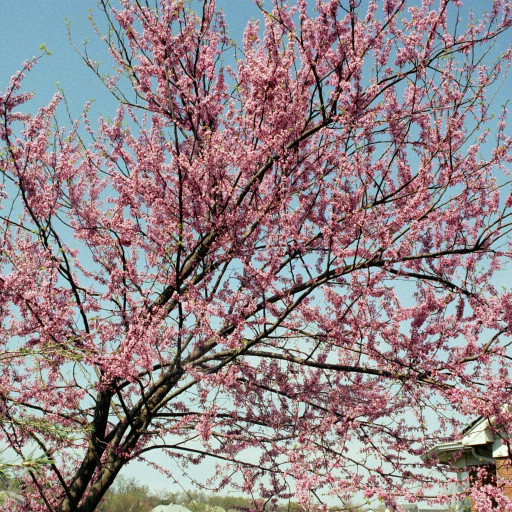
Plant Overview
Known as the "Harbinger of Spring," the Eastern Redbud is famous for its stunning magenta blossoms that appear on bare branches before the leaves even wake up. Native to North America, this tree is a favorite for home gardeners looking to add a romantic, architectural touch to their landscape. Its distinct heart-shaped foliage and graceful branching make it a year-round visual treat.
🔍 How to Identify
- 🌸 The Blossoms: Tiny, pea-like flowers in shades of rosy-pink or magenta. Uniquely, these flowers often cluster directly on the bark of the trunk and older branches.
- 💚 The Leaves: Large, perfectly heart-shaped (cordate) leaves with a smooth texture. They emerge with a reddish tint, maturing into a deep, forest green.
- 🌿 The Twigs: Smaller branches often follow a distinct zig-zag pattern, making the tree easy to identify even in the dead of winter.
🏡 In Your Garden
- 🌳 The Taproot Rule: Redbuds develop a deep taproot very quickly. This makes them drought-tolerant once established, but it also means they "resent" being moved. Pick a permanent spot and try not to transplant them once they are settled.
- 🌤️ Understory Nature: In the wild, these trees grow under the canopy of larger oaks and maples. In your garden, they appreciate well-drained soil and a bit of afternoon shade if you live in a particularly scorching climate.
⚠️ Safety & Toxicity
- ✅ Pet Friendly: The Eastern Redbud is considered non-toxic to dogs, cats, and horses, making it a "green light" plant for pet owners.
- 🍴 Edible Blooms: For humans, the flowers are actually edible! They have a slightly nutty, tart flavor and are often tossed into salads or used as a colorful garnish for desserts.
✨ Fun Fact
The Redbud is one of the rare temperate trees that exhibits "cauliflory." This is a botanical term for plants that flower directly from their main trunks and woody stems, a trait much more common in tropical rainforest trees like Cacao (the chocolate tree)!

Detailed Care Instructions
| Color | Pink |
| Soil Ph | Neutral To Slightly Alkaline (6.6 To 7.8) |
| Lighting | Full Sun |
| Soil Type | Well-Drained |
| Bloom Time | Spring |
| Plant Type | Deciduous Tree |
| Mature Size | 20 To 30 Feet Tall, 30 To 35 Feet Wide |
| Native Area | North America |
| Sun Exposure | Full Sun, Part Shade |
| Hardiness Zones | 4-8 |
To grow Cercis Canadensis, also known as Eastern Redbud or Judas Tree, you can follow the steps below:
- Choose the right location: Find a suitable spot in your garden that receives full to partial sunlight and has well-draining soil. Eastern Redbuds prefer slightly acidic soil, but they are adaptable to a range of soil types.
- Planting: Dig a hole twice as wide and as deep as the root ball of the plant. Gently remove the plant from its container and place it in the hole, ensuring that the top of the root ball is level with or slightly above the ground. Backfill the hole with soil, pressing gently to eliminate air pockets. Water thoroughly after planting.
- Watering: Keep the soil consistently moist but not waterlogged, especially during the first year of growth. Water deeply once or twice a week, especially during dry spells or hot weather. Mulching around the base of the plant will help retain moisture and regulate soil temperature.
- Pruning: Prune in late winter or early spring to remove any dead or damaged branches. Cercis Canadensis naturally forms a rounded shape, but you can shape it to your liking by selectively pruning branches.
- Fertilizing: Fertilize in early spring before the new growth emerges using a balanced slow-release fertilizer. Follow the instructions on the fertilizer packaging for the appropriate dosage.
- Protection: Protect young plants from extreme temperatures, especially frost in winter. Mulching around the base of the plant can also help insulate the roots.
- Pests and diseases: Cercis Canadensis is generally not prone to significant pest or disease issues. However, keep an eye out for common pests such as aphids or scale insects. If necessary, treat them with insecticidal soap or horticultural oil.
- Propagation: Eastern Redbuds can be propagated through seeds, softwood cuttings, or grafting. Collect seeds from mature pods in late summer and sow them in a well-draining potting mix. Softwood cuttings can be taken in mid-summer, placing them in a rooting hormone before planting. Grafting can be done using younger Cercis Canadensis rootstocks.
By following these steps, you should be able to successfully grow and care for Cercis Canadensis plants in your garden.

Place in a bright room that is sun drenched almost all day. Or directly in a south-facing window.

To properly water this plant, it is important to consider its specific needs. It requires well-draining soil and should be watered deeply, but infrequently to avoid overwatering. When watering, aim to saturate the soil down to the root zone, but avoid getting the leaves wet. It is recommended to water in the early morning or late evening to avoid excessive evaporation. During periods of drought, it may be necessary to supplement with additional watering. A good rule of thumb is to check the soil moisture level by sticking a finger into the soil to see if it feels dry an inch or two below the surface. If so, it may be time to water.
The fertilizer should have a balanced NPK ratio with a focus on phosphorus. Apply the fertilizer in early spring before new growth starts and again in mid-summer. Avoid over-fertilization as it may cause damage to the roots. Water the plant deeply after fertilization.
The ideal soil for Cercis Canadensis plants is a well-draining, moist soil that is rich in organic matter. It should have a pH level of 5.5 to 7.0, which is slightly acidic to neutral. The soil should be loamy or sandy, with good water retention properties. Avoid planting in heavy clay soils or in areas prone to water-logging. Prior to planting, it is recommended to add organic matter such as compost or well-rotted manure to improve soil structure and fertility.
To propagate this plant, collect a few stem cuttings from the plant in early spring or fall. Ensure that the cutting is about 8 inches in length and has at least two sets of leaves. Remove the lower leaves of the cutting, leaving only a couple of sets on top. Dip the cut end of the stem in rooting hormone and plant it in a well-draining potting mix. Water it until the soil is moist and keep the pot in partial shade. After a few weeks, new growth should begin to emerge, indicating that the cutting has rooted. Gradually increase the amount of sunlight the new plant receives until it is strong enough to be planted outdoors.
Common pests of the eastern redbud include Scale insect, larvae. Make a habit of checking your eastern redbud frequently for pests so that any infestations can be caught and managed early.








