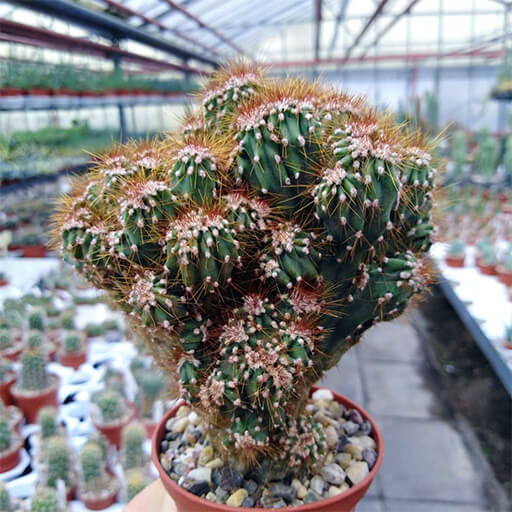
Plant Overview
Known as the Monstrose Apple Cactus or the "Curiosity Cactus," this plant is a fascinating genetic mutation of the standard upright Cereus. Instead of growing in neat, symmetrical columns, it twists, turns, and clumps into a sculptural masterpiece that looks more like a living coral reef than a desert dweller. It is a favorite among interior designers and collectors for its architectural "weirdness" and rugged personality.
🔍 How to Identify
- 🌵 Growth Habit: Unlike its straight-laced cousins, this cactus grows in irregular, knobby mounds and ridges. Because of its mutation, no two specimens look exactly alike.
- 🎨 Coloration: The skin features a waxy, glaucous finish that ranges from a deep forest green to a misty, chalky blue-grey.
- 📍 Spines: It possesses small, brownish-grey spines clustered along the "crests" or bumps of its irregular ribs. While they aren't long, they are quite sharp and tucked into the plant's folds.
🏡 In Your Garden
- ☀️ Sun & Scarring: While it craves bright light, the "Monstrosus" form can be more sensitive to intense, direct midday sun than the standard variety. If moved from a dim corner to a bright patio, acclimate it slowly to prevent permanent "sunburn" scars.
- 💧 The "Drought or Drown" Rule: This cactus stores massive amounts of water in its thickened, mutated stems. It is far more likely to die from a single episode of overwatering than a month of neglect. Ensure the soil is completely dry throughout the pot before watering.
- 🪴 Container Life: It has a relatively shallow root system for its size. It thrives in heavy terracotta pots which provide both the necessary drainage and the weight needed to keep the top-heavy "knobs" from tipping the plant over.
⚠️ Safety & Toxicity
- 🌵 Physical Hazard: While the plant is not chemically toxic to humans or pets, its spines are stiff and can cause painful punctures.
- 🐾 Placement: Position this cactus away from narrow hallways or low shelves where children or pets might accidentally brush against its jagged ridges.
✨ Fun Fact
🌸 The Midnight Bloomer: If your Curiosity Cactus reaches a substantial size, it may produce massive, white, fragrant flowers. These blooms are "vespertine," meaning they open only at night and wither by the next morning, as they are evolutionarily designed to be pollinated by bats!

Detailed Care Instructions
| Humidity | Dry |
| Lighting | Full Sun |
| Difficulty | Easy |
| Temperature | 16°C - 35°C |
| Hardiness Zones | 9 - 11 |
Growing Cereus peruvianus monstrosus, also known as the monstrose apple cactus or Peruvian apple cactus, can be a fun and rewarding experience. Here are some steps to help you successfully grow this plant:
- Choose the right location: Cereus peruvianus monstrosus thrives in full sun to partial shade. Make sure the chosen location receives at least six hours of direct sunlight per day. The plant can also withstand high temperatures.
- Prepare the soil: The plant prefers well-draining soil. Use a cactus or succulent potting mix, or create your own mix by combining regular potting soil, sand, and perlite in equal parts. Ensure the soil has good drainage properties.
- Planting: If growing from seeds, start by soaking the seeds in warm water for 24 hours prior to planting. Sow them in the prepared soil, ensuring they are fully covered but not buried too deep. Keep the soil lightly moist until the seeds germinate.
- Watering: Cereus peruvianus monstrosus is a drought-tolerant plant. Water the plant sparingly, allowing the soil to dry out between waterings. Overwatering can cause root rot, so it is better to underwater than overwater.
- Fertilizing: The plant doesn't require much fertilizer. During the growing season (spring and summer), you can apply a balanced cactus fertilizer diluted to half strength every 2-4 weeks. Reduce or stop fertilizer application during the winter months.
- Pruning: Cereus peruvianus monstrosus can develop irregular and contorted growth patterns. Pruning can help maintain a healthier and more aesthetically pleasing plant shape. Use clean pruning shears to remove any dead, damaged, or overcrowded sections.
- Potting: If growing in a container, choose a pot with drainage holes to prevent waterlogging. Pot the plant in well-draining soil, leaving enough room for its roots to grow. Repotting may be necessary every 1-2 years as the plant grows.
- Pests and diseases: While Cereus peruvianus monstrosus is generally resilient to pests and diseases, occasionally, it may suffer from common succulent pests like mealybugs or scale insects. Inspect the plant regularly and take appropriate measures if an infestation occurs.
Remember to research specific care instructions for your region, as the needs and growing conditions can vary. Enjoy watching your Cereus peruvianus monstrosus grow and flourish!

Place in a window with dappled sun or a spot in the middle of a room. Or directly in a window facing west or east.
To properly water this plant, it is important to consider the soil type and environment in which it is growing. The soil should be well-drained and not waterlogged, as excess moisture can lead to root rot. It is best to water the plant deeply and infrequently, allowing the soil to dry out partially between waterings. The plant should be watered at the base of the stem rather than overhead, as excessive moisture on the foliage can promote fungal growth. A good rule of thumb is to water when the top inch of soil feels dry to the touch. In the winter months, the plant may require less frequent watering due to reduced growth and potential dormant period. Additionally, it is important to consider the humidity level in the plant's environment, as low humidity can cause the plant to dry out more quickly and require more frequent watering.
To fertilize this plant, use a well-balanced fertilizer and apply it during the growing season. Make sure to dilute the fertilizer according to the instructions on the package. Apply the fertilizer to the soil around the base of the plant, being careful not to get any on the leaves or stems. Water the plant thoroughly after fertilizing.
The ideal soil for this plant is a well-draining mixture that allows for adequate water retention without excessive water accumulation around the roots. It should have a pH level of approximately 6.0 to 7.5 and be rich in essential nutrients such as nitrogen, potassium, and phosphorus. A mixture of organic materials such as peat moss, perlite, and vermiculite, combined with sand and gravel can provide an ideal growing medium for this plant. It is important to avoid compacting the soil around the roots as this can cause damage and impede plant growth. Additionally, regular fertilization and watering, as well as proper light and temperature conditions, are important factors in creating a healthy growing environment for this plant.
To propagate this plant, the first step is to take a cutting from the parent plant. Use a sharp and clean knife to cut a section of stem that is at least 4 inches in length. Make sure the cutting has at least two nodes, which are the points on the stem where leaves or branches emerge.
Once the cutting is taken, it is important to let it dry out for a few days in a cool, dry place. This will help the cut end to form a callus, which will protect it from rotting when it is planted.
After the cutting has formed a callus, it is ready to be planted. Fill a pot with well-draining soil that is rich in organic matter. Make a small hole in the soil and insert the cutting so that the bottom node is just below the soil surface. Press the soil gently around the stem to hold it in place.
Water the cutting lightly, being careful not to let the soil become too wet or saturated. It is important to keep the soil moist but not waterlogged, as excess moisture can cause the cutting to rot.
Place the pot in a bright and warm location, but out of direct sunlight. It is important to provide the cutting with indirect light to help it establish roots. Within a few weeks, roots should start to form and the cutting will begin to grow new leaves.
It is important to continue to provide the young plant with the right conditions to promote growth. Water it regularly, but being careful not to overwater it. Fertilize the plant with a balanced fertilizer every 2-3 months to provide it with the nutrients it needs to thrive. With proper care and attention, the young plant will grow into a healthy mature plant that can be enjoyed for years to come.







