Plant Overview
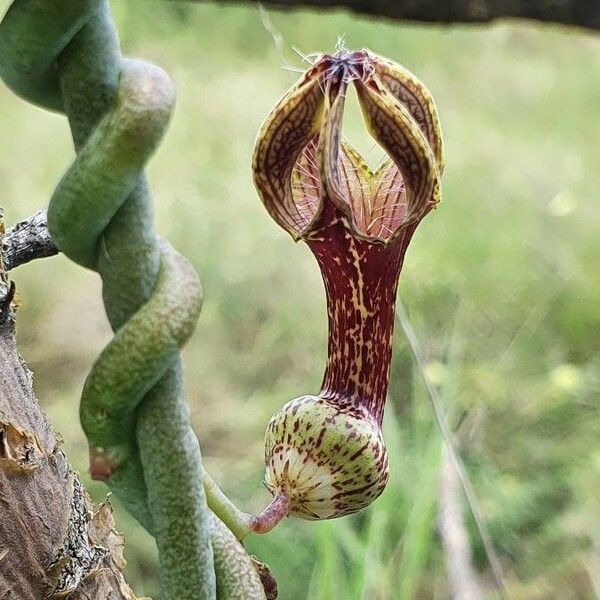
Often called the "African Lantern" or the "Fly-trap Ceropegia," Ceropegia aristolochioides is a striking succulent vine native to the tropical regions of Africa. It belongs to the milkweed family, known for producing some of the most bizarre and "alien-looking" flowers in the botanical world. While it shares a lineage with the popular String of Hearts, this species is a robust climber that looks like a piece of living, organic architecture.
🔍 How to Identify
- 🌸 The "Birdcage" Bloom: The flowers are upright, yellowish-green tubes mottled with dark purple or brown spots. The petals are fused at the tips, forming a delicate cage or "lantern" structure that protects the reproductive organs.
- 🍃 Fleshy Foliage: It features pointed, heart-shaped leaves that are slightly succulent to the touch. The leaves are typically a deep forest green and grow in pairs along the stem.
- 🧶 Twining Stems: Unlike some succulents that crawl, this plant is a natural climber. Its thin, wiry stems will actively seek out support, winding themselves tightly around trellises or neighboring plants.
🏡 In Your Garden
- 🧗 Vertical Ambition: This plant thrives when given a small bamboo hoop or trellis to scale. If left to trail from a hanging basket, the stems can become easily tangled, so giving it a "ladder" helps showcase its unique floral geometry.
- 💧 The "Drought-First" Rule: Because it stores water in its fleshy stems and roots, it is highly susceptible to root rot. It is far safer to forget to water it for a week than to water it too frequently. It prefers a gritty, fast-draining cactus mix.
⚠️ Safety & Toxicity
- 🛡️ Generally Safe: Ceropegia aristolochioides is widely considered non-toxic to both humans and common household pets like cats and dogs.
- 🐈 Playful Temptation: While not poisonous, the long, dangling vines are incredibly tempting for cats. To protect the plant from being pulled down or shredded, it’s best kept on a high shelf or in a secure hanging pot.
✨ Fun Fact
The flowers are actually "temporary prisons." They use a specific scent to lure small flies inside, where downward-pointing hairs prevent the insects from escaping. The fly is held captive overnight, dusted with pollen, and then released the next day when the hairs wither—ensuring the fly travels to the next plant to complete the pollination cycle!

Detailed Care Instructions
| Humidity | Normal |
| Difficulty | Medium |
| Temperature | 20°C - 30°C |
| Hardiness Zones | 9 - 11 |
To water this plant, you should first check the soil moisture level by sticking your finger about 1-2 inches into the soil. If the soil feels dry, it is time to water. Use room temperature water and water slowly, being careful not to pour too much at once as this can cause the soil to become waterlogged. Allow the water to drain out of the drainage holes at the bottom of the pot, and then empty the saucer beneath the pot to prevent water from accumulating. Water this plant thoroughly and consistently, but do not over-water as it can lead to root rot.
The optimal soil for a certain plant species in the genus Ceropegia and the specific species Aristolochioides depends on the natural habitat of the plant, as well as its growth habits and root system. However, in general, Ceropegia plants prefer well-draining soils that are loose and porous, with high levels of organic matter and nutrients. A recommended mix for soil often contains a combination of peat moss, perlite, and sand or small rocks to ensure adequate drainage. Additionally, some growers may choose to add compost or other organic soil amendments to increase the fertility of the soil. It is important to note that different plants may require different levels of moisture in the soil, so it is important to research the specific needs of the Ceropegia Aristolochioides plant in order to provide optimal growing conditions.








