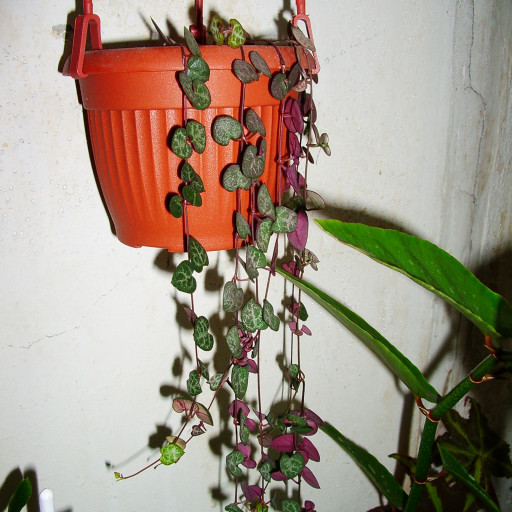
Plant Overview
Known affectionately as the "String of Hearts" or "Rosary Vine," this South African native is the ultimate romantic of the succulent world. Its delicate, wiry vines create a cascading waterfall of silver-patterned foliage that can reach over six feet in length, making it a favorite for high shelves and hanging baskets. Despite its fragile appearance, it is a hardy survivor, storing water in its fleshy leaves and bead-like tubers to endure periods of neglect.
🔍 How to Identify
- 🌿 Heart-Shaped Leaves: Small, succulent leaves that grow in opposite pairs along the vine, featuring a dark green surface marbled with stunning silver-gray veins.
- 💜 Trailing Stems: Thin, thread-like vines that often take on a purplish or dusty pink hue, especially when exposed to bright light.
- 🏮 Lantern Flowers: Unique, tubular blooms that are pale magenta to purple; they look like tiny "parachutes" or lanterns and appear most often in late summer.
🏡 In Your Garden
- ☀️ The Light Connection: To keep the "hearts" growing close together and maintain that vivid silver marbling, this plant needs bright, indirect light. In low light, the stems will stretch (become "leggy"), and the leaves will lose their distinctive patterns.
- 💧 Drought Specialist: Because it grows from woody tubers (corms) that act as underground water tanks, it prefers the "soak and dry" method. It is far more likely to die from over-watering than under-watering; always ensure the soil is bone-dry before giving it a drink.
- 🪴 Aerial Tubers: As the plant matures, you’ll notice small, potato-like bumps growing along the vines. These are aerial tubers; you can simply press them into a new pot of soil while still attached to the mother plant to easily grow a new "curtain" of hearts.
⚠️ Safety & Toxicity
- 🐾 Safe for Everyone: The String of Hearts is non-toxic to cats, dogs, and humans. It is an excellent choice for pet owners who want beautiful trailing greenery without the risk associated with Pothos or Ivy.
- 🧶 Physical Hazard: While not poisonous, the long, thin vines can be a tangling hazard for very small children or playful kittens if the plant is placed within reach.
✨ Fun Fact
The genus name Ceropegia literally translates to "wax fountain," a nod to the waxy, fountain-like appearance of its bizarre flowers. These flowers are actually "pitfall traps" that temporarily imprison small flies with downward-pointing hairs to ensure they are covered in pollen before being released!

Detailed Care Instructions
| Color | Green Leaves With Variegated Markings And Pinkish Undersides |
| Soil Ph | Slightly Acidic To Neutral |
| Lighting | Part Sun |
| Soil Type | Well-Drained Compost With Sand Or Grit Added |
| Bloom Time | Small Flowers May Appear In Summer |
| Plant Type | Perennial |
| Mature Size | Trailing Stems Can Grow To Well Over 39 Inches |
| Native Area | Southern Africa, Particularly Zimbabwe And South Africa |
| Sun Exposure | Bright Indirect Sunlight |
| Hardiness Zones | 11 And Above If Grown Outside |
To grow Ceropegia Woodii, also known as the String of Hearts or Rosary Vine, follow these steps:
- Propagation: The easiest way to get started with Ceropegia Woodii is through propagation. Take cuttings from an established plant, making sure each cutting has at least two sets of leaves. Allow the cuttings to dry out for a few days to form calluses before planting them.
- Soil: Use well-draining soil for Ceropegia Woodii. A mixture of cactus potting mix and perlite or sand works well. Ensure the pot has drainage holes to prevent waterlogging, as excessive moisture can cause root rot.
- Potting: Plant the cuttings in a shallow pot with the prepared soil. It's best to choose a hanging basket or a pot with a trellis, as the vines will cascade down as they grow. Plant the cuttings deep enough to support them but avoid burying the leaves.
- Lighting: Ceropegia Woodii prefers bright but indirect sunlight. Place the plant near a window with filtered light or provide fluorescent grow lights if natural light is limited. Avoid direct sunlight, as it can scorch the leaves.
- Watering: Water the Ceropegia Woodii sparingly as it is a succulent plant and stores water in its tuberous roots. Allow the soil to dry out slightly between waterings. Overwatering can lead to root rot and plant decline. During the winter months, reduce watering even further as the plant goes into a dormant period.
- Temperature: Ceropegia Woodii prefers temperatures between 60-80°F (15-27°C). It can tolerate slightly cooler temperatures, but avoid exposure to frost or extreme heat.
- Humidity: The plant can tolerate normal indoor humidity levels. However, in very dry environments, you can increase humidity levels by misting the plant occasionally or placing a tray filled with water near it.
- Fertilization: Feed the plant with a mild, balanced fertilizer once a month during the growing season (spring and summer). Dilute the fertilizer to half the recommended strength to prevent overfertilization.
- Pruning: Pruning encourages bushier growth and helps maintain the shape of the plant. Remove any dead or yellowing leaves and trim back long, leggy vines to promote branching.
- Repotting: Ceropegia Woodii doesn't require frequent repotting as it prefers being slightly root-bound. However, if the plant outgrows its pot, repot it in a slightly larger container with fresh soil.
With proper care and attention, your Ceropegia Woodii plant will thrive and cascade beautifully with its distinctive heart-shaped leaves.

Place in a window with dappled sun or a spot in the middle of a room. Or directly in a window facing west or east.

Ceropegia Woodii is a relatively low-maintenance plant and requires moderate watering. To avoid overwatering, you should let the soil dry out before watering it again. A good rule to follow is to water the plant once the top inch of soil feels dry to the touch.
When watering your Ceropegia Woodii plant, make sure to do so slowly and evenly, allowing the water to fully saturate the soil. Avoid getting water on the leaves and stems, as this can lead to rotting or disease.
It is also important to provide adequate drainage for your plant. Make sure that the container has drainage holes and that excess water can drain out easily. If the water does not drain properly, it can cause the roots to become waterlogged, which can lead to root rot and other problems.
In general, Ceropegia Woodii plants do well with regular but moderate watering. It is always better to underwater than overwater, so if you are unsure, wait a few days before watering again. With proper care, your Ceropegia Woodii plant can thrive and make a beautiful addition to your home.
To fertilize this plant, use a balanced liquid fertilizer every two weeks during the growing season (spring and summer). Dilute the fertilizer to half strength before applying. During the dormant season (fall and winter), reduce fertilization to once a month. Be sure to avoid over-fertilizing, which can damage the roots and foliage.
When growing the plant Ceropegia Woodii, it is recommended to use a well-draining potting soil mix that is rich in organic matter. This soil should have a pH range of 6 to 7, which is slightly acidic to neutral. The ideal soil mix should consist of peat moss, perlite, and loam soil, to ensure good drainage. It's also important to avoid using heavy soils, such as clay, as they can cause the roots to rot and damage the plant. The soil should be kept slightly moist but not too wet to avoid overwatering. Regular fertilization with a balanced fertilizer during the growing season can help promote healthy and vibrant growth of the plant.
Propagation of this plant can be done in several ways. One method is by taking stem cuttings. Select a healthy stem that has several nodes and cut it just below a node. Remove any leaves from the bottom half of the stem, leaving at least two leaves at the top. Dip the cut end of the stem into rooting hormone and plant it in a well-draining soil mix. Keep the soil moist and place the cutting in a bright, but indirect, location. After a few weeks, roots should begin to form and new growth will appear.
Another method for propagating this plant is by division. Gently remove the plant from its pot and separate the stems and tubers into smaller sections. Each section should have at least one tuber and a few stems. Replant the sections in fresh soil in separate pots. Keep the soil moist and place the pots in a bright, but indirect, location. New growth should begin to appear in a few weeks.
Finally, this plant can also be propagated by leaf cuttings. Select a healthy leaf and cut it at the base of the stem. Place the leaf in a well-draining soil mix, burying about half of the leaf in the soil. Keep the soil moist and place the container in a bright, but indirect, location. After a few weeks, roots should begin to form and a new plant will begin to grow from the leaf.
Common pests of the string of hearts include Mealybugs, thrips. Make a habit of checking your string of hearts frequently for pests so that any infestations can be caught and managed early.








