Plant Overview
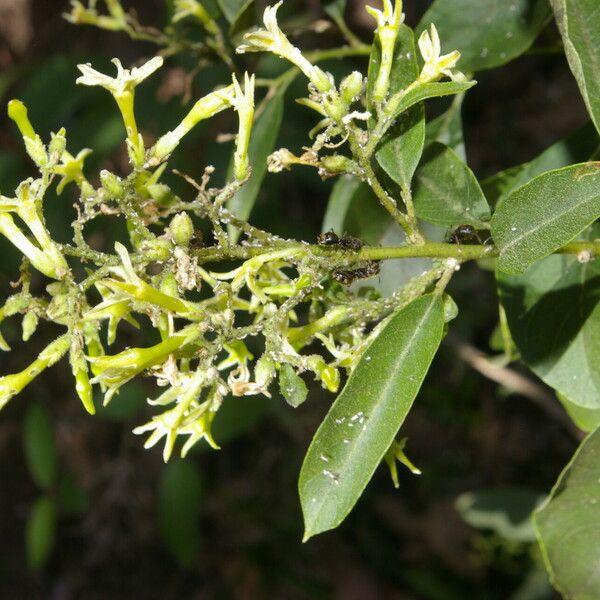
Often called the Bushy Jessamine or Hierba Hedionda, Cestrum dumetorum is a resilient and somewhat mysterious member of the Nightshade family. Native to the thickets of Mexico and Central America, it is a plant of dualities—offering delicate, star-tipped flowers that beckon to nocturnal pollinators while hiding a rugged, defensive nature. It is often found reclaiming disturbed lands, acting as a sturdy pioneer in the wild.
🔍 How to Identify
- 🍃 The Foliage: Look for elongated, lance-shaped leaves that are a dull, deep green. When young, the stems and undersides of the leaves may feel slightly velvety or "pubescent" to the touch.
- 🎺 The Blooms: It produces clusters of slender, tubular flowers that are greenish-white or pale yellow. The petals flare out at the tip into a tiny, five-pointed star.
- 🔮 The Berries: After flowering, the plant produces small, succulent berries. These start as light green globes and transition into a dark, glossy purple or black as they ripen.
🏡 In Your Garden
- ✂️ Growth Management: This plant is a fast grower and can become "leggy" or sparse if left to its own devices. To keep it looking like a lush garden shrub rather than a wild weed, it requires regular "pinching" or pruning to encourage a bushier shape.
- ☀️ Sun & Soil: It is incredibly unfussy about soil quality but demands good drainage. It thrives in full sun to partial shade; however, in very hot climates, a bit of afternoon shade prevents the leaves from wilting under the midday heat.
- 🦋 Wildlife Role: Because the flowers open and release their subtle scent primarily at twilight, it is a vital food source for specialized nocturnal moths and long-tongued butterflies.
⚠️ Safety & Toxicity
- 🚫 Toxic Status: High. Like many of its Nightshade cousins, every part of Cestrum dumetorum—from the roots to the berries—contains toxic alkaloids.
- 🐾 Risk to Animals: It is a known hazard for livestock, particularly cattle and horses. In a home setting, keep it well out of reach of dogs, cats, and small children, as ingesting the berries can lead to severe gastrointestinal distress or worse.
- 👃 Skin Irritation: Some gardeners report respiratory or skin sensitivity when pruning the plant, as the crushed leaves release a pungent, "skunky" odor.
✨ Fun Fact
The name "Hierba Hedionda" literally translates to "Stinking Weed." While its flowers may smell sweet to a moth, the plant has evolved a chemical defense mechanism: when the leaves are crushed or bruised, they release a sharp, unpleasant scent to warn hungry herbivores that a toxic meal awaits them!

Detailed Care Instructions








