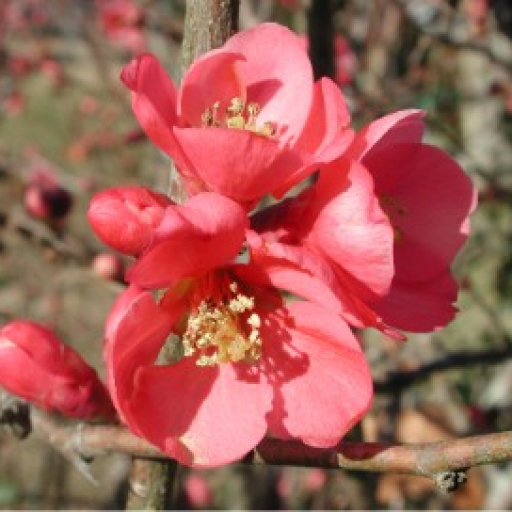
Plant Overview
Known as the "Flowering Quince," Chaenomeles is a hardy, deciduous shrub that acts as a fiery herald of spring. Originating from East Asia, these plants are famous for their stunning, waxy blossoms that often appear on bare, thorny branches before the leaves even wake up. They are a favorite for gardeners looking to add structure and a burst of early-season color to their landscapes.
🔍 How to Identify
- 🌸 The Blooms: Five-petaled, cup-shaped flowers that resemble apple blossoms. They typically come in vibrant shades of scarlet, salmon, pink, or creamy white.
- 🍃 The Foliage: Glossy, dark green leaves that are oval-shaped with finely serrated edges. They appear after the flowers have already started their show.
- ⚔️ The Framework: A tangled, multi-stemmed growth habit featuring sharp spines or thorns hidden among the woody branches.
- 🍏 The Fruit: In autumn, the plant produces small, hard, yellow-green fruits (quinces) that have a fragrant, spicy aroma.
🏡 In Your Garden
- 🧱 Natural Barriers: Because of their dense, thorny nature, Chaenomeles makes an excellent "living fence" or hedge that discourages unwanted foot traffic or neighborhood pets from wandering through.
- ✂️ Pruning Nuance: These shrubs bloom on "old wood" (growth from previous years). To ensure a spectacular display, prune them immediately after they finish flowering in late spring. If you prune in winter, you’ll be cutting off all of your spring color!
- 🐦 Wildlife Haven: The thorny thickets provide a perfect, predator-proof fortress for small songbirds to build their nests.
⚠️ Safety & Toxicity
- 🐾 Pet Safety: The plant is generally considered non-toxic to cats, dogs, and horses. However, the sharp thorns can cause physical injury to curious snouts or paws.
- 🥣 Human Consumption: The raw fruit is incredibly astringent and hard—don't try to bite into it like an apple! However, they are high in pectin and are safe (and delicious) when cooked down into jams, jellies, or "quince cheese."
✨ Fun Fact
In the Victorian "Language of Flowers," the Flowering Quince symbolised "temptation." Today, it is a highly prized species in the world of Bonsai because its woody trunk and brilliant flowers create a miniature tree that looks ancient and powerful.

Detailed Care Instructions
Here are some steps to help you grow Chaenomeles plants:
- Choose the right location: Chaenomeles plants prefer full sun exposure, but they can also tolerate partial shade. Make sure to select a well-draining area with fertile soil.
- Prepare the soil: Before planting, amend the soil with organic matter such as compost or aged manure to improve drainage and fertility. Chaenomeles plants can tolerate a wide range of soil types but prefer slightly acidic to neutral soil.
- Planting: Dig a hole that is large enough to accommodate the plant's root ball. Place the plant in the hole, ensuring that it is at the same level as it was in its nursery pot. Fill the hole with soil and gently tamp it down around the plant.
- Watering: Water the newly planted Chaenomeles thoroughly after planting to settle the soil and encourage root establishment. Afterward, water regularly, especially during dry spells, ensuring that the soil remains evenly moist but not waterlogged.
- Mulching: Apply a layer of organic mulch, such as wood chips or shredded bark, around the base of the plant to help conserve moisture, suppress weed growth, and insulate the roots during extreme temperatures.
- Pruning: Chaenomeles plants benefit from regular pruning to maintain their shape and encourages more flowering. Prune in late winter or early spring before new growth begins. Remove any dead, damaged, or crossing branches. Pruning can also be done after flowering to shape the plant.
- Fertilization: Chaenomeles plants typically don't require a lot of fertilization when grown in fertile soil. However, if your soil is poor, you can apply a balanced organic fertilizer in early spring before new growth starts.
- Pest and Disease Control: Chaenomeles plants are generally pest and disease resistant. However, they can occasionally be affected by aphids, scale insects, or fungal diseases like powdery mildew. Monitor your plants regularly and apply organic pest control methods or appropriate fungicides if necessary.
By following these steps and providing adequate care, you should be able to successfully grow Chaenomeles plants and enjoy their beautiful flowers and fruits.

Place in a bright room that is sun drenched almost all day. Or directly in a south-facing window.

The plant in question belongs to the Rosaceae family and requires regular watering during the growing season. It is important to avoid watering the leaves and aim for the soil surrounding the roots for maximum absorption. This plant enjoys moist soil, but overwatering can lead to root rot, so it is important to ensure proper drainage. During the dormant season, watering can be reduced. It is important to monitor the moisture levels and adjust watering as necessary based on the plant's needs.
To fertilize this plant, apply a balanced fertilizer in the early spring before the plant begins to actively grow. Use a slow-release granular fertilizer or liquid fertilizer diluted to half strength. Avoid fertilizing during the summer months as it can promote excessive growth and weaken the plant. Water the plant well after fertilizing to help distribute the nutrients throughout the soil.
When selecting soil for the Chaenomeles plant, it is important to consider the plant's specific needs. The ideal soil should be well-draining and fertile, with a pH range of 5.5 to 7.5. It should also be rich in organic matter, such as compost or aged manure, to ensure sufficient nutrients for growth. The soil should be loose and crumbly to allow for proper aeration, and it should not have a tendency to become waterlogged. Adding perlite or sand can help improve drainage if necessary. Additionally, avoiding heavy clay or compacted soils is important, as they can hinder root growth and cause issues with water retention. Overall, selecting a well-draining, fertile, and loose soil rich in organic matter will provide the best growing conditions for the Chaenomeles plant.
To propagate this plant, you should start by taking cuttings from healthy, mature stems. Cuttings should be about 6 inches long, with at least 2 to 3 nodes where new roots and leaves can form. Remove any lower leaves from the stem, leaving only a few at the top.
Next, dip the cut ends of the stem into rooting hormone powder and plant them into a container filled with moist potting soil. Make sure the container has drainage holes to prevent waterlogging.
Place the container in a warm, bright location, but not in direct sunlight. Keep the soil moist but not waterlogged, and mist the cuttings with water to keep them hydrated.
Within a few weeks, new roots should begin to form, and new growth should appear on top of the stem. Once the new growth is about 2 inches long, your new plant can be transplanted into a larger pot or into the ground.







