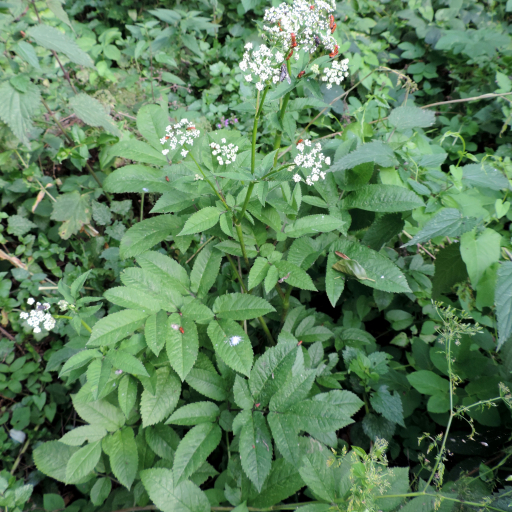
Plant Overview
Known as the Broad-leaved Chervil, this hardy perennial is a woodland wanderer that brings a touch of wild elegance to shaded landscapes. Native to Central and Southern Europe, it is a more robust, structural relative of the delicate herb used in French cooking. While it carries an "aromatic" title, it is primarily admired for its lush, fern-like presence and its ability to brighten the dark corners of a forest garden.
🔍 How to Identify
- 🌿 Broad Foliage: Unlike the feathery, thin leaves of common culinary Chervil, this variety features large, triangular leaves divided into broad, serrated leaflets that resemble oversized parsley.
- 🌸 Summer Umbels: It produces flat-topped clusters of tiny white flowers, known as umbels, which appear to float like lace doilies above the foliage from June to August.
- 🖌️ Hairy, Spotted Stems: The stems are hollow and covered in fine, downward-pointing hairs, often marked with distinctive purple spots or streaks near the base.
🏡 In Your Garden
- 🌳 The Shade Specialist: This plant is an expert at colonizing "dappled light" areas. It thrives in moist, nutrient-rich soil, making it a perfect companion for the edges of ponds or under the canopy of deciduous trees.
- 🌱 Naturalizing Nature: It has a strong tendency to self-seed. If you are looking for a "set it and forget it" groundcover for a wild garden, this is a top choice, though you may need to pull young shoots to keep it from wandering too far.
⚠️ Safety & Toxicity
- 🚫 The Mimicry Risk: While Chaerophyllum aromaticum is not considered deadly, it looks strikingly similar to Poison Hemlock and Water Hemlock. Never consume any wild plant in the carrot family unless you are an expert, as the visual differences are subtle but the consequences of a mistake are fatal.
- 🧴 Skin Sensitivity: Like many plants in the Apiaceae family, the sap can occasionally cause mild skin irritation or "phytophototoxicity" (sensitivity to sunlight) in some individuals. It’s best to wear gloves when pruning.
✨ Fun Fact
Despite its name aromaticum, the scent of the crushed leaves is a bit of a mystery—some people detect a pleasant, spicy fragrance, while others claim it smells slightly "mousy" or pungent!

Detailed Care Instructions
| Humidity | Normal |
| Lighting | Part Sun |
| Difficulty | Easy |
| Temperature | 21°C - 30°C |
| Hardiness Zones | 6 - 9 |
To grow Chaerophyllum Aromaticum plant, also known as sweet cicely or myrrh, you can follow these steps:
- Choose a suitable location: Select a spot in your garden that receives partial shade to full sun, depending on your climate. Sweet cicely prefers a cool and moist environment.
- Prepare the soil: The plant thrives in fertile, well-draining soil. Amend the soil with organic matter like compost or aged manure to improve its fertility and drainage.
- Sow the seeds: Sweet cicely can be grown from seeds. Sow the seeds in early spring or in late fall directly into the ground. Scatter the seeds over the prepared soil or plant them in rows, covering them lightly with soil.
- Provide water: Keep the soil evenly moist throughout the growing season, especially during dry spells. Avoid overwatering as it may cause root rot.
- Thin the seedlings: Once the seedlings emerge and grow a few inches tall, thin them out to provide enough space for each plant to develop fully. Space the plants about 12-18 inches apart.
- Mulch the soil: Apply a layer of organic mulch, such as straw or wood chips, around the base of the plants to retain moisture, suppress weed growth, and regulate soil temperature.
- Fertilize if necessary: If your soil is low in nutrients, you can feed the plants with a balanced organic fertilizer once or twice during the growing season. Follow the instructions on the package for application rates.
- Harvesting: The leaves of sweet cicely can be harvested throughout the growing season. Snip the leaves at the base, taking care not to damage the main stem. Use the leaves fresh or dry them for storage.
- Overwintering: Sweet cicely is a perennial plant that often dies back in winter. Cut back the stems after they wilt and apply a layer of mulch to protect the plant's roots during cold temperatures.
- Divide and propagate: Over time, sweet cicely plants can become congested. Every few years, in early spring or late fall, you can divide the clumps to create new plants. Dig up the clump, separate the individual plants, and replant them in prepared soil.
With proper care, Chaerophyllum Aromaticum can grow into a beautiful and useful addition to your garden.

Place in a bright room that is sun drenched almost all day. Or directly in a south-facing window.

In general, when watering this plant, it is important to ensure that the soil is consistently moist but not waterlogged. Overwatering can lead to root rot and other issues. It is also important to avoid allowing the soil to dry out completely, as this can cause stress to the plant and may lead to wilting or leaf drop.
When watering, it is best to use room temperature or lukewarm water, rather than cold water straight from the tap. This can help prevent shock to the plant's roots. Watering can be done from above, using a watering can or a gentle spray nozzle, or from below, by setting the plant container in a tray of water and allowing it to soak up the moisture.
In general, it is a good idea to monitor the plant closely and adjust your watering schedule as needed based on the plant's individual needs. Some people find that watering once a week is sufficient, while others may need to water more frequently depending on the conditions in their home or growing environment. It is also a good idea to periodically check the soil moisture using a moisture meter or by sticking your finger into the soil to gauge its dryness.
To fertilize this plant, you should use a balanced, all-purpose fertilizer that is high in nitrogen. Apply the fertilizer according to the instructions on the packaging, and be sure to water the plant thoroughly before and after fertilizing. Repeat the fertilization process every four to six weeks during the growing season. It is important not to over-fertilize the plant, as this can cause damage to the roots and leaves.
The Chaerophyllum Aromaticum plant prefers a well-draining soil with a neutral to slightly alkaline pH level. A soil mixture with a blend of organic matter, such as compost or peat moss, and sand or perlite will allow for good drainage. It is also important to ensure that the soil is not compacted, as this can inhibit root growth. The plant thrives in soil that is consistently moist but not waterlogged. Additionally, adding a balanced, slow-release fertilizer to the soil can provide essential nutrients for the plant's growth.
To propagate this plant, you can take stem cuttings. Choose a healthy stem that is at least 4 inches long and has several leaves. Cut the stem just below a node (where a leaf attaches to the stem) and remove any leaves from the bottom half of the stem. Dip the cut end of the stem in rooting hormone powder and plant it in a pot filled with well-draining potting mix. Water the cutting and cover the pot with plastic wrap to create a humid environment. Place the pot in a bright, indirect light but avoid direct sunlight. Keep the soil moist but not overly wet. After about 2-3 weeks, you should see new roots forming. Once the cutting has established roots and new growth, you can transplant it to a larger pot or to the garden.








