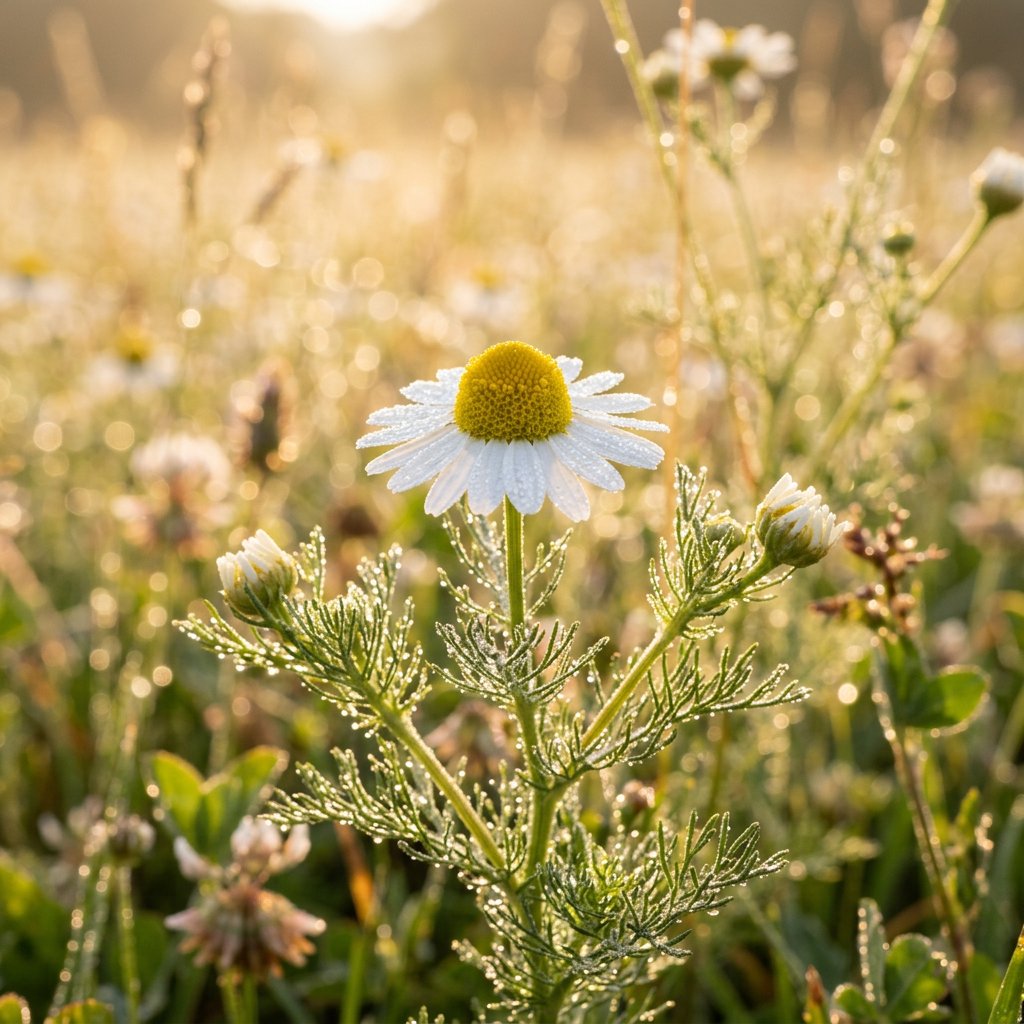
Plant Overview
Known as "Roman Chamomile" or the "Ground Apple," Chamaemelum nobile is a low-growing perennial that has been a staple in European cottage gardens for centuries. Its name comes from the Greek word chamaimelon, meaning "earth apple," a nod to the sweet, crisp fragrance released when its feathery leaves are crushed. Long revered as the "Plant’s Physician," it was historically believed that planting chamomile next to a sickly plant would help it recover.
🔍 How to Identify
- 🌼 The Flowers: Small, daisy-like blooms with bright yellow centers (disks) surrounded by a single row of white ray petals.
- 🌿 The Foliage: Delicate, bright green, and fern-like. Unlike its taller cousin (German Chamomile), this variety stays close to the ground and feels soft to the touch.
- 🍏 The Scent: If you gently rub the leaves, they emit a distinct aroma of green apples and honey.
- 🌱 Growth Habit: It spreads via creeping stems (rhizomes), forming a dense, carpet-like mat rather than growing into a tall, airy bush.
🏡 In Your Garden
- 🚶 The "Step-Over" Herb: Because of its creeping habit, it is often used as a fragrant "herbal lawn" or tucked between paving stones. It actually benefits from occasional light foot traffic, which releases its scent.
- ☀️ Drought Nuance: While it loves the sun, it has a shallow root system. It prefers consistently moist, well-drained soil and may go dormant or "crisp up" if left in bone-dry dirt during a heatwave.
- ✂️ Pruning for Health: To keep it from getting leggy and to encourage a thick carpet, it’s best to deadhead the flowers regularly or even mow it on a high setting after the first flush of blooms.
⚠️ Safety & Toxicity
- 🟢 Human Status: Generally safe and widely used for teas and skin salves. However, those allergic to the Asteraceae family (like ragweed or daisies) should exercise caution.
- 🐾 Pet Warning: Roman Chamomile is considered toxic to dogs, cats, and horses if ingested in large quantities. It contains volatile oils and bisabolol that can cause vomiting, diarrhea, or allergic skin reactions in sensitive pets.
✨ Fun Fact
In the Victorian "Language of Flowers," a gift of Roman Chamomile symbolized "energy in adversity" because the plant famously grows stronger and more resilient the more it is stepped upon.

Detailed Care Instructions
| Humidity | Normal |
| Lighting | Part Sun |
| Toxicity | Poisonous |
| Hibernation | Cold Period |
| Hardiness Zones | 6 - 11 |
To grow Chamaemelum nobile, also known as Roman chamomile, follow these steps:
- Choose the right location: Select a sunny spot in your garden or choose a container with drainage holes if you plan to grow it indoors.
- Prepare the soil: Roman chamomile prefers well-draining soil. Loosen the soil and mix in some organic compost or well-rotted manure to improve drainage and fertility.
- Planting seeds: Sow the seeds directly in the soil or pots. Cover the seeds with a thin layer of soil, about ¼ inch deep. Space the seeds 8-12 inches apart.
- Watering: Keep the soil consistently moist but not waterlogged. Water deeply when the top inch of soil feels dry to the touch. Avoid overwatering, which can lead to root rot.
- Thinning: When seedlings reach a few inches tall, thin them out, leaving approximately 6-8 inches of space between each plant to allow proper air circulation and growth.
- Maintenance: Regularly remove any weeds that might compete with the plants for nutrients and space. Additionally, trim or pinch back the tops of the plant periodically to encourage bushier growth.
- Harvesting: Roman chamomile blooms in late spring or early summer. Harvest the flowers when they are fully open for the best flavor and scent. You can either dry the flowers to make tea or use them fresh for a variety of purposes.
- Overwintering: Roman chamomile is a perennial plant. When winter approaches, protect the plant by adding a layer of mulch around its base to insulate the roots.
Remember to check your local climate and growing conditions to ensure they match the needs of the Chamaemelum nobile plant.

Place in a bright room that is sun drenched almost all day. Or directly in a south-facing window.

To water this plant, you should first check the soil moisture level by inserting your finger 1-2 inches into the soil. If the soil feels dry, it's time to water the plant. Use a watering can or hose with a gentle spray to water the soil around the base of the plant, making sure to avoid getting water on the leaves. Water until the soil feels moist but not waterlogged. It is important to not overwater this plant as it can lead to root rot. Instead, allow the soil to dry out slightly between waterings. During periods of hot weather or drought, you may need to water this plant more frequently to keep the soil consistently moist.
To fertilize this plant, use a balanced fertilizer that contains equal amounts of nitrogen, phosphorus, and potassium. Apply the fertilizer once per month during the growing season, which is typically from spring through fall. Use only a small amount of fertilizer, as too much can burn the roots and damage the plant. Water the plant thoroughly after applying fertilizer to help distribute it evenly through the soil. To avoid over-fertilizing, use a soil test kit to check the nutrient levels in the soil before adding more fertilizer.
Chamaemelum Nobile plant prefers well-drained soil with a moderate amount of organic matter. The ideal pH range for the soil should be between 6.0 and 7.5. The soil texture should be light, moist, and well-aerated, with good drainage to prevent waterlogging. The plant also needs a soil that provides a good balance between water retention and drainage. A mixture of sandy loam soil and perlite or vermiculite can be used to create such a soil. The soil should be enriched with compost or organic matter before planting, and fertilizer should be used sparingly to avoid over-fertilization. Overall, the soil should be kept moist, but not too wet, and well-drained to ensure optimal growth and health of the Chamaemelum Nobile plant.
Chamaemelum Nobile is a plant species that can be propagated through several methods including seed germination, stem cuttings, and division of the plant. One way to propagate Chamaemelum Nobile through stem cuttings is by selecting a healthy stem with a few leaves and making a clean, straight cut just below a node or leaf. The cutting should be about 4-6 inches in length.
Remove the lower leaves from the stem, leaving only the top few leaves. Dip the cut end in a rooting hormone powder, if desired, to promote root growth. Plant the cutting in a pot filled with a well-draining mixture of soil and sand or perlite. Keep the soil moist but not overly wet and place the pot in a warm and bright location, but away from direct sunlight.
Within a few weeks, the cutting should start to develop roots and new growth. When the plant has established itself, it can be transplanted into a larger pot or into a garden bed.
Common pests of the roman chamomile include Spider mites, aphids. Make a habit of checking your roman chamomile frequently for pests so that any infestations can be caught and managed early.








