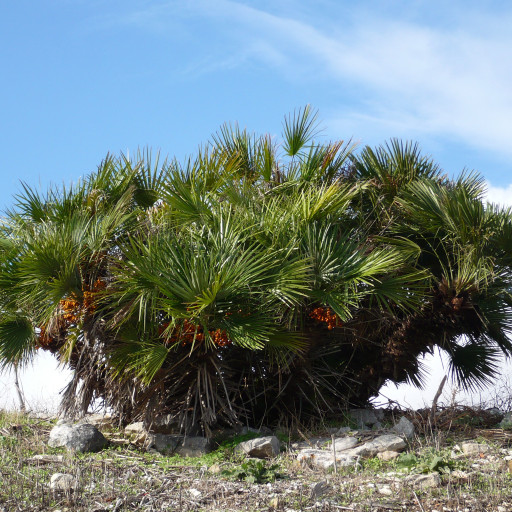
Plant Overview
Known as the European Fan Palm, this resilient beauty is the only palm species native to continental Europe. Often found clinging to rocky Mediterranean hillsides, it brings an instant touch of the Riviera to any landscape. It is a true survivor, famous for its ability to withstand frost and neglect while maintaining a lush, architectural presence that fits perfectly in both modern and classic gardens.
🔍 How to Identify
- 🌿 Fan-Shaped Fronds: The leaves are stiff, deeply divided "fans" that range from dusty green to a striking silvery-blue, spreading out from the center like a peacock's tail.
- ⚔️ Thorny Petioles: If you look closely at the stems holding the leaves, you will see they are lined with sharp, needle-like teeth—a natural defense against grazing animals.
- 🪵 Clumping Habit: Unlike the tall, single-trunk palms of the tropics, this species naturally grows multiple trunks from a single base, creating a dense, bushy silhouette over time.
🏡 In Your Garden
- ❄️ Extreme Hardiness: This is one of the toughest palms on Earth; it can survive temperatures as low as 10°F (-12°C), meaning it can stay outdoors in regions where other palms would perish.
- 🌬️ Coastal Warrior: Because the leaves are so rigid and the stems are sturdy, it handles salt spray and high coastal winds much better than more delicate, feathery palm varieties.
- 🏜️ Drainage is Key: While it is incredibly drought-tolerant once established, it hates "wet feet." It thrives in rocky or sandy soil because it evolved to live on dry, sun-baked slopes.
⚠️ Safety & Toxicity
- 🐾 Non-Toxic: This palm is generally considered safe for households with cats, dogs, and horses, as it does not contain the harsh alkaloids found in Cycads (Sago Palms).
- 🧤 Mechanical Hazard: The main danger is physical. The sharp spines along the leaf stalks can cause painful scratches or puncture wounds. Always wear heavy-duty gloves and long sleeves when pruning or relocating this plant.
✨ Fun Fact
In its native Mediterranean habitat, Chamaerops humilis is incredibly fire-resistant. After a wildfire, it is often the very first plant to sprout new green leaves from its charred trunk, earning it a reputation for rebirth and endurance.

Detailed Care Instructions
| Color | Yellow |
| Soil Ph | 6.1-7.8 |
| Humidity | Normal |
| Lighting | Full Sun |
| Toxicity | Non-Toxic |
| Soil Type | Rich, Moist, Well-Drained |
| Bloom Time | Spring |
| Difficulty | Hard |
| Plant Type | Palm, Shrub |
| Native Area | Western And Central Mediterranean Region |
| Temperature | 15°C - 25°C |
| Sun Exposure | Full Sun |
| Hardiness Zones | 9-11 |
To grow Chamaerops Humilis, also known as the Mediterranean fan palm or European fan palm, follow these steps:
- Choose the right location: Chamaerops Humilis prefers full sun but can tolerate partial shade. It can withstand cool temperatures, but it is best suited for USDA hardiness zones 8-11.
- Prepare the soil: The soil should be well-draining because Chamaerops Humilis does not like wet feet. Amend heavy clay soil or compacted soil with organic matter such as compost to improve drainage.
- Plant the palm: Dig a hole twice as wide as the root ball, but no deeper. Place the plant in the hole, ensuring that the top of the root ball is level with or slightly above the soil surface. Backfill with soil and gently firm it around the roots.
- Watering: Initially, water the plant thoroughly after planting to settle the soil. Afterward, water deeply but infrequently, allowing the top few inches of soil to dry out between watering. Too much water can cause root rot.
- Mulching: Apply a layer of organic mulch around the base of the palm, leaving a small space around the trunk. Mulch helps retain moisture, suppresses weeds, and moderates soil temperatures.
- Fertilizing: Feed the palm with a slow-release palm fertilizer in early spring and mid-summer. Follow the package instructions for application rates. Avoid over-fertilization as it can harm the plant.
- Pruning: Remove any dead or damaged fronds by cutting them off close to the trunk. Avoid cutting green healthy fronds as it may weaken the plant.
- Provide winter protection if necessary: In colder climates, protect the plant from freezing temperatures by wrapping it with burlap or covering it with a frost blanket.
- Pests and diseases: Chamaerops Humilis is generally resistant to pests and diseases. However, keep an eye out for common palm pests such as scale insects and spider mites. Treat any infestations with appropriate insecticides.
- Patience: Chamaerops Humilis is a slow-growing palm, so be patient with the growth process. It can take several years for the plant to reach its full potential.
Following these guidelines should help you successfully grow Chamaerops Humilis. Remember to provide proper care and attention to ensure its health and vitality.

Place in a bright room that is sun drenched almost all day. Or directly in a south-facing window.

To water this plant, wait until the top inch of soil is dry before watering it. Water thoroughly until excess water drains out of the bottom of the pot or container. Ensure that the plant is not sitting in standing water to avoid root rot. In hot and dry weather, this plant may require more frequent watering.
To fertilize this plant, use a slow-release fertilizer in the spring and again in the fall. Apply the fertilizer to just beyond the drip line of the canopy. Water thoroughly after fertilizing. Avoid fertilizing in the winter or during times of drought.
The best type of soil to use with this particular plant is a well-draining soil that is a mixture of sand and loam. It should be slightly acidic with a pH between 6.0 and 7.0. The soil should also contain adequate organic matter to provide necessary nutrients for the plant's growth. Avoid using heavy clay soil which may retain too much water and lead to root rot. Additionally, the plant prefers to be planted in a location with good air flow to prevent the growth of fungi and other diseases.
To propagate this plant, you will need to first obtain seeds or offsets from a mature plant. If using offsets, ensure they have roots and are taken from the outer edges of the parent plant.
Prepare a well-draining potting mix and a container with drainage holes. Plant the seeds or offsets in the potting mix and water them thoroughly.
Place the container in a warm and bright location, but where it is protected from direct sunlight. Keep the potting mix moist but not waterlogged, and fertilize regularly with a balanced fertilizer.
The plant should begin to grow new leaves and roots over time. Once the new growth has become established, you can transplant the plant into a larger pot or into the ground in a suitable location.
Common pests of the european fan palm include Scale insect, mealybugs, spider mites. Make a habit of checking your european fan palm frequently for pests so that any infestations can be caught and managed early.








