Plant Overview
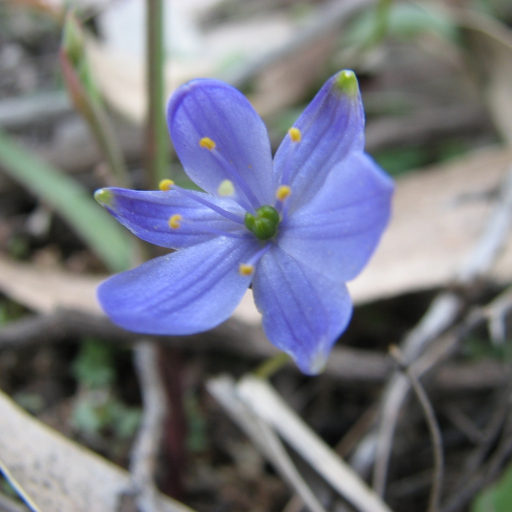
Often called the Blue Squill or "Stars of the Grass," this dainty Australian wildflower is a master of the "blink and you’ll miss it" strategy. It blankets open woodlands and heathlands in a vibrant carpet of cobalt for just a few weeks each year. It is a hardy tuberous herb that marks the arrival of spring, vanishing back into the earth as soon as the summer heat begins to peak.
🔍 How to Identify
- 💙 Starry Petals: Each flower features six brilliant, sky-blue petals that form a perfect star shape, typically measuring about 1-2 centimeters across.
- 💛 Golden Centers: The bright yellow anthers (pollen-bearing parts) contrast sharply against the blue petals, acting like tiny glowing beacons for pollinators.
- 🌿 Grassy Foliage: The leaves are narrow, fleshy, and strap-like, often appearing in small tufts that look remarkably like ordinary lawn grass until the flower spikes emerge.
🏡 In Your Garden
- 🏜️ Drought Survivalist: Because it grows from small, fleshy tubers, the plant is incredibly resilient. It stores all its water and energy underground, allowing it to survive the harsh, dry Australian summers while dormant.
- ☀️ The Sun Sensor: These flowers are "fair-weather friends." They are highly sensitive to light and will usually only open their petals on bright, sunny days. If a cloud passes over or evening approaches, they fold up tightly to protect their pollen.
- 🌱 Naturalizing: In a garden setting, they work best in rockeries or native meadow pockets where they can be left undisturbed to "naturalize" and spread over time.
⚠️ Safety & Toxicity
- 🐾 Low Risk: There are no widespread reports of high toxicity for humans, but as with many bulb-like Australian lilies, it is best kept away from curious pets.
- 🤢 Digestive Caution: Ingesting the tubers or leaves may cause mild stomach upset or nausea in cats, dogs, or small children.
- 🛑 Wild Sensitivity: While safe to touch, the plant is delicate; its thin stems snap easily, and it rarely survives being transplanted from the wild due to its deep-set tuber.
✨ Fun Fact
In some regions of Australia, the Blue Squill is nicknamed the "Blueberry Lily" (though it's not a true lily). Early settlers and Indigenous groups noted its appearance as a reliable biological calendar, signaling the exact moment the soil had warmed enough for spring growth to begin in earnest.

Detailed Care Instructions

Some plants require more regular watering than others, which should be done every few days. It's critical to maintain the soil moist all of the time. The water requirements of the same plant placed in pots with varying sizes will differ. Because the water in the smaller pot evaporates faster than the water in the larger pot, it will require more watering. Regardless of pot size, the surface should constantly be maintained moist.








