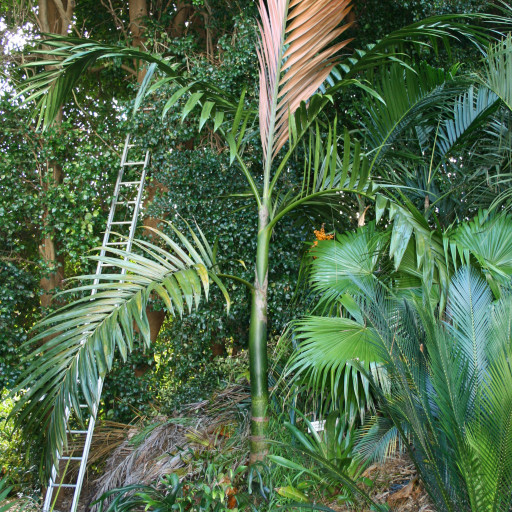
Plant Overview
Known famously as the Flame Thrower Palm, Chambeyronia macrocarpa is the undisputed "showstopper" of the tropical garden. Hailing from the lush rainforests of New Caledonia, this palm is legendary for its dramatic new leaves that emerge in a brilliant, fiery red before slowly fading to deep emerald green. It is often described as a living piece of art, turning a quiet corner of the yard into a theatrical display of color.
🔍 How to Identify
- 🌿 The "Flame" Leaf: The most iconic feature is the newly unfolded frond, which stays a vibrant shades of crimson, burgundy, or bright pink for about two weeks.
- 🍃 Leathery Texture: The mature fronds are thick, wide, and arching with a distinctly leathery feel, giving the plant a robust and prehistoric appearance.
- 🌴 Ringed Trunk: As it matures, it develops a clean, smooth, green trunk with prominent leaf-base scars (rings) that eventually turn a silver-grey.
🏡 In Your Garden
- 💧 Humidity is Key: While it can adapt to drier air, it thrives in high humidity. In drier climates, the tips of those magnificent leaves may brown if the plant feels "thirsty" in the air.
- 🌥️ Sun Protection: Younger specimens are quite sensitive to direct sunlight. Think of them as forest floor dwellers; they prefer "dappled" light or shade until they are tall enough to handle the full intensity of the sun.
- 🐌 Patience Required: This is a slow-growing species. It doesn’t rush to reach the canopy, which makes it an excellent choice for large containers or smaller gardens where you don't want a plant to take over too quickly.
⚠️ Safety & Toxicity
- ✅ Safe Status: Chambeyronia macrocarpa is generally considered non-toxic to humans, cats, and dogs.
- 🧤 Physical Caution: While not "sharp" like a cactus, the fallen fronds are heavy and leathery. Use gloves when pruning old growth to avoid minor scratches from the tough leaf edges.
✨ Fun Fact
Scientists believe the brilliant red color of the new leaf isn't just for beauty—it may serve as a chemical "sunscreen" (anthocyanins) to protect the tender young tissue from UV rays before it hardens and produces its own protective chlorophyll!

Detailed Care Instructions
To grow Chambeyronia macrocarpa, also known as the flame thrower palm or red leaf palm, you can follow these steps:
- Climate and light: Chambeyronia macrocarpa thrives in a warm and tropical climate. It prefers temperatures between 65-80°F (18-27°C) and high humidity. It also requires filtered or partially shaded sunlight, as direct sunlight can burn its leaves.
- Soil: Use a well-draining soil mix with organic matter. A mix of peat moss, perlite, and sand can work well. The soil should be slightly acidic with a pH of around 6-7.
- Planting: Select a suitable pot or container with drainage holes. Fill the pot with the soil mix and plant the Chambeyronia macrocarpa at the same depth it was growing in its previous container. Firmly press the soil around the plant to eliminate any air pockets.
- Watering: Ensure that the soil remains moist but not overly saturated. Water the plant when the top inch of soil feels dry. Avoid overwatering, as it can lead to root rot. Mist the leaves regularly to maintain humidity.
- Fertilization: Chambeyronia macrocarpa benefits from regular fertilization. Use a balanced, slow-release fertilizer during the growing season, following the label instructions. Avoid fertilizing during winter when growth slows down.
- Pruning: Remove any dead or yellowing fronds to maintain the plant's appearance. You can also trim any damaged or overcrowded branches. Make sure to use clean, sharp pruning tools to prevent the spread of disease.
- Repotting: As the Chambeyronia macrocarpa grows, it may require repotting every 2-3 years. Choose a larger pot with good drainage and fresh soil mix. Repot in the spring when the plant is actively growing.
- Pest control: Keep an eye out for common pests such as spider mites, mealybugs, and scale insects. Regularly inspect the plant for any signs of infestation and use appropriate insecticides or insecticidal soap to control the pests. Neem oil can also be effective against pests.
By following these steps, you can successfully grow Chambeyronia macrocarpa and enjoy its beautiful red leaves.

Place in a bright room that is sun drenched almost all day. Or directly in a south-facing window.

To water this particular plant, you should look for signs of the soil being dry before watering. When the top layer of soil feels dry to the touch, it is time to water the plant. Make sure to water deeply, ensuring that the water reaches the roots of the plant. Avoid overwatering by allowing any excess water to drain out of the bottom of the pot or container. Additionally, this plant prefers well-draining soil, so take care not to let it sit in standing water.
For optimal growth, it is recommended to fertilize this plant every two months with a well-balanced, slow-release fertilizer. Do not apply fertilizer directly to the base of the plant, as it may cause burning. Instead, sprinkle it around the drip line of the plant and water thoroughly afterwards. Avoid over-fertilization, as it may cause leaf burning or other issues. Consider using a fertilizer high in potassium to encourage healthy root development and overall plant growth. As always, follow the instructions on the fertilizer packaging for best results.
Chambeyronia macrocarpa is a plant species that is native to a specific region. As such, it thrives best in soils that replicate their natural habitat. The ideal soil for this plant should have a sandy loam texture with well-draining properties. The soil pH should be slightly acidic, ranging between 6.0 and 6.5.
To ensure that the soil is suitable for Chambeyronia macrocarpa, you can mix it with organic matter such as compost, leaf mold, or peat moss. These additives can help to improve soil fertility and aeration, which are both essential for healthy growth.
Moreover, it is recommended to avoid using soils with a high clay content or compacted soils, as they can negatively impact the growth of Chambeyronia macrocarpa. They may cause problems with water drainage, leading to root rot. On the other hand, soils that are too sandy may not retain water or nutrients, resulting in dehydration or nutrient deficiencies.
To maintain the optimal soil conditions for Chambeyronia macrocarpa, make sure to water the plant regularly and provide it with a balanced fertilizer during the growing season. By providing the right conditions, your Chambeyronia macrocarpa plant can flourish and thrive for many years to come.
Chambeyronia Macrocarpa is a tropical plant that can be propagated through various methods, including seeds, division, and stem cuttings. To propagate the plant through stem cuttings, follow the steps below:
- Choose a healthy Chambeyronia Macrocarpa plant with firm stems and no signs of disease or pests.
- Using a sharp and sterilized pruning tool, cut a stem from the plant that is around 5-6 inches in length with at least two leaves attached to the stem.
- Remove the bottom leaves of the stem, leaving only the top two leaves.
- Dip the cut end of the stem into rooting hormone powder.
- Plant the stem in a small pot with well-draining soil, making sure the cut end is buried in the soil and the remaining leaves are above the soil line.
- Water the soil thoroughly but do not overwater, as this can lead to rotting.
- Cover the pot with a plastic bag or a clear plastic container to create a humid environment around the plant.
- Place the pot in a bright, warm location but do not expose it to direct sunlight.
- After a few weeks, the stem should have formed roots and new growth can be seen. At this point, you can remove the cover and continue caring for the plant as usual.
Propagation through stem cuttings can be a simple and effective way to increase the number of Chambeyronia Macrocarpa plants in your collection.
Common pests of the red-leaf palm include Scale insect, mealybugs, spider mites. Make a habit of checking your red-leaf palm frequently for pests so that any infestations can be caught and managed early.








