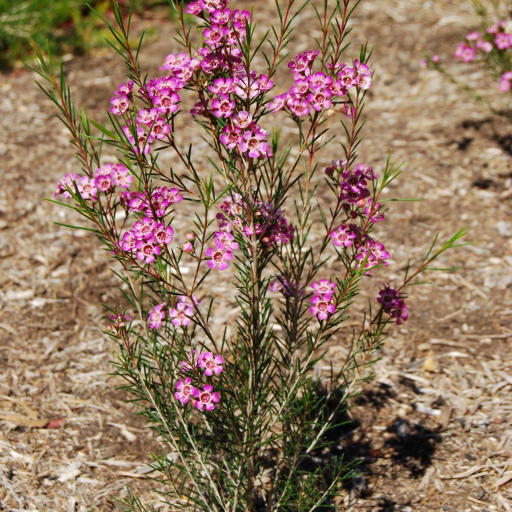
Plant Overview
Often called the Geraldton Wax, this Western Australian beauty is the darling of the floral industry. Known for its incredible vase life, it produces sprays of delicate, pearl-like buds that burst into waxy, five-petaled blossoms. It is a resilient shrub that brings a touch of "wildflower elegance" to any landscape, especially in Mediterranean climates.
🔍 How to Identify
- 🌿 The Foliage: The leaves are fine, needle-like, and dark green, resembling a soft version of pine needles.
- 🌸 The Blooms: Flowers are small and circular with a distinct waxy texture. They typically come in shades of white, pink, or deep purple, often featuring a darker "eye" in the center.
- 🍋 The Fragrance: If you crush the leaves between your fingers, they release a pleasant, refreshing citrus scent.
- 🪴 Growth Habit: It grows as an upright, woody shrub that can reach heights of 6 to 10 feet if left unpruned, creating a light, airy screen.
🏡 In Your Garden
- ☀️ Sun & Drainage: This plant is a sun-worshiper. It thrives in sandy, well-draining soil and will struggle with "wet feet." If your soil is heavy clay, consider planting it in a raised bed.
- ✂️ Pruning Strategy: To prevent the plant from becoming "leggy" or woody at the base, give it a light haircut right after the flowering season ends. It responds beautifully to pruning, which encourages a bushier shape and more flowers next year.
- 💧 Drought Queen: Once established, it is remarkably drought-tolerant. In fact, over-parenting with too much water is the most common cause of failure for new growers.
⚠️ Safety & Toxicity
- ✅ Safe for All: Chamelaucium uncinatum is generally considered non-toxic to humans, cats, and dogs.
- 🖐️ Skin Sensitivity: While not poisonous, the woody stems and needle-like leaves can be slightly abrasive. Wear gardening gloves if you have sensitive skin to avoid minor scratches during pruning.
✨ Fun Fact
The species name uncinatum actually means "hooked" in Latin. This refers to the very tips of the needle-like leaves, which often curve into a tiny, subtle hook that you can feel if you run your hand gently along the branch!

Detailed Care Instructions
| Lighting | Full Sun |
To grow Chamelaucium uncinatum (also known as Geraldton waxflower), follow these steps:
- Climate: Ensure that you live in a suitable climate for growing Chamelaucium uncinatum, which is typically Mediterranean or subtropical regions. It prefers mild winters and warm summers.
- Sunlight: Choose a sunny spot in your garden or balcony with at least 6-8 hours of direct sunlight per day. This plant thrives in bright light conditions.
- Soil: Chamelaucium uncinatum prefers well-draining soil. Prepare the planting area by loosening the soil and adding organic matter such as compost or well-rotted manure. This will improve the soil's fertility and drainage.
- Planting: Purchase a young Chamelaucium uncinatum plant from a local nursery or garden center. Dig a hole that is slightly larger than the plant's root ball and place the plant in the hole. Backfill with soil and gently press it down around the roots. Water thoroughly to settle the soil.
- Watering: Water the plant deeply but infrequently. Let the soil dry out slightly between waterings to avoid overwatering, which can cause root rot. Chamelaucium uncinatum is considered drought-tolerant once established, but regular watering during the plant's first year is necessary to help it establish a strong root system.
- Pruning: Prune Chamelaucium uncinatum to maintain its shape and promote bushiness. This is best done in late winter or early spring before new growth begins. Remove any dead or damaged branches and shape the plant as desired.
- Fertilizer: Apply a balanced slow-release fertilizer in early spring to provide nutrients for healthy growth. Follow the package instructions for application rates.
- Mulching: Apply a layer of organic mulch around the base of the plant to help retain moisture and suppress weed growth. Keep the mulch a few inches away from the plant's stem to prevent rot.
- Pests and diseases: Monitor the plant for common pests such as aphids or scale insects. Treat infestations promptly using insecticidal soap or horticultural oil, following the product instructions. Chamelaucium uncinatum is generally resistant to diseases.
- Propagation: You can propagate Chamelaucium uncinatum from cuttings. Take 4-6 inch semi-hardwood cuttings in late spring or early summer. Remove the lower leaves and dip the end in rooting hormone powder. Plant the cutting in a pot filled with damp potting soil or perlite, and keep it in a warm and bright location. After a few weeks, the cutting should develop roots, and you can then transfer it to a larger pot or plant it in the ground.
With proper care and suitable growing conditions, your Chamelaucium uncinatum plant should grow and flower beautifully.

Place in a bright room that is sun drenched almost all day. Or directly in a south-facing window.

To water this plant, one should first ensure that the soil is evenly moist but not waterlogged. When watering, it is important to direct the water towards the base of the plant rather than onto the foliage. The frequency of watering will depend on the climate and time of year, with more frequent watering needed during hot and dry periods. It is recommended to water in the early morning or late afternoon to avoid water evaporation in the heat of the day. Additionally, adding a layer of mulch around the base of the plant can help retain moisture in the soil.
To fertilize this plant, use a balanced slow-release fertilizer, with an NPK ratio of 10-10-10, once every two months during the growing season (spring and summer). Apply the fertilizer to moist soil and water thoroughly after application. Do not fertilize the plant during the fall and winter months. Over-fertilization can cause damage to the plant so be careful not to apply too much fertilizer.
Chamelaucium Uncinatum is a plant that requires well-draining soil to thrive. The ideal soil should have a pH range of 5.5-6.5. A soil mix that is high in organic matter, such as peat moss, is preferred, as it can retain moisture while also allowing for proper drainage. It is also important to ensure that the soil is rich in nutrients. Adding a slow-release fertilizer to the soil mix can help provide essential nutrients to the plant over an extended period. Additionally, regularly testing the soil's pH and nutrient levels can help ensure that the plant is receiving the necessary nutrients for healthy growth.
To propagate this plant, you will need to take stem cuttings of about 4-6 inches in length from the parent plant during its growing season. Make sure to choose a healthy stem with no diseases or pests. Cut the stem slightly below a node, which is the point where the leaf is attached to the stem. Remove all the leaves from the bottom half of the cutting, leaving only a few leaves at the top.
Dip the cut end of the stem in rooting hormone powder, which will promote root growth. Place the cutting in a potting mix made with a combination of sand, peat moss, and perlite. Moisten the soil and cover the pot with a plastic bag or a clear plastic wrap to maintain humidity.
Keep the pot in a warm, brightly lit spot but avoid direct sunlight. Check the soil regularly and water as needed to keep it moist but not waterlogged. After a few weeks, roots should emerge from the cut end of the stem. Once the stem has developed a good root system, remove the plastic cover and gradually acclimate the plant to normal conditions.
Repot the new plant into a larger pot or transplant it outdoors in a sunny, well-draining spot with fertile soil. Water the plant regularly and fertilize during its growing season for optimal growth and health.
Common pests of the geraldton waxflower include Scale insect, mealybugs, spider mites, aphids. Make a habit of checking your geraldton waxflower frequently for pests so that any infestations can be caught and managed early.








