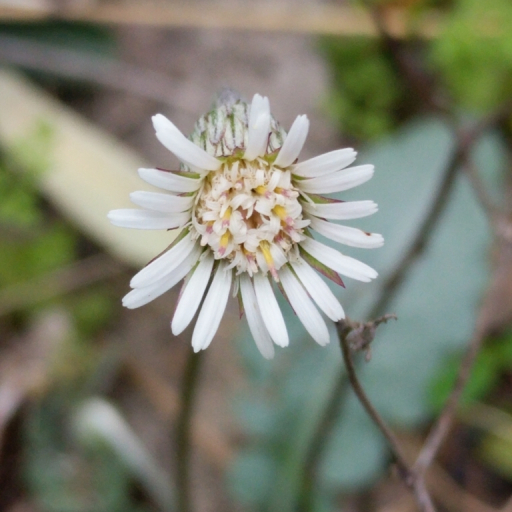
Plant Overview
Often called the Texas Sunbonnet or Silverpuff, this charming wildflower is a hidden gem of the Southern landscape. A member of the Daisy family, it is known for its "shy" personality, as the flower heads often nod toward the ground before fully opening. It is a favorite among native plant enthusiasts for its resilience and its beautiful, fluffy seed heads that resemble tiny clouds.
🔍 How to Identify
- 🍃 Silver Undersides: The leaves grow in a flat rosette at the base and are dark green on top, but flipping them over reveals a striking, woolly white or silvery texture.
- 🌸 The "Sunbonnet" Bloom: A single, leafless stalk rises from the center, bearing a flower that is white to pale pink. True to its name, the bud often droops downward like a bonnet before standing tall.
- ☁️ The Silverpuff: Once the flower fades, it transforms into a spherical, feathery seed head—much like a dandelion, but with a more sophisticated, silvery sheen.
🏡 In Your Garden
- 🪨 Rocky Foundations: In the wild, this plant thrives in limestone-rich soils and rocky outcroppings. If you're planting it at home, ensure your soil is well-draining; it hates "wet feet" and heavy clay.
- 🌳 Dappled Shade: Unlike many sun-loving daisies, the Texas Sunbonnet prefers the protection of a tree canopy or the eastern side of a building where it can escape the harsh afternoon sun.
- ⏳ Seasonal Vanishing: Don't panic if it disappears! This plant often goes dormant during the hottest parts of summer, only to reappear when the temperatures drop and the rains return.
⚠️ Safety & Toxicity
- ✅ Safe Status: Chaptalia texana is generally considered non-toxic and safe for gardens frequented by children and pets.
- 🧤 Skin Sensitivity: While not poisonous, the fine, woolly hairs on the underside of the leaves can occasionally cause mild skin irritation for people with very sensitive skin or hay fever allergies.
✨ Fun Fact
The Texas Sunbonnet is a master of "cleistogamy." This means it can actually produce seeds from closed flowers that self-pollinate, ensuring the plant survives even if there aren't any bees around to help!

Detailed Care Instructions
| Humidity | Dry |
| Lighting | Part Sun |
| Difficulty | Medium |
To grow Chaptalia Texana plant, also known as Texas Sunflower or Woolly Sunflower, you can follow these steps:
- Climate and Soil Requirements:
- Chaptalia Texana prefers a warm climate, typically found in U.S. Department of Agriculture (USDA) hardiness zones 8-10.
- It thrives in well-draining, sandy or loamy soil. Ensure the soil pH is between neutral to mildly acidic.
- Chaptalia Texana prefers a warm climate, typically found in U.S. Department of Agriculture (USDA) hardiness zones 8-10.
- Starting Seeds:
- Start by obtaining seeds from a reliable source.
- Sow the seeds indoors in small pots or seed trays about 8-10 weeks before the last frost date.
- Plant the seeds about 1/4 inch deep in a seed-starting mix.
- Ensure the seeds receive plenty of light and maintain a temperature of around 70°F (21°C).
- Keep the soil moist but not waterlogged until the seeds germinate, which usually takes around 7-21 days.
- Start by obtaining seeds from a reliable source.
- Transplanting:
- Once the threat of frost has passed and the seedlings have developed at least 2-3 true leaves, they can be transplanted outdoors.
- Choose a location with full sun exposure for optimum growth.
- Harden off the seedlings by gradually exposing them to outdoor conditions over a week before transplanting.
- Dig a hole slightly larger than the root ball of each seedling and gently place them in the hole.
- Fill the hole with soil, firm it gently, and water thoroughly.
- Once the threat of frost has passed and the seedlings have developed at least 2-3 true leaves, they can be transplanted outdoors.
- Care and Maintenance:
- Water the plant regularly, ensuring the soil remains consistently moist but not waterlogged.
- Apply a layer of organic mulch around the base of the plant to help retain moisture and control weed growth.
- Fertilize monthly during the growing season with a balanced, slow-release fertilizer.
- Pinch back the growing tips of the plant to promote bushier growth.
- Remove any dead or faded flowers to encourage continuous blooming.
- Protect the plant from strong winds that may damage the delicate flower heads.
- Monitor the plant for pests and diseases such as aphids, caterpillars, or fungal infections, and take appropriate action if needed.
By following these steps and providing the necessary care, you should be able to successfully grow Chaptalia Texana plants.
- Water the plant regularly, ensuring the soil remains consistently moist but not waterlogged.

Place in a dark room with little light, like a dark bedroom or a spot far away from a window or directly in a north-facing window.

To properly water this plant, one should first assess the soil moisture level. This can be done by inserting a finger into the soil up to the second knuckle. If the soil feels dry at that depth, it is time to water the plant. When watering, it is important to ensure that the soil is evenly moist throughout the root zone. This can be achieved by slowly pouring water at the base of the plant until it begins to run out of the drainage holes in the bottom of the container or onto the soil surface if the plant is grown outdoors. One should avoid getting water on the leaves as this can cause fungal disease. It is also best to avoid allowing the plant to sit in standing water, as this can lead to root rot. The frequency of watering will depend on factors such as the size of the plant, the type of soil it is grown in, and the amount of sun it receives.
To fertilize this plant, you should use a balanced fertilizer with equal amounts of nitrogen, phosphorus, and potassium. Apply the fertilizer during the growing season every two weeks, making sure to water the plant before and after fertilizing. Avoid fertilizing during the dormant season. For best results, follow the manufacturer's instructions for the fertilizer's application rate and method.
For the Chaptalia Texana plant, it is best to use a well-draining soil that is rich in organic matter. The soil should be a sandy loam with a pH range between 5.5 and 7.5. It is important to avoid soils that are heavy or clay-like, as these can retain too much water and lead to root rot. Adding compost or other organic material to the soil can help to improve its structure and fertility. In addition, it is important to ensure that the soil is moist but not waterlogged, as the Chaptalia Texana plant prefers moderate soil moisture levels.
To propagate this plant, you will need to collect seeds from a mature plant. Wait until the seeds have fully ripened and turned brown before harvesting. Take care to not damage the seed pods as you collect them.
Once you have collected the seeds, place them in a plastic bag or container and store them in a cool, dry location. Keep them away from heat and direct sunlight.
To plant the seeds, prepare a shallow tray or pot with a well-draining potting mix. Scatter the seeds on the surface of the soil and lightly cover with a thin layer of soil. Water gently, and place the tray or pot in a warm, bright location.
Keep the soil moist, but not waterlogged, and wait for the seeds to germinate. This may take several weeks. Once the seedlings have grown to a few inches tall, transplant them to individual pots or directly into the garden.








