Plant Overview
Often called the "Crepe Ginger," this architectural wonder is a favorite in tropical landscapes for its dramatic spiraling stems and delicate, paper-thin blooms. Native to Southeast Asia, it carries a sense of ancient jungle mystery, appearing in traditional folklore as a plant of healing and beauty. Unlike common gingers, its foliage grows in a unique, rhythmic corkscrew that earns it a spot as a "living sculpture" in any collection.
🔍 How to Identify
- 🌀 Spiral Growth: The stems don't grow straight up; they twist in a beautiful, natural corkscrew pattern that makes the plant visually striking even when it isn't blooming.
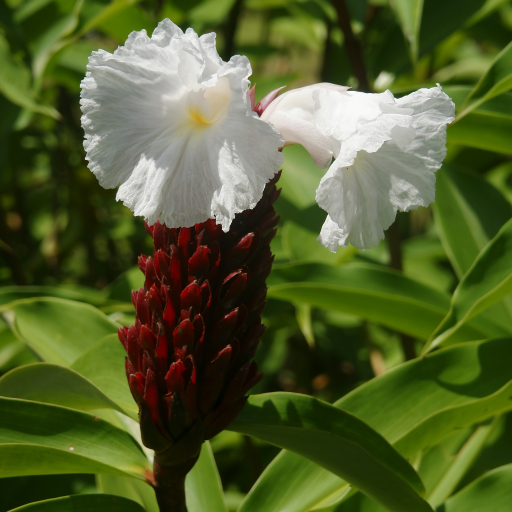
- 🏮 Vibrant Bracts: At the top of the leafy stems, you'll find cone-shaped, deep reddish-maroon clusters. These waxy "cones" stay colorful long after the actual flowers have faded.
- 🕊️ Papery Blooms: The white flowers emerge one or two at a time from the red cones. They feature a crinkled, ruffled texture that looks exactly like delicate crepe paper with a tiny splash of yellow in the center.
🏡 In Your Garden
- 💧 Humidity is Key: This plant is a rainforest native. If the leaf edges start to brown or crisp, it’s usually a signal that the air is too dry or it’s getting too much harsh, direct afternoon sun.
- 🪴 Spreading Rhizomes: It grows from thick underground roots called rhizomes. Because it is a vigorous grower, it can eventually form a large, lush clump. Give it plenty of "elbow room" in the garden or use a large, heavy pot to contain its spread.
⚠️ Safety & Toxicity
- ✅ Generally Safe: Crepe Ginger is not considered highly toxic to humans and has a long history of use in traditional herbal medicine.
- 🐾 Pet Precaution: While it isn't listed as a major hazard, the plant contains saponins which can cause mild stomach upset or drooling in cats and dogs if they decide to use the leaves as a snack.
✨ Fun Fact
The species name speciosus is Latin for "showy" or "beautiful," but the plant is more than just a pretty face—in some Southeast Asian cultures, the tangy, starch-rich rhizomes are preserved in sugar or used as a unique ginger-like ingredient in local dishes!

Detailed Care Instructions
To grow Cheilocostus Speciosus (also known as crepe ginger or spiral ginger), follow these steps:
- Climate and soil requirements: Crepe ginger thrives in tropical or subtropical climates. It prefers well-draining soil with a slightly acidic to neutral pH level.
- Propagation: You can propagate Cheilocostus Speciosus through rhizomes or seeds. Rhizome division is the most common and successful method. Choose healthy, mature rhizomes with multiple buds or "eyes."
- Site selection: Select a spot in your garden that receives partial sun to dappled shade. Crepe ginger prefers filtered sunlight rather than direct, intense sunlight.
- Planting: Dig a hole about 4-6 inches deep and place the rhizome horizontally with the buds facing upwards. Cover it with soil, leaving the tip slightly exposed. Space the plants about 2-3 feet apart to allow for healthy growth.
- Watering: Keep the soil slightly moist but not overly wet. Water the plant regularly, especially during hot and dry periods. Avoid waterlogging, as it can cause root rot.
- Mulching: Apply a layer of organic mulch, such as wood chips or grass clippings, around the base of the plant. This will help retain soil moisture, regulate temperature, and suppress weed growth.
- Fertilization: Feed the plant with a balanced, slow-release fertilizer during the growing season. Follow the package instructions for the appropriate dosage. Alternatively, you can use organic fertilizers like compost or well-rotted manure.
- Pruning: Trim off any dead or damaged leaves as needed. Thinning out crowded growth can improve air circulation and reduce the risk of diseases.
- Pests and diseases: Cheilocostus Speciosus is relatively pest-resistant, but it can sometimes be affected by aphids, mealybugs, or spider mites. Use a suitable insecticide or organic pest control methods if necessary. Watch out for fungal diseases like leaf spot or powdery mildew and treat them promptly.
- Winter care (for non-tropical climates): If you live in a colder climate, dig up the rhizomes in late fall and store them in a cool, dry place over winter. Replant them in spring after the danger of frost has passed.
With proper care and suitable growing conditions, your Cheilocostus Speciosus plant should thrive and produce beautiful spiral-shaped flowers.

Place in a bright room that is sun drenched almost all day. Or directly in a south-facing window.

Cheilocostus Speciosus plant requires a sufficient amount of moisture to grow and thrive. The soil should be kept consistently moist, but not saturated. It is recommended to water the plant deeply and thoroughly, allowing excess water to drain out of the bottom of the pot, to avoid water pooling around the roots.
To determine when to water, it is important to check the soil moisture level by sticking your finger about an inch into the soil. If the soil feels dry, it is time to water.
It is also important to avoid letting the soil completely dry out as it can cause stress to the plant and may lead to leaf drop or wilting. In addition to regular watering, the Cheilocostus Speciosus plant benefits from occasional misting or a gentle shower of water to simulate its natural environment.
- Choose a balanced fertilizer with equal amounts of nitrogen (N), phosphorus (P), and potassium (K).
- Mix the fertilizer with water according to the instructions on the label.
- Apply the fertilizer to the soil around the base of the plant.
- Water the plant thoroughly after fertilizing.
- Repeat the fertilization process every two to three months during the growing season.
- Avoid over-fertilizing, which can lead to burnt leaves or a weakened plant.
Cheilocostus Speciosus plant prefers well-draining soil that is rich in nutrients. The plant prefers to grow in soil that is slightly acidic, with a pH between 5.5 and 6.5. The soil should be kept moist but not waterlogged, as the plant does not tolerate soggy conditions. A mix of peat moss, perlite, and sand can make an ideal soil mixture for the Cheilocostus Speciosus plant. Additionally, the plant prefers to grow in a location that receives partial to full sun. It is important to maintain a consistent watering schedule and avoid overwatering or underwatering the plant. Adequate drainage is vital, and the soil should be allowed to dry slightly between watering to prevent roots from rotting. The addition of organic matter, such as compost or manure, to the soil can also provide necessary nutrients for healthy growth.
Propagation of this plant can be done through division of the rhizomes. The rhizomes should be dug up and separated into smaller sections, each with a portion of the rhizome and at least one healthy shoot. The sections should be planted in well-draining soil and kept moist until established. It is also possible to propagate the plant from seed, although this method may take longer to produce mature plants. Seeds should be collected from mature plants and sown in well-draining soil indoors or directly in the garden, depending on climate. The seedlings should be kept moist and protected from extreme temperatures until established.








