Plant Overview
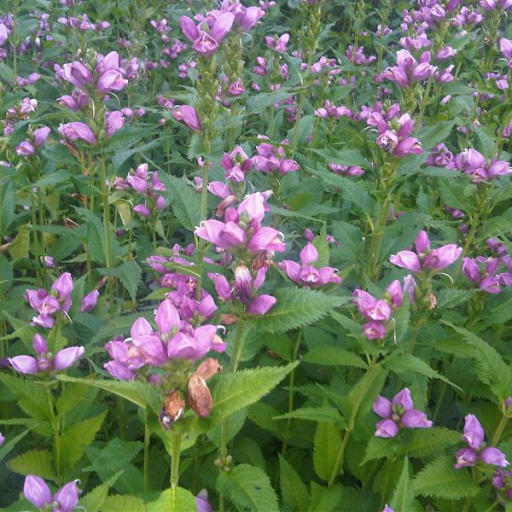
The Chelone obliqua, affectionately known as the "Rose Turtlehead," is a standout perennial that brings a splash of deep pink to the late-summer garden. Native to the moist woodlands and stream banks of the southeastern United States, its unique blossoms are shaped remarkably like the head of a turtle peeking out from its shell. It is a favorite for gardeners looking to add color to damp, shady spots where other plants might struggle to survive.
🔍 How to Identify
- 🌸 The "Beak" Flower: Each flower is a hooded, two-lipped tube in a vibrant rosy-pink or purple hue, appearing in dense, attractive clusters at the tips of the stems.
- 🍃 Serrated Foliage: The leaves are dark green, lance-shaped, and have noticeably "toothed" edges. They grow in opposite pairs along the stem, providing a lush, bushy appearance.
- 📏 Upright Stature: This plant grows in tidy, vertical clumps. Unlike many tall summer perennials, its stems are remarkably stiff and rarely require staking, even when fully loaded with blooms.
🏡 In Your Garden
- 💧 The Swamp Connection: Because this plant originated in wetlands, it is "hydrophilic" (water-loving). It thrives in heavy clay or boggy soil that would cause root rot in other species, making it the perfect solution for that "problem" wet spot in your yard.
- 🐝 Strength-Training for Bees: The flowers are tightly closed, meaning only strong pollinators like large bumblebees have the muscle to pry open the "turtle's mouth" to reach the nectar, often disappearing entirely inside the bloom to do so.
⚠️ Safety & Toxicity
- ✅ Non-Toxic Status: Chelone obliqua is generally considered safe and is not listed on major toxic plant databases for humans or common pets.
- 🐾 Pet-Friendly: Unlike many other late-season beauties (like Monkshood or Foxglove), the Turtlehead is a safe choice for gardens frequented by curious dogs, cats, or young children.
✨ Fun Fact
🐢 Ancient Punishment: The genus name Chelone is derived from a Greek nymph. According to myth, the nymph Chelone refused to attend the wedding of Zeus and Hera; as punishment, the gods turned her into a turtle, condemning her to carry her house on her back forever!

Detailed Care Instructions
To grow Chelone obliqua, also known as turtlehead plant or pink turtlehead, follow these steps:
- Choose the right location: Turtlehead plants prefer partial shade to full sun, so select a spot in your garden that receives at least 4-6 hours of sunlight each day. They also prefer moist soil, so make sure the chosen location has good drainage.
- Prepare the soil: Turtlehead plants grow best in rich and fertile soil. Amend the soil with compost or organic matter before planting to improve its nutrients and structure.
- Planting: Dig a hole that is slightly larger than the plant's root ball. Place the plant in the hole at the same depth it was previously growing. Fill the hole with soil and gently firm it around the plant.
- Watering: Keep the soil consistently moist, especially during the plant's first year of growth. Water deeply whenever the top inch of soil feels dry. Avoid allowing the soil to become waterlogged, as this can cause root rot.
- Mulching: Apply a layer of mulch around the base of the plant to help retain moisture in the soil and suppress weed growth. Mulch will also protect the roots during winter.
- Pruning: Turtlehead plants do not require extensive pruning. However, you can deadhead the faded flowers to encourage more blooms and a neater appearance. Prune any damaged or diseased stems as needed.
- Division: After a few years, Chelone obliqua may become crowded. To rejuvenate the plant and propagate new ones, divide it in early spring or fall. Dig up the entire clump and carefully separate it into smaller sections, each with a portion of roots and foliage. Replant the divisions at the same depth as before.
- Fertilization: Turtlehead plants generally do not require much fertilization. However, you can apply a balanced slow-release fertilizer in early spring to give them a nutrient boost.
- Pests and diseases: Turtlehead plants are generally resistant to pests and diseases. However, watch for signs of powdery mildew, which can develop during humid conditions. Provide good air circulation around the plants and avoid overhead watering to prevent this problem.
By following these guidelines, you should be able to successfully grow Chelone obliqua in your garden.

Place in a window with dappled sun or a spot in the middle of a room. Or directly in a window facing west or east.

To water this type of plant, make sure to check the soil moisture level before each watering. Using your finger, stick it about an inch deep into the soil. If the soil feels dry, it's time to water. When watering, ensure that the water reaches the entire root system by slowly pouring water at the base of the plant until the soil is evenly saturated. Avoid watering the leaves to prevent the risk of fungal diseases. This type of plant prefers moist soil, but not waterlogged conditions, so be careful not to overwater. During the growing season, it's generally recommended to water once a week. However, during periods of drought or hot weather, it may require more frequent watering.
To fertilize Chelone Obliqua, apply a balanced, all-purpose fertilizer in early spring before new growth appears. Use a slow-release granular fertilizer, applying it at the recommended rate per square foot of soil surface. Water the plant well after fertilizing to help the nutrients penetrate the soil. Repeat the application every 4-6 weeks during the growing season, but avoid fertilizing after midsummer to prevent excessive growth that can be vulnerable to winter damage.
For optimal growth and health, the plant requires well-draining soil that is rich in organic matter. The ideal soil pH should be slightly acidic to neutral (around 6.0-7.0). It is recommended to use a loamy or sandy loam soil type, avoiding heavy clay or overly sandy soils. The soil should be evenly moist, but not waterlogged, as excessive moisture can lead to root rot. Adding compost or aged manure can help increase soil fertility and improve drainage. Regularly amending the soil with organic matter can also help maintain soil health and support the plant's growth.
Chelone Obliqua is a plant species that belongs to the genus Chelone. It is propagated through asexual means by taking cuttings from a mature and healthy plant, or through sexual means by sowing seed.
To propagate Chelone Obliqua through cuttings, select healthy stems that are at least 4 inches long. Cut the stem at a 45-degree angle using a clean, sharp blade. Remove all the leaves from the lower half of the stem and dip it in rooting hormone. Plant the stem in a well-draining potting mix and water it. Keep the cutting in a moist and humid environment with indirect sunlight until roots develop.
To propagate through seeds, sow them in well-draining soil in early spring. The seeds should be sown at a depth of 1/4 inch and spaced about 6 inches apart. Water the soil and keep it moist until the seeds germinate. Thin the seedlings so that they are about 18 inches apart.
Chelone Obliqua prefers growing in full sun to partial shade and well-draining soil. It is a hardy plant and can tolerate a wide range of soil types. The plant is native to eastern North America and attracts pollinators such as bees and butterflies.
Common pests of the red turtlehead include Aphids, larvae, snails. Make a habit of checking your red turtlehead frequently for pests so that any infestations can be caught and managed early.








