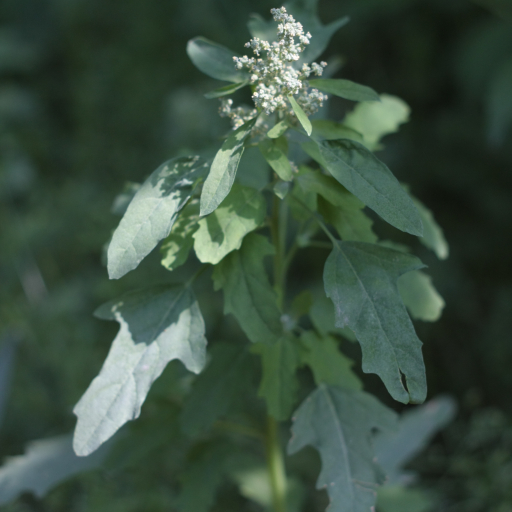
Plant Overview
Known as the Fig-leaved Goosefoot, this hardy annual is often mistaken for its more famous cousin, Lamb’s Quarters. It is a cosmopolitan traveler, frequently popping up in freshly tilled garden soil or urban cracks. While many gardeners view it as a mere weed, it has a long history of being recognized as a resilient survivor that thrives where other plants struggle.
🔍 How to Identify
- 🍃 The Leaf Shape: Unlike the diamond-shaped leaves of common goosefoot, this species has distinct side-lobes near the base, giving it a shape reminiscent of a miniature Fig leaf.
- ❄️ Mealy Texture: The younger leaves and flower clusters often look like they’ve been dusted with flour or fine sugar; this is actually a layer of tiny, waxy hairs that help the plant retain moisture.
- 🎨 Stem Markings: Look closely at the "axils" (where the leaf joins the stem). You will often find a splash of vibrant purple or red pigment, a signature trait of this genus.
🏡 In Your Garden
- 🌱 Opportunistic Growth: This plant is a "pioneer species," meaning it is the first to arrive after the soil has been disturbed. If you’ve recently dug up a new flower bed, don't be surprised to see this guest arrive uninvited.
- 💧 Drought Resistance: Because of its mealy coating and deep taproot, it can withstand dry spells that would make a lettuce patch wither. It prefers nitrogen-rich soil, making it an indicator that your soil might be quite fertile.
⚠️ Safety & Toxicity
- 🐾 Low to Moderate Risk: While related to spinach, Chenopodium ficifolium contains oxalic acid and can accumulate nitrates from the soil.
- 🧪 The Details: In small amounts, it is generally harmless to humans, but it can be toxic to livestock (like sheep or horses) if consumed in very large quantities. It may cause mild stomach upset in curious pets.
✨ Fun Fact
The seeds of the Fig-leaved Goosefoot are incredibly patient; they can remain dormant in the soil for over 30 years, waiting for the perfect moment of sunlight and soil disturbance to finally sprout!

Detailed Care Instructions
To grow Chenopodium Ficifolium, also known as Tree Spinach or Beetberry, you can follow these steps:
- Obtain seeds: Purchase Chenopodium Ficifolium seeds from a trusted supplier or collect them from a mature plant, if available.
- Germination: Start the germination process by sowing the seeds in a small container or seed tray. Gently press them into the soil, but do not cover them completely, as they need light to germinate. Keep the soil moist, but not waterlogged.
- Location: Choose a sunny or partially shaded location for planting. Chenopodium Ficifolium prefers well-draining soil with a slightly acidic to neutral pH level.
- Transplanting: When the seedlings have developed a few true leaves and are around 3-4 inches tall, they can be transplanted into larger pots or directly into the ground. Space them about 12-18 inches apart.
- Watering: Water the plants regularly, aiming to keep the soil consistently moist. Avoid overwatering, as this can cause root rot.
- Fertilizer: Chenopodium Ficifolium is a fast-growing plant that may benefit from a slow-release fertilizer or organic compost applied during the growing season to provide essential nutrients.
- Weeding: Keep the area around the plants free from weeds to reduce competition and ensure optimal growth.
- Pruning: Regularly remove any dead or damaged leaves to maintain plant health and appearance.
- Harvesting: You can start harvesting the leaves when they reach a suitable size, usually around 6-8 weeks after planting. Pick the older, lower leaves first, allowing the new growth at the top to continue developing.
- Pest and disease control: Keep an eye out for pests such as aphids or caterpillars and treat them with appropriate organic pest control methods if necessary. Be aware of common diseases such as powdery mildew and promptly address any symptoms with appropriate treatments.
By following these steps, you should be able to successfully grow Chenopodium Ficifolium. Remember to do some research specific to your local climate and growing conditions for the best results.

Place in a bright room that is sun drenched almost all day. Or directly in a south-facing window.

Watering this plant involves first assessing the soil moisture level by sticking your finger into the soil up to the second knuckle. If the soil feels dry, water the plant until water runs out of the drainage holes at the bottom of the pot. It is important not to overwater, as this plant is sensitive to excess moisture. Allow the soil to dry out slightly between waterings, but not to the point where the plant wilts. It is also important to avoid getting water on the foliage or stems, as this can cause damage or disease. Instead, water directly at the base of the plant. Watering frequency may vary depending on factors such as temperature, humidity, and amount of sunlight received.
To fertilize this plant, use a balanced fertilizer with equal amounts of nitrogen, phosphorus, and potassium. Apply the fertilizer once a month during the growing season, from spring to early fall. Dilute the fertilizer according to instructions and apply it around the base of the plant, avoiding contact with the leaves and stems. Water the plant thoroughly after fertilizing to ensure the nutrients are absorbed.
Chenopodium Ficifolium, which is a member of the Chenopodiaceae family, is a plant that grows well in soil that is well-draining, loamy, and rich in organic matter. This plant prefers soil with a pH range of 6.0 to 7.5 which is slightly acidic, and it requires good sunlight exposure.
A good soil mix for Chenopodium Ficifolium plant should consist of a blend of soils such as loam, sand, and organic matter to provide the necessary nutrients for growth.
The soil mix should be well-draining, allowing excess water to drain away quickly, preventing waterlogging that can cause root rot.
The soil should be enriched with compost and other organic matter such as peat moss or well-rotted manure to improve soil structure and fertility.
The plant requires a slightly acidic soil, so adding sulfur or sulfate to the soil mix can help reduce pH levels.
Overall, a good soil mix for Chenopodium Ficifolium plant should be well-draining, rich in organic matter, and slightly acidic to provide optimal growing conditions for this plant.
To propagate this plant, you will need to take stem cuttings. First, identify a healthy and mature stem on the plant. Using a sharp and sterile pair of pruning shears, cut a section of the stem, making sure to include at least one node. Remove any leaves from the bottom of the stem, and optionally, you can dip the cut end of the stem into rooting hormone to encourage quick and strong root growth.
Next, prepare a small pot or container with well-draining soil. Insert the stem cutting into the soil, burying it approximately 1 inch deep. Water the cutting thoroughly and place it in a bright, warm location with indirect sunlight. Keep the soil moist but not waterlogged, and avoid placing the plant in direct sunlight or exposing it to harsh environmental conditions.
Over time, the stem cutting will develop roots and start to grow new leaves. Once you see new growth, you can begin to gradually acclimate the plant to more direct sunlight and outdoor conditions. When the plant is strong and established, you can transplant it into a larger pot or into your garden bed. With proper care, your propagated Chenopodium Ficifolium plant will continue to grow and thrive.








