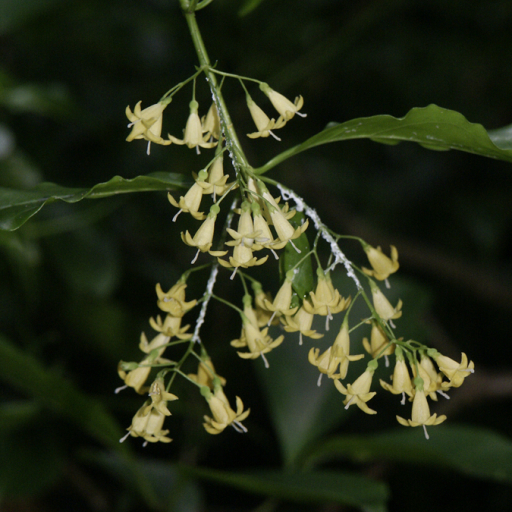
Plant Overview
Known as the Snowberry or Milkberry, Chiococca alba is a versatile evergreen that brings a touch of pearly elegance to tropical landscapes. Often found scrambling through coastal hammocks or pine rocklands, it is prized for its luminous white fruit that looks like scattered pearls against deep green foliage. In folklore, it was once a staple in traditional "black drink" concoctions, but today it is mostly cherished for its ornamental charm and its ability to turn a fence into a living wall of white berries.
🔍 How to Identify
- 🌿 The Foliage: Look for glossy, leathery, dark green leaves that grow in opposite pairs. They are typically oval-shaped with a sharp point at the tip.
- 🔔 The Flowers: In spring and summer, the plant produces small, bell-shaped flowers. They start as a creamy white or pale yellow and release a subtle, sweet fragrance.
- ⚪ The Berries: The most striking feature is the clusters of pure white, fleshy berries. These spherical "milkberries" are strikingly bright and often persist on the branch for a long time.
🏡 In Your Garden
- 🧗 Scrambling Habit: Unlike a true vine, this plant is a "scrambler." It doesn't have tendrils to grip surfaces, so if you want it to climb a trellis, you’ll need to loosely tie the stems as they grow.
- 🌊 Coastal Warrior: This is a fantastic choice for seaside gardens. It is highly resistant to salt spray and can thrive in sandy, nutrient-poor soils where other plants might struggle.
- 🐦 Wildlife Magnet: If you enjoy birdwatching, this is a must-have. While the berries aren't for humans, they are a favorite snack for mockingbirds and other local avian visitors.
⚠️ Safety & Toxicity
- 🚫 Toxicity Status: Mildly to moderately toxic if ingested.
- 🐾 The Risk: The berries contain saponins, which can cause stomach upset, vomiting, or diarrhea in humans, dogs, and cats. Because the berries look like small candies or grapes, keep a close eye on curious children playing near the plant.
✨ Fun Fact
- ❄️ Snow in the Tropics: The genus name Chiococca comes from the Greek words chion (snow) and kokkos (berry), referring to the plant's ability to look like it is covered in snowballs even in the sweltering heat of the Caribbean.

Detailed Care Instructions
To grow Chiococca Alba plant, you can follow these steps:
- Choose the right location: Chiococca Alba plant prefers partial shade to full sun. Select a spot in your garden that receives 4-6 hours of sunlight per day. Make sure the soil is well-draining.
- Prepare the soil: Mix organic compost or well-rotted manure into the soil to improve its fertility and drainage. Chiococca Alba plants prefer slightly acidic to neutral soil (pH 6.0-7.0).
- Planting: Dig a hole slightly larger than the size of the plant's root ball. Gently remove the plant from its container and place it in the hole. Backfill the hole with soil and firm it gently around the base of the plant.
- Watering: Water the plant thoroughly after planting to settle the soil around the roots. Chiococca Alba plants prefer consistently moist soil, so water regularly to keep the soil evenly moist but not waterlogged.
- Mulching: Apply a layer of organic mulch around the base of the plant, such as wood chips or pine straw. This helps to retain moisture in the soil and suppress weed growth.
- Pruning: Chiococca Alba plants respond well to pruning. Prune them in early spring to promote healthy growth and maintain their shape. Remove any dead or damaged branches and shape them as desired.
- Fertilizing: Apply a balanced slow-release fertilizer in spring and again in late summer to provide the necessary nutrients for healthy growth. Follow the instructions on the fertilizer packaging for proper application rates.
- Pests and diseases: Chiococca Alba plants are generally resistant to pests and diseases. However, keep an eye out for common garden pests and treat them accordingly if necessary. Regularly inspect the plant for any signs of disease or infection.
- Support: If your Chiococca Alba plant grows as a vine, provide a trellis, fence, or other support structure for it to climb. Secure the branches to the support structure with plant ties or twine.
- Enjoy: Chiococca Alba plants produce beautiful white flowers and can also attract butterflies and bees to your garden. Enjoy the beauty and fragrance of the plant as it grows and thrives.
Remember to regularly monitor and care for your Chiococca Alba plant by providing appropriate water, sunlight, and pruning to help it grow and flourish.

Place in a bright room that is sun drenched almost all day. Or directly in a south-facing window.

To water this plant, you should first make sure that the soil is slightly dry to the touch before watering. When watering, use room temperature water and evenly moisten the soil until water starts to drain out of the bottom of the pot. Do not let the plant sit in standing water. Depending on the humidity and temperature in your environment, you may need to water more frequently in the summer months and less frequently in the winter months. It is important to avoid overwatering as this can lead to root rot.
To fertilize this plant, mix a balanced NPK fertilizer with water according to the manufacturer's instructions. Apply the fertilizer solution to the soil around the base of the plant, being careful not to get it on the leaves or stems. Repeat this process every 2-4 weeks during the growing season, tapering off in the fall and winter months. Avoid over-fertilizing, as this can cause damage to the plant.
To ensure proper growth and development of the Chiococca Alba plant, it is recommended to use a soil that is well-draining, fertile, and rich in organic matter. A pH range of 6.0-7.5 is ideal. The soil should be loose enough to allow proper aeration and root development but also firm enough to provide adequate support for the plant's structure. Adding compost and other organic materials to the soil can improve its fertility and increase soil moisture retention. It is also important to avoid using soil that has previously been used to grow plants in the same family as the Chiococca Alba plant, as this can increase the risk of disease and pest problems.
To propagate this plant, first, select a healthy stem with at least 2-3 nodes. Cut the stem at a node using a sharp, sterile knife. Remove the lower leaves from the stem, leaving only 1-2 leaves at the top. Dip the cut end of the stem in rooting hormone powder and plant it in a pot filled with moist potting soil. Water the soil and cover the pot with a clear plastic bag to create a humid environment. Place the pot in a bright but indirect light location and keep the soil moist. After a few weeks, roots will appear and new growth will emerge from the top of the stem. Once the new plant has grown several inches, it can be transplanted into a larger container or in the ground.








