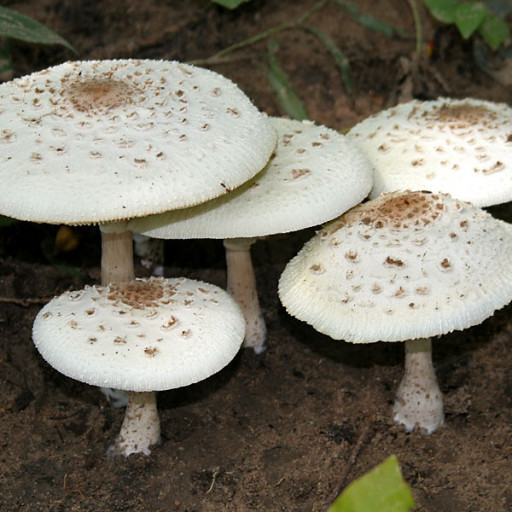
Plant Overview
Often called the Shaggy Parasol, Chlorophyllum brunneum is a robust and eye-catching mushroom that frequently surprises gardeners by popping up in mulch or compost heaps. While it looks like a delicious woodland treasure, it is a master of disguise, closely resembling several toxic species. In some regions, it is known as the "Garden Giant" due to its impressive size and fleshy texture.
🔍 How to Identify
- 🍄 The Shaggy Cap: The cap starts as a brown "button" but expands into a wide, flat umbrella covered in thick, concentric brown scales that peel away to reveal a creamy white surface beneath.
- 💍 The Moving Ring: The thick, sturdy stem features a prominent, fleshy ring (annulus) that can often be slid up and down the stalk without breaking.
- 🧅 The Abrupt Bulb: One of its most defining features is the base of the stem, which features a very large, "stepped" or marginated bulb that looks almost like a small onion.
- 🎨 The Color Change: If you scratch the stem or slice the flesh, it will quickly stain a distinct saffron-orange or reddish-brown before eventually turning dark.
🌲 Habitat & Ecology
- 🏡 The Suburban Resident: Unlike many wild mushrooms that hide deep in the forest, this species loves human-altered environments. You’ll find it in nutrient-rich garden soil, compost piles, and well-manured lawns.
- 🍂 Nature’s Recycler: As a saprobic fungus, it plays a vital role in your garden's ecosystem by breaking down dead organic matter, turning old mulch and leaf litter into rich nutrients for your plants.
⚠️ Safety & Toxicity
- 🚨 WARNING: Identification of Chlorophyllum species is notoriously difficult for hobbyists. This mushroom is a "look-alike" to the False Parasol (Chlorophyllum molybdites), which is the most common cause of mushroom poisoning in North America.
- 🤢 Gastric Distress: Even though some consider it edible after thorough cooking, it causes severe allergic reactions and violent stomach upset in many people. Do not consume unless identified by a professional mycologist.
- 🐾 Pet Safety: Keep curious dogs away; the large caps can be tempting for pets and may cause severe vomiting if ingested.
✨ Fun Fact
The Shaggy Parasol is a "bleeding" mushroom. While it doesn't actually have blood, the rapid chemical reaction that turns its white flesh into a deep sunset orange when cut is a defense mechanism meant to deter certain insects!

Detailed Care Instructions
To grow Chlorophyllum Brunneum or Shaggy Parasol mushroom, you can follow these steps:
- Choose the right location: Shaggy Parasol mushrooms prefer shady and moist areas. Find a location with filtered sunlight or partial shade. Ensure the soil is well-draining and rich in organic matter.
- Obtain mushroom spawn: Purchase Chlorophyllum Brunneum mushroom spawn from a reliable supplier. Mushroom spawn consists of mycelium, which is the fungus's vegetative growth stage.
- Prepare the growing area: Clear the area of any debris or weeds. If you are growing in a garden bed, loosen the soil to improve aeration and drainage. If growing in containers, ensure they have drainage holes.
- Plant the spawn: Break up the mushroom spawn into small pieces and spread them evenly over the prepared area. You can lightly press the spawn into the soil or cover it with a thin layer of compost or straw.
- Maintain moisture: Keep the soil consistently moist but not waterlogged. Water the growing area regularly, especially during dry periods, to ensure the mushrooms have enough moisture to thrive.
- Mulch the area: Mulching helps retain moisture and creates an ideal environment for the mushroom mycelium to grow and colonize. Apply a layer of organic mulch, such as straw or wood chips, around the planted area.
- Maintain the growing environment: Maintain a cool and shady environment for the mushrooms. Regularly monitor the moisture levels and ensure adequate humidity. If the weather is dry, mist the area with water to increase humidity.
- Harvest the mushrooms: After a few months, the mushrooms should start appearing. Harvest them when they have fully matured but are still firm. Cut the mushrooms close to the base using a sharp knife or scissors, being careful not to disturb the mycelium.
Remember, growing mushrooms requires patience and proper care. It is essential to follow the instructions provided with the specific mushroom species and consult reliable resources or experts for more detailed information on growing Chlorophyllum Brunneum.
To water this plant, it is important to first determine the type of soil it is planted in. The soil should be moist, but not waterlogged. Overwatering can cause root rot and damage to the plant.
Watering should be done when the top inch of soil feels dry to the touch. It is recommended to use room temperature water and to water the plant until water starts to drain out of the bottom of the pot.
If the plant is in a container without drainage holes, it is important to be more careful with watering to avoid water accumulation in the soil. In this case, it is recommended to water the plant less frequently and in smaller amounts.
It is also important to avoid getting water on the leaves of the plant, as this can lead to fungal growth and disease. If water does get on the leaves accidentally, it is recommended to gently wipe them dry.
Overall, it is important to maintain consistent and appropriate watering habits to keep this plant healthy and thriving.
To fertilize this plant, use a balanced fertilizer with an N-P-K ratio of 10-10-10. Apply the fertilizer once every two to three months during the growing season, which is typically from spring to fall. Be sure to follow the instructions on the fertilizer label and do not over-fertilize as this can damage the plant. Water the plant after applying the fertilizer to ensure that it is absorbed properly.
When choosing a soil for this particular plant, it is important to consider its specific needs. This type of plant prefers a well-draining soil that is rich in organic matter, with a pH level between 6.0 and 7.0. A mixture of peat moss, perlite, and vermiculite is a good option to provide good drainage while also retaining moisture. It is important to avoid soils that are too heavy or dense, as this can lead to overwatering and root rot. Additionally, it is recommended to add a slow-release fertilizer to the soil at planting time to provide the plant with the necessary nutrients for healthy growth.
To propagate this plant, take a healthy and mature specimen and remove a portion of its underground rhizome. Cut the rhizome into small segments, making sure each segment has a healthy root system attached. Plant each segment in a well-draining soil mix, covering the roots completely but keeping the top of the rhizome slightly exposed. Water the newly planted segments thoroughly and keep the soil moist but not waterlogged. Place them in a warm and well-lit location, but avoid exposing them to direct sunlight. The new plants should be established and sprouting new growth within a few weeks.







