Plant Overview
Known widely as the Boneseed or Bitou Bush, this South African native is a master of survival. While its cheerful yellow daisies might look like a friendly addition to a coastal garden, it is often viewed as a "beautiful invader" due to its incredible ability to take over entire landscapes. In many parts of the world, it is treated more as a persistent wanderer than a pampered houseplant.
🔍 How to Identify
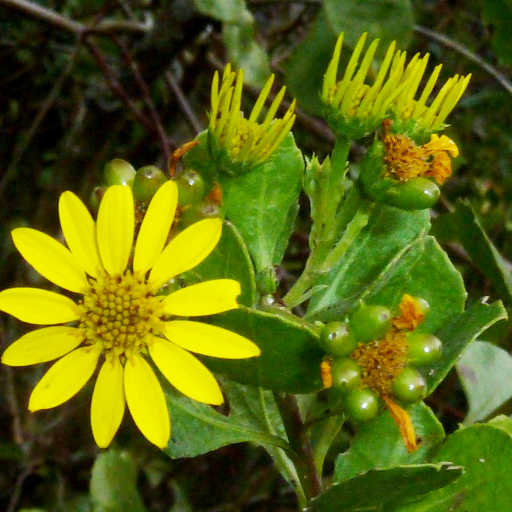
- 🌼 Sunny Blooms: It produces bright yellow, daisy-like flowers with 5 to 13 petals that appear in clusters at the ends of the branches.
- 🍃 Fleshy Foliage: The leaves are oval-shaped, bright green, and slightly waxy. When the plant is young, the leaves are often covered in a white, "cobwebby" down that disappears as they age.
- 🦴 The "Bone" Seed: After flowering, it produces small, fleshy green berries that turn purplish-black. Once the flesh rots away, it leaves behind a hard, bone-white seed that gives the plant its common name.
🏡 In Your Garden
- 🌊 Coastal Specialist: This plant was historically used to stabilize sand dunes because it laughs at salt spray and harsh winds. If you find it in your yard, it’s likely because it thrives in poor, sandy soils where other plants struggle.
- 🚫 The Garden Takeover: Be cautious! In many regions (especially Australia), this plant is a declared noxious weed. It grows faster than native species and produces thousands of seeds that can lay dormant in the soil for years, waiting for a chance to sprout.
- ✂️ High Maintenance Control: If you are keeping it, it requires heavy pruning to prevent it from becoming a woody, leggy thicket. However, most experts recommend replacing it with native coastal shrubs to support local biodiversity.
⚠️ Safety & Toxicity
- 🚫 Not for Consumption: The berries may look like small grapes, but they are not for human consumption. They are generally considered low-toxicity but can cause digestive upset if ingested.
- 🐾 Pet Safety: While not famously deadly to pets, it is best to keep dogs from snacking on the hard seeds, which can pose a choking hazard or cause intestinal irritation.
- 🌿 Ecological Hazard: The primary "danger" of this plant is to the environment. It creates dense monocultures that "smother" local wildflowers and change the soil chemistry, making it hard for other plants to return.
✨ Fun Fact
The name Chrysanthemoides literally means "resembling a chrysanthemum," while monilifera comes from the Latin word for "necklace," referring to the way the round fruit clusters look like a string of pearls or beads hanging from the branches.

Detailed Care Instructions
To grow Chrysanthemoides Monilifera plants, also known as Boneseed, follow these steps:
- Choose the right location: Boneseed plants thrive in full sun to partial shade. Select a spot in your garden with well-draining soil.
- Prepare the soil: Loosen the soil and remove any weeds or grass from the chosen area. Mix organic matter, such as compost or aged manure, into the soil to improve fertility and drainage.
- Propagate from seeds: Collect ripe Boneseed berries and remove the flesh to extract the seeds. Rinse the seeds well and allow them to dry for a few days. You can also buy seeds from a reputable nursery. Sow the seeds directly into the prepared soil, about 1 centimeter deep.
- Water regularly: Keep the soil consistently moist, but not waterlogged, until germination occurs. After that, water sparingly, as the plant is drought-tolerant once established. Water deeply during dry spells.
- Mulch the soil: Apply a layer of organic mulch, such as wood chips or straw, around the plants to conserve moisture, suppress weed growth, and regulate soil temperature.
- Prune and shape: As the plants grow, you may need to prune and shape them to maintain a neat appearance. Pruning is typically done in late winter or early spring before new growth emerges.
- Monitor for pests and diseases: Boneseed plants are generally hardy with few pest or disease problems. However, watch out for common garden pests like aphids or caterpillars, and apply appropriate treatments if necessary.
- Regular fertilization: Apply a balanced, slow-release fertilizer in early spring or as per the package instructions to promote healthy growth and flowering.
- Support if needed: Depending on the variety, some Boneseed plants may require support systems like trellises or stakes to help them stand upright. Assess the plant's growth and provide support if necessary.
- Harvest seeds (optional): If you want to collect more seeds for propagation, allow the flowers to mature and form berries. Harvest the berries when they turn dark brown and dry them before extracting and storing the seeds.
Remember that Chrysanthemoides Monilifera plants can be invasive in some regions, so make sure to check with your local agriculture department before planting them.
To water this plant properly, ensure that you consistently check the moisture level in the soil to ensure that it is not too dry. Avoid watering the plant too frequently, as this can lead to overwatering and root rot. When watering, be gentle and avoid getting water on the foliage, as this can promote the growth of fungal diseases. You should also avoid using water that contains high levels of salt, as this can damage the plant. Instead, use clean, fresh water and allow the soil to fully absorb the water before replacing the plant back in its original location. Additionally, consider providing the plant with additional humidity to help prevent drought stress.
To fertilize this plant, first determine the soil type and pH level. Use a balanced fertilizer with equal amounts of nitrogen, phosphorus, and potassium. Apply the fertilizer in the spring and summer months during the growing season according to the manufacturer's instructions. Avoid over-fertilizing, as this can cause damage to the plant. Water the plant thoroughly before and after fertilizing to prevent fertilizer burn. Consider using organic fertilizers for a more sustainable option.
Chrysanthemoides Monilifera plants prefer well-draining soil that is moderately fertile and neutral to slightly acidic. A combination of loam and sand is ideal, as it allows for good drainage while also retaining enough moisture for healthy growth. Organic matter, such as compost or leaf mold, can be added to enrich the soil. It is important to ensure that the soil is not compacted, as this can impede root growth and lead to poor health for the plant. Additionally, the plant prefers soil that is not overly wet, so it is important to avoid over-watering and to choose a planting location that has adequate drainage.
Chrysanthemoides monilifera can be propagated through vegetative propagation. Take a cutting from the existing plant, making sure it is at least 10 cm long and has a few leaves on it. Remove the leaves from the lower part of the cutting and dip the end in rooting hormone. Plant the cutting in potting soil, water it well, and place it in a shaded area. Keep the soil consistently moist, and after a few weeks, the cutting should start to produce new growth. Once the plant has established roots, it can be transplanted into a larger pot or into the ground.








