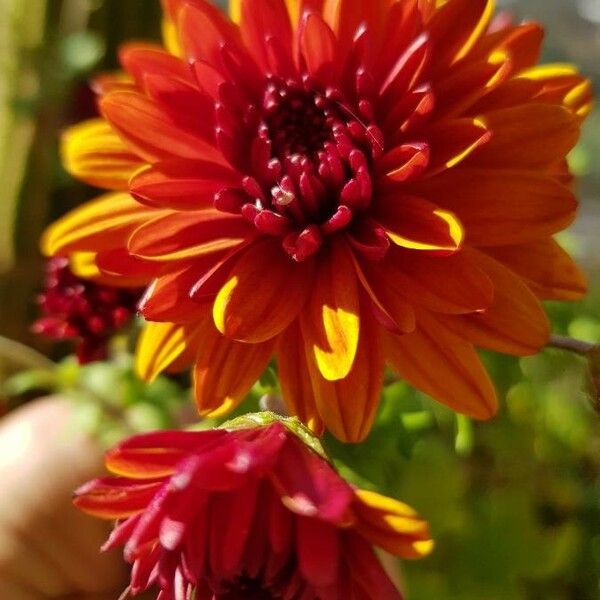
Plant Overview
Often celebrated as the "Queen of Autumn," the Garden Mum is a symbol of longevity and rebirth in many cultures. Originally cultivated in China over 2,500 years ago, these complex hybrids are the ultimate reward for gardeners as the summer heat fades. Whether shaped like tight pompons or delicate, explosive "spiders," they bring a final, fiery celebration to the landscape before the first frost.
🔍 How to Identify
- 🍃 Foliage: Features deeply lobed, toothy leaves that are a dusty, dark green and have a distinct, slightly medicinal herbal scent when bruised.
- 🌸 Flower Form: Incredibly diverse; petals can be flat, quilled (tube-like), or curved, forming a wide variety of shapes from tiny buttons to giant, shaggy heads.
- 🌿 Growth Habit: Naturally grows in a mounded, bushy shape that becomes quite dense and woody at the base as the season progresses.
🏡 In Your Garden
- ✂️ The "Pinch" Method: To achieve that iconic "floral ball" look, you must pinch off the growing tips several times in early summer. This forces the plant to branch out into a dense mound rather than growing tall, thin, and "leggy."
- 🌑 Night Owls: These are "short-day" plants, meaning they require long periods of uninterrupted darkness to trigger their flower buds. Avoid planting them near bright porch lights or streetlamps, as artificial light can confuse their internal clock and stop them from blooming.
- 💧 Winter Drainage: While they love consistent moisture, many Mums die in winter not from the cold, but from ice rotting their roots. They need extremely well-draining soil to survive the dormant season.
⚠️ Safety & Toxicity
- 🐾 Toxic to Pets: Garden Mums are considered toxic to dogs, cats, and horses.
- 🤢 Details: The plant contains pyrethrins (a natural insecticide) and sesquiterpene lactones. If ingested, pets may experience vomiting, diarrhea, drooling, and a lack of coordination. Some humans may also develop a mild skin rash (dermatitis) after handling the foliage extensively.
✨ Fun Fact
🏆 In Japan, the Chrysanthemum is the supreme symbol of the Emperor and the Imperial family. Every year, the country celebrates "National Chrysanthemum Day," also known as the Festival of Happiness, which is one of Japan's five ancient sacred festivals.

Detailed Care Instructions
To grow Chrysanthemum X Grandiflorum, also known as the garden chrysanthemum, you can follow these steps:
- Choose a sunny location: Chrysanthemums require at least six hours of direct sunlight, so select a spot in your garden that receives ample sunlight.
- Prepare the soil: Chrysanthemums prefer well-drained soil. Amend the soil by adding organic matter such as compost or aged manure. This will improve drainage and provide essential nutrients for the plants.
- Planting: Chrysanthemums can be grown from seeds, cuttings, or division. If starting from seeds, sow them indoors about eight weeks before the last frost date. Once the seedlings are a few inches tall, transplant them into the garden. For cuttings or divisions, plant them directly into the prepared soil.
- Spacing: Ensure proper spacing between plants, typically 18-24 inches apart. This will allow enough room for healthy growth and airflow.
- Watering: Chrysanthemums need regular watering, especially during dry periods. Water deeply, providing enough moisture to penetrate the root zone. Avoid overhead watering as it may promote the spread of diseases. Water at the base of the plant instead.
- Fertilization: Apply a balanced, slow-release fertilizer or a water-soluble fertilizer formulated for flowering plants. Follow the instructions on the packaging for dosage and frequency of application.
- Pinching: To encourage bushier growth and more blooms, pinch off the top inch or two of each stem when the plants reach 6-8 inches in height. Repeat this process every two to three weeks until early July. This practice promotes lateral branching and a fuller appearance.
- Staking: Depending on the variety, some chrysanthemums may require staking to support the weight of the blooms. Use bamboo stakes or plant supports and gently tie the stems to them to prevent breakage.
- Mulching: Apply a layer of organic mulch, such as straw or wood chips, around the plants. Mulching helps retain moisture, suppress weeds, and regulate soil temperature.
- Maintenance: Regularly remove spent flowers to encourage continuous blooming. Monitor for pests and diseases, and take appropriate measures if detected.
By following these steps and providing proper care, you can successfully grow Chrysanthemum X Grandiflorum plants and enjoy their beautiful blooms.

Place in a bright room that is sun drenched almost all day. Or directly in a south-facing window.

To properly water the plant, wait until the top inch of soil feels dry to the touch before watering it thoroughly. Use a watering can or hose with a gentle spray to avoid damaging the plant. Water the soil at the base of the plant rather than the leaves or flowers to prevent fungal diseases. Be sure to drain any excess water from the pot or container to prevent root rot. Additionally, avoid getting water on the foliage as it can cause damage to the plant and lead to leaf spotting.
To fertilize this plant, use a balanced fertilizer with equal ratios of nitrogen, phosphorus, and potassium. Apply the fertilizer in early spring and again in mid-summer. Be sure to water the plant thoroughly before and after fertilizing. Avoid over-fertilizing, as this can result in stunted growth and smaller flowers.
The optimal soil for Chrysanthemum X Grandiflorum should be well-draining, fertile and loamy. It should be rich in organic matter and have a pH range of 6.0 to 7.0. The soil should be moist but not waterlogged, as excessive water can lead to root rot and fungal diseases. In addition, the soil should be free from weed seeds and pests, as they can easily infect the Chrysanthemum X Grandiflorum plant. Proper soil preparation, including the addition of compost and organic matter, can help provide the ideal growing conditions for this plant.
Chrysanthemum X Grandiflorum plant can be propagated through division or stem cuttings.
To propagate through division, you will need to carefully dig up the mature plant and remove the clump of roots from the soil. Gently separate the clump into smaller sections, ensuring that each section has enough healthy roots to sustain it. Replant each section in a new location, making sure to water it thoroughly.
To propagate through stem cuttings, choose a healthy branch with several leaves and make a clean cut just below a leaf node. Remove the lower leaves, leaving only a few at the top. Dip the cut end of the stem in rooting hormone and plant it in a pot with moist soil. Cover the pot with a plastic bag to create a humid environment and place it in a bright, warm location but out of direct sunlight. Make sure to keep the soil moist and after a few weeks, new growth should appear, indicating that the cutting has rooted. Once the roots are established, you can transplant the new plant into a larger pot or into the ground.








