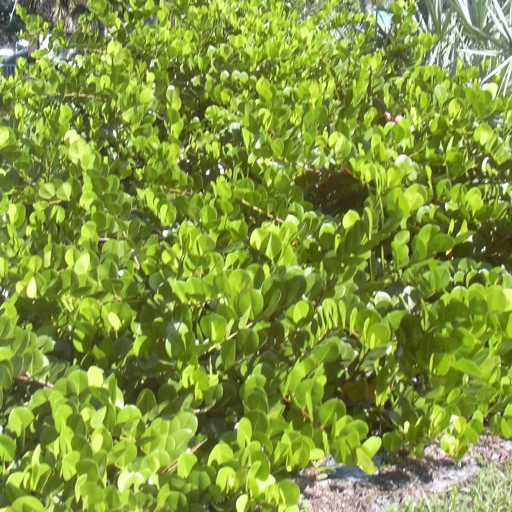
Plant Overview
Known commonly as the Coco Plum or Icaco, this resilient coastal shrub is a staple of tropical landscapes from Florida to the Caribbean and Western Africa. It is often nicknamed the "Paradise Plum" for its sweet, spongy fruit and its ability to thrive in harsh, salty environments where other plants might wither. Whether used as a privacy screen or a sprawling groundcover, it adds a lush, leathery green texture to any sunny space.
🔍 How to Identify
- 🍃 Leathery Foliage: The leaves are round to egg-shaped, thick, and shiny. They typically grow in an alternating pattern along the stem and often have a small notch at the very tip.
- 🌸 Inconspicuous Blooms: It produces very small, star-shaped white flowers that grow in clusters. While they aren't showy to humans, they are highly attractive to honeybees and butterflies.
- 🍇 The Fruit: The most recognizable feature is the fruit, which looks like a large grape or small plum. Depending on the variety, these can be creamy white, rosy pink, or a deep, midnight purple when ripe.
🏡 In Your Garden
- 🌊 Coastal Champion: This plant is incredibly salt-tolerant. It is one of the few species that can sit right against the dunes, shrugging off salt spray and heavy winds without losing its leaves.
- ✂️ Versatile Growth: In a garden setting, it is often treated as a "living wall." It takes exceptionally well to pruning; you can keep it as a neat, 3-foot hedge or allow it to reach its full potential as a 15-foot ornamental tree. It prefers well-drained soil but is surprisingly tolerant of occasional flooding.
⚠️ Safety & Toxicity
- ✅ Safe & Edible: The fruit of the Coco Plum is non-toxic to humans and is famously used in the Caribbean to make preserves and jams. Even the large kernel inside the pit is edible and has a flavor reminiscent of almonds.
- 🐾 Pet Friendly: It is generally considered non-toxic to cats and dogs. However, as with any fruiting plant, the large pits could pose a choking hazard or cause digestive blockage if swallowed by smaller pets.
✨ Fun Fact
🕯️ Nature's Torch: The seeds of the Coco Plum are so packed with natural oils that they were historically strung together on sticks and burned like candles by indigenous peoples and early settlers!

Detailed Care Instructions
To grow Chrysobalanus icaco (also known as Coco Plum), you can follow these steps:
- Seed selection: Obtain viable Chrysobalanus icaco seeds from a reputable seed supplier or collect them from a mature plant. Ensure the seeds are fresh and healthy.
- Preparing the seeds: Soak the seeds in warm water for 24 hours to soften the outer shell and enhance germination. Discard any seeds that float as they may not be viable.
- Soil preparation: Choose a well-drained soil mix that is rich in organic matter. Coco plums prefer slightly acidic to neutral soil. Amend the soil with compost or peat moss to improve its texture and fertility.
- Planting the seeds: Fill a seedling tray or pots with the prepared soil mixture. Make small indentations in the soil, approximately 1/4 to 1/2 inch deep, and place a single seed in each indentation. Gently cover the seeds with soil and lightly press down to ensure good seed-to-soil contact.
- Watering: Moisten the soil evenly, but avoid overwatering, as this may lead to rotting of the seeds or seedlings. Keep the soil consistently moist but not waterlogged. You can use a spray bottle or a misting attachment on your watering can to provide gentle moisture.
- Temperature and light: Chrysobalanus icaco requires warm temperatures to germinate, ideally between 75-85°F (24-29°C). Place the seedlings in a warm, well-lit location that receives bright, indirect sunlight. Avoid exposing them to direct, intense sunlight, as it may scorch the delicate seedlings.
- Transplanting: Once the seedlings have developed a few sets of true leaves and are around 3-4 inches tall, they are ready to be transplanted into larger pots or directly into the garden. Ensure the final planting location gets adequate sunlight and has well-drained soil. Space the plants about 3-6 feet apart if planting multiple Coco Plum trees.
- Care and maintenance: Water the plants regularly, especially during dry periods. Apply a balanced fertilizer every few months to promote healthy growth. Prune the plants to maintain their shape and remove any dead or damaged branches.
- Harvesting: It may take several years for Chrysobalanus icaco plants to start producing fruit. The fruits can be harvested when they reach their full size and turn a dark purple or black color. The plums have a sweet, tart taste and can be eaten fresh or used for various culinary purposes.
Remember that the exact care requirements may vary based on your specific climate and growing conditions. Monitor the plants closely and adjust watering, fertilizing, and other care practices accordingly.

Place in a window with dappled sun or a spot in the middle of a room. Or directly in a window facing west or east.

Chrysobalanus Icaco is a plant that requires proper watering to ensure its growth and survival. The first step in watering this plant is to determine its water requirements. This can be done by checking the soil moisture level, temperature, and humidity of the environment where the plant is grown.
When watering the Chrysobalanus Icaco plant, it is essential to use a well-drained soil mix to prevent waterlogging. The roots of the plant must not be left in standing water as this can lead to root rot. Overwatering can also damage the plant by depriving the roots of oxygen.
The frequency of watering depends on the environmental conditions and the size of the plant. During hot and dry weather, the plant may require watering every day, while during cooler weather, the plant may require less frequent watering.
To water the Chrysobalanus Icaco plant, simply water the soil around the base of the plant until it is completely soaked. Be sure to avoid getting water on the leaves and flowers of the plant, as this can cause fungal diseases.
Additionally, it is essential to provide good drainage by keeping the soil porous and aerated. This can be done by adding organic matter to the soil, such as compost or well-rotted manure. When planting, make sure that the plant is not too deep in the soil and that the soil level is at the same level as the plant's root crown.
Overall, proper watering practices are critical for the health and vitality of the Chrysobalanus Icaco plant.
To fertilize this plant, use a balanced fertilizer with equal parts nitrogen, phosphorus, and potassium. Apply the fertilizer every four to six weeks during the growing season, avoiding direct application on the leaves or stem. Be sure to water the plant well before and after fertilizing to prevent root burn. Additionally, check the soil pH regularly, as this plant prefers slightly acidic soil with a pH of 5.5 to 6.0. Consider using organic fertilizers such as compost or manure for a more sustainable and environmentally-friendly approach.
Chrysobalanus Icaco is a plant that requires well-draining soil that has a good balance of nutrients. The ideal soil for this plant is a mix of sand and loamy soil that is slightly acidic. Avoid using heavy or clayey soil, as this can cause waterlogging and potentially cause root rot. Additionally, it is important to ensure that the soil is fertile and regularly amended with organic matter, as Chrysobalanus Icaco is a heavy feeder. Finally, it is advisable to use a soil with good aeration, as this can help to prevent soil compaction and promote healthy root growth.
To propagate the plant, you will need to collect ripe fruits from a healthy parent plant. The fruits should be washed and the pulp removed. The seeds can be planted in well-draining soil and kept moist. It is best to plant the seeds in containers, as the plant has a deep taproot that is difficult to transplant. The containers should be placed in bright, indirect sunlight and kept consistently moist. Germination can take up to several months. Once the seedlings have grown large enough, they can be transplanted into larger pots or directly into the ground. It is important to protect the young plants from pests and harsh weather conditions.
Common pests of the coco plum include Mealybugs, spider mites, thrips. Make a habit of checking your coco plum frequently for pests so that any infestations can be caught and managed early.








