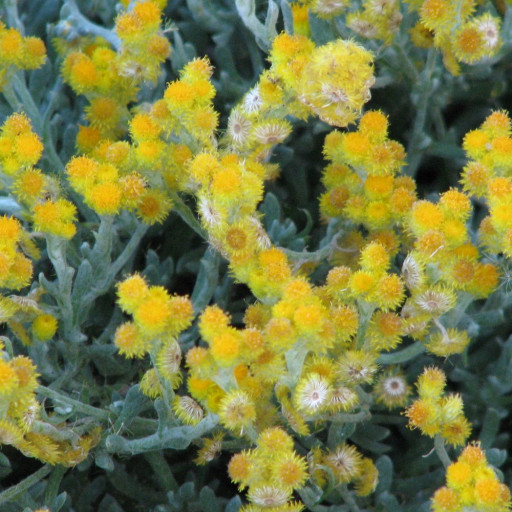
Plant Overview
Often called "Yellow Buttons" or "Common Everlasting," this Australian native looks like a handful of golden suns scattered across a shimmering silver carpet. It is a rugged survivor of the bushland that has become a darling of modern sustainable gardening. Whether draped over a rockery or lining a garden path, its cheerful blooms provide a constant pop of color against its velvety, metallic foliage.
🔍 How to Identify
- 🌼 Golden Buttons: The flower heads are small, rounded clusters of bright yellow to orange florets that lack traditional "petals," giving them a distinct, compact button appearance.
- 🥈 Silvery Foliage: The stems and leaves are covered in fine, silky white hairs, which give the entire plant a soft, sage-green to silver sheen.
- 🌱 Growth Habit: It usually grows as a low-spreading mat or a small, mounded shrub, making it an excellent choice for groundcover.
🏡 In Your Garden
- ☀️ Sun Worshipper: This plant evolved to thrive in the harsh Australian sun. The "silver" look of the leaves is actually a natural sunscreen; the more light it receives, the more vibrant and metallic the foliage will appear.
- 🏜️ Tough Love: It prefers "neglect" over pampering. It has a high tolerance for drought and poor soil, but it will quickly rot if planted in heavy clay or overwatered. Think of it as a plant that appreciates a "dry feet" policy.
- 🐝 Biodiversity Hero: In a garden setting, it acts as a vital nectar station. It is a favorite for native bees, hoverflies, and small butterflies who find the flat "button" tops easy to land on.
⚠️ Safety & Toxicity
- ✅ Safe Status: Chrysocephalum apiculatum is considered non-toxic to humans, dogs, and cats.
- 🧤 Mild Irritation: While not poisonous, the tiny hairs on the foliage can be slightly abrasive to those with very sensitive skin. Wearing gloves during heavy pruning is a good practice if you are prone to contact dermatitis.
✨ Fun Fact
The "Everlasting" nickname isn't just a metaphor—these flowers are a favorite for dried floral arrangements because the golden yellow color and papery texture of the buttons remain perfectly preserved for years after they are cut!

Detailed Care Instructions
Chrysocephalum apiculatum, commonly known as strawflower or yellow buttons, is a low-growing perennial plant native to Australia. Here are some steps to help you grow it:
- Climate and location: Chrysocephalum apiculatum prefers a sunny location with well-draining soil. It is tolerant of various soil types but thrives in sandy or loamy soil.
- Propagation: You can grow chrysocephalum apiculatum from seeds or cuttings. If growing from seeds, sow them directly into the soil after the last frost date. If using cuttings, take the stem tip cuttings in spring or summer and root them in a well-draining potting mix.
- Soil preparation: Prepare the planting area by loosening the soil and removing any weeds or debris. Amend the soil with organic matter like compost or well-rotted manure to improve fertility and drainage.
- Planting: Space the chrysocephalum apiculatum plants about 12-18 inches apart to allow for airflow and spread. Dig a hole slightly larger than the root ball and place the plant in it. Backfill with soil, firming it gently around the roots.
- Watering: Chrysocephalum apiculatum prefers moderate water levels. Water the plant deeply whenever the top inch of soil feels dry. Avoid overwatering as it can lead to root rot.
- Mulching: Apply a layer of mulch around the plant to help retain moisture, suppress weeds, and regulate soil temperature.
- Fertilizing: Apply a balanced slow-release fertilizer once or twice a year, following the manufacturer's instructions. Avoid excessive fertilization, as it can lead to leggy growth.
- Pruning: Prune chrysocephalum apiculatum regularly to maintain its compact and bushy form. Pinch back the tips of the stems to encourage branching and more flowers.
- Pests and diseases: Chrysocephalum apiculatum is generally resistant to pests and diseases. However, keep an eye out for aphids, mealybugs, and snails. If necessary, treat them with organic insecticides or use environmentally friendly pest control methods.
- Propagation and division: Every few years, you can divide the plant to propagate and rejuvenate it. Lift the clump and separate it into smaller sections, ensuring each division has enough roots. Replant the divisions in well-prepared soil.
With proper care, Chrysocephalum apiculatum should thrive and provide you with its attractive strawflower-like blooms for a long time.

Place in a bright room that is sun drenched almost all day. Or directly in a south-facing window.

To water this plant, it is important to first consider the moisture level of the soil. The soil should be kept moist, but not waterlogged.
One way to determine when the plant needs water is by feeling the top inch of soil. If it feels dry to the touch, it's time to water.
When watering, it's best to use a watering can or hose with a gentle spray to avoid damaging the plant. Make sure to water at the base of the plant, rather than on the leaves or flowers.
During periods of hot weather or drought, the plant may require more frequent watering. However, be sure not to over-water as this can lead to root rot and other problems.
It's also important to note that this plant is drought-tolerant and can survive periods of dryness. So, it's best to err on the side of caution and not water too often.
To fertilize this plant, apply a slow-release, balanced fertilizer in early spring before new growth begins. Then, every four to six weeks during the growing season, apply a water-soluble fertilizer to the soil around the plant. Be sure to follow the instructions on the fertilizer packaging for proper application rates. Avoid fertilizing in late summer or fall to allow the plant to harden off before winter.
Chrysocephalum Apiculatum plant prefers well-draining soil that is rich in organic matter. The soil should be slightly acidic to neutral, with a pH range of 6.0 to 7.0. The plant can tolerate drought conditions, but the soil should not be allowed to dry out completely. A well-draining soil mixture can be prepared by adding sand or perlite to reduce the soil's moisture retention capacity. Additionally, a light layer of mulch can be added on top of the soil to prevent moisture evaporation and maintain soil temperature. Fertilizer can be applied once a month during the growing season with a balanced NPK mix.
One way to propagate this plant is through stem cuttings. Select a healthy stem from the parent plant and cut a section that is approximately 4-6 inches long. Remove any leaves from the bottom half of the stem. The stem should have at least one leaf node (where the leaves attach to the stem) near the bottom.
Dip the cut end of the stem in a rooting hormone, which will encourage the stem to produce roots. Place the stem cutting in a pot filled with moist potting soil. Cover the pot with a clear plastic bag to create a humid environment.
Place the pot in a warm and bright location but out of direct sunlight. After a few weeks, new growth should appear, indicating that the cutting has rooted. Once the cutting has established roots, remove the plastic bag and continue to care for it like a mature plant.
Common pests of the common everlasting include Spider mites, aphids. Make a habit of checking your common everlasting frequently for pests so that any infestations can be caught and managed early.








