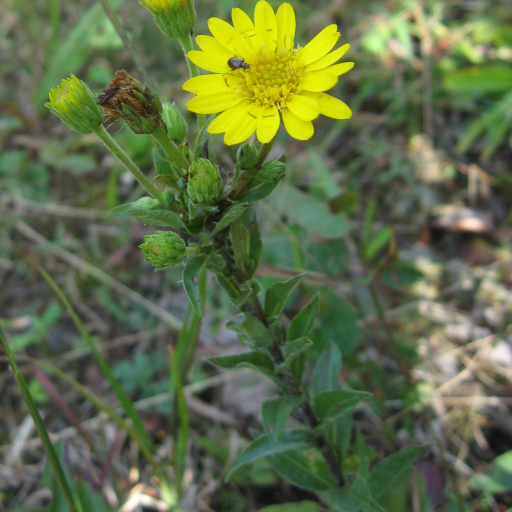
Plant Overview
Known affectionately as the Maryland Goldenaster, this vibrant perennial is like a splash of bottled sunshine for the late-season garden. While many wildflowers begin to fade as autumn approaches, the Chrysopsis mariana is just getting started, providing a critical nectar source for migrating butterflies. Native to the sandy coastal plains and pine barrens of the Eastern United States, it is a hardy survivor that thrives where other plants might wither.
🔍 How to Identify
- 🌼 The Flowers: Features 1-inch, daisy-like flower heads with bright yellow "petals" (ray florets) surrounding a dense, golden-yellow central disc.
- ☁️ Silky Foliage: The stems and young leaves are covered in fine, arachnoid (cobweb-like) silky hairs, giving the plant a soft, silvery-green shimmer in the light.
- 🌿 Leaf Shape: It begins the season as a low-growing rosette of spoon-shaped leaves, eventually sending up upright flowering stalks that reach 1 to 2 feet in height.
🏡 In Your Garden
- ☀️ The Sun-Lover’s Choice: This plant is a "tough cookie" that excels in poor, sandy, or rocky soils. It is the perfect candidate for a rock garden or a "hellstrip" between the sidewalk and the street.
- 🦋 Pollinator Magnet: Because it blooms from late August through October, it serves as a vital refueling station for bees and butterflies preparing for the winter months.
- 🌱 Low Maintenance: It is highly resistant to drought once established. Its hairy leaves are a clever evolutionary trick to help the plant retain moisture and deflect intense heat.
⚠️ Safety & Toxicity
- ✅ Non-Toxic: Maryland Goldenaster is generally considered safe and non-toxic for humans, dogs, and cats.
- 🧤 Mild Irritation: While not poisonous, the tiny silky hairs on the stems can be a bit ticklish or mildly irritating to those with very sensitive skin; wearing gloves during heavy pruning is a good idea.
✨ Fun Fact
The genus name Chrysopsis comes from the Greek words chrysos (gold) and opsis (appearance). It literally translates to "gold-look," a fitting tribute to the way these flowers can turn a dry, dusty meadow into a glowing sea of yellow.

Detailed Care Instructions
To grow Chrysopsis Mariana plant, also known as Maryland goldenaster or Lyme grass, follow these steps:
- Choose the right location: Plant Chrysopsis Mariana in a sunny area with well-draining soil. This plant thrives in full sun and can tolerate various soil types, including sandy or rocky soil.
- Prepare the soil: Before planting, loosen the soil and remove any weeds or grass. If the soil is compacted, amend it with organic matter, such as compost, to improve drainage and nutrient content.
- Planting: Dig a hole slightly larger and deeper than the root ball of the Chrysopsis Mariana plant. Place the plant into the hole, ensuring that the top of the root ball is level with the surrounding soil. Backfill the hole with soil and gently firm it down to eliminate air pockets.
- Watering: Water the plant thoroughly after planting and continue to water regularly, especially during dry periods. Chrysopsis Mariana plants prefer moist soil but are relatively drought-tolerant once established.
- Mulching: Apply a layer of organic mulch, such as wood chips or straw, around the plant to help conserve moisture, suppress weed growth, and insulate the roots during extreme temperatures.
- Fertilizing: Chrysopsis Mariana generally does not require frequent fertilization. However, if the plant seems to be growing slowly or showing signs of nutrient deficiency, you can apply a balanced, slow-release fertilizer according to the instructions on the package.
- Pruning: In late winter or early spring, before new growth begins, prune Chrysopsis Mariana to remove any dead or damaged branches and to maintain a more compact shape. This plant can become leggy over time, so pruning can help promote bushier growth.
- Maintenance: Regularly monitor the plant for any signs of pests or diseases. Chrysopsis Mariana is generally resistant to pests and diseases, but occasional issues like aphids or powdery mildew may occur. Treat any problems promptly using appropriate organic or chemical solutions.
Remember to check your local gardening regulations, as Chrysopsis Mariana might be considered invasive in some areas.

Place in a bright room that is sun drenched almost all day. Or directly in a south-facing window.

Chrysopsis Mariana plant requires regular watering to maintain healthy growth. When watering this plant, it is essential to ensure that the soil is moist but not waterlogged. Overwatering can lead to root rot, which can kill the plant.
To water the Chrysopsis Mariana plant, thoroughly saturate the soil around the plant with water. Wait until the top layer of soil feels dry before watering again. This plant prefers well-draining soil that does not retain water, so if the soil is still wet when you check it, skip watering until it dries out.
Watering is crucial during the growing season, which typically spans spring and summer. During winter, the plant may require less frequent watering. Be sure to water evenly around the plant to prevent areas of dry soil.
It is also crucial to avoid getting water on the foliage of the Chrysopsis Mariana plant, as this can lead to the development of diseases. Instead, water at the base of the plant, directing the flow of water gradually to avoid washing away soil.
In summary, water the Chrysopsis Mariana plant regularly, ensuring that the soil is moist but not waterlogged and avoiding getting water on the foliage.
For optimal growth and health, it is recommended to fertilize this plant using a balanced, all-purpose fertilizer in early spring or late fall. Follow the manufacturer's instructions for application rates based on the size of the plant and the soil conditions. Avoid over-fertilizing, as this can lead to excessive foliage growth at the expense of flowering. It is also important to regularly monitor the soil moisture levels and provide adequate water to your plant, especially during hot and dry periods.
Chrysopsis Mariana requires well-draining and sandy soil with a pH level of around 5.5 to 6.5. The soil should be loose and low in nutrient content since this plant prefers poor soil. It should not be heavy and clay-like since it can retain too much water that can lead to root rot. A mixture of sand, perlite, and vermiculite can be added to the soil to improve drainage. Additionally, organic matter such as compost can be added to the soil to improve its fertility. However, it is important not to over-fertilize the soil as this may encourage excessive growth that can harm the plant in the long run.
Chrysopsis Mariana plant can be propagated through various methods such as seed propagation, division, layering, and stem cuttings. However, stem cuttings are the most common and successful method of propagation for this plant.
- First, select a healthy stem from the Chrysopsis Mariana plant that has matured and is not flowering.
- Using a clean, sharp knife, make a clean cut just below a node on the stem.
- Remove any leaves from the lower half of the stem.
- Dip the cut end of the stem into rooting hormone powder to encourage root growth.
- Place the stem cutting into a pot filled with well-draining potting soil.
- Water the soil until it is moist, but not saturated.
- Place a clear plastic bag or plastic wrap over the pot to create a mini greenhouse for the cutting.
- Place the pot in a warm, bright location, but away from direct sunlight.
- After two to four weeks, check for root growth by gently tugging on the stem. If there is resistance, roots have formed.
- Once roots have formed, remove the plastic covering and gradually introduce the plant to more sunlight and less humidity.
- When the cutting has grown enough, it can be transplanted into its permanent location.








