Plant Overview
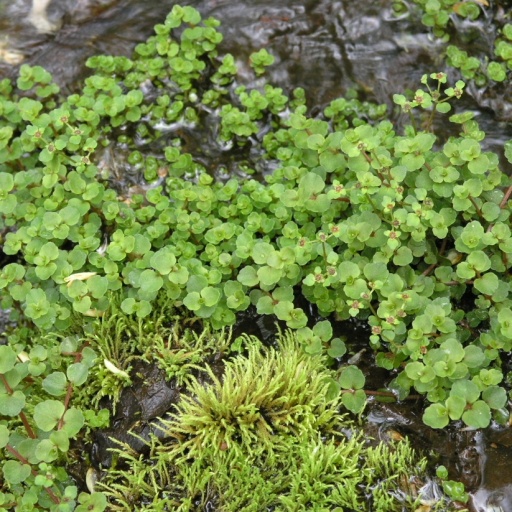
Often called the American Golden Saxifrage or the "Water-carpet," this humble plant is a hidden gem of North American wetlands. It creates lush, emerald mats in places where other plants might drown, clinging to the edges of cold woodland springs and shaded seeps. While it lacks traditional showy petals, its jewel-like appearance in early spring makes it a favorite for those who enjoy exploring the "micro-beauty" of the forest floor.
🔍 How to Identify
- 🍃 Opposite Leaves: A key giveaway! The small, rounded, and slightly scalloped leaves grow in pairs directly across from each other along the stem.
- 💧 Succulent Stems: The stems are fleshy, smooth, and slightly translucent, often trailing along the mud to form a dense, low-growing mat.
- 🌼 The "Flower" Secret: Look closely in early spring; you won't see petals. Instead, you'll find four greenish-yellow sepals with tiny, bright reddish-orange or gold stamens at the center.
🏡 In Your Garden
- 🌊 Wetland Specialist: This is not a plant for a dry flower bed. It is a "hydrophile" that requires constant moisture, making it a perfect choice for lining a backyard stream, a bog garden, or the splash zone of a fountain.
- ❄️ Cool Feet: It thrives in cold, moving water. In a garden setting, it prefers deep shade and will struggle if the soil dries out or if the summer heat becomes too intense without adequate water cover.
⚠️ Safety & Toxicity
- ✅ Generally Safe: Chrysosplenium americanum is considered non-toxic to humans, cats, and dogs. It is a gentle member of the ecosystem.
- 🧼 Wild Caution: While the plant itself isn't poisonous, it is a "water-mat." If you find it in the wild, avoid touching or tasting it if the water source is stagnant, as the foliage can trap waterborne bacteria or parasites like Giardia.
✨ Fun Fact
The genus name Chrysosplenium is derived from the Greek words chrysos (gold) and splen (spleen). In ancient times, the plant was believed to be a medicinal remedy for spleen ailments because its leaves were thought to resemble the shape of the organ!

Detailed Care Instructions
| Humidity | Normal |
| Lighting | Part Sun |
| Difficulty | Easy |
| Temperature | 21°C - 30°C |
| Hardiness Zones | 3 - 7 |
To grow Chrysosplenium Americanum, also known as American golden saxifrage or water mat, follow these steps:
- Choose the right location: Chrysosplenium Americanum thrives in moist to wet environments. It prefers shade or partial shade, so select a spot where it will receive limited direct sunlight.
- Prepare the soil: The plant prefers fertile, humus-rich soil. If your soil is clay-heavy or lacking in organic matter, amend it with compost or leaf mold before planting.
- Start with seeds or divisions: Chrysosplenium Americanum can be grown from seeds or divisions. If using seeds, sow them in early spring in a seed tray or small pots filled with a moist, well-draining soil mix. Keep the soil consistently moist and maintain a temperature of around 70°F (21°C). Transplant the seedlings outdoors once they are large enough to handle.
- If using divisions, dig up an established plant in early spring before new growth begins. Carefully separate the clumps, being sure to keep some roots intact. Replant the divisions at the same depth they were growing previously.
- Watering: Chrysosplenium Americanum requires consistently moist soil. Water the plant regularly, especially during dry periods. Avoid overwatering, as excessive moisture can lead to root rot.
- Mulching: Apply a layer of organic mulch, such as bark chips or straw, around the plant to help retain moisture in the soil and prevent weed growth.
- Fertilizing: Chrysosplenium Americanum generally does not require heavy fertilization. However, you can apply a balanced slow-release fertilizer in early spring to provide some nutrients.
- Pruning: Trim back any dead or damaged foliage to maintain the plant's appearance. This plant tends to spread and fill empty spaces, so occasional thinning may be necessary to prevent overcrowding.
Remember to check your local gardening regulations before planting Chrysosplenium Americanum, as it could be considered invasive in some areas.

Place in a dark room with little light, like a dark bedroom or a spot far away from a window or directly in a north-facing window.

The ideal way to water this plant is to ensure that the soil around it is evenly moist but not waterlogged. It is important to avoid letting the soil dry out completely as this can cause the plant to wilt and even die. The frequency of watering will depend on several factors such as the climate, the size of the plant, and the type of soil it is planted in. It is recommended to water deeply but less frequently rather than watering lightly and more often. It is also important to avoid splashing water on the leaves as this can lead to fungal diseases. Ideally, watering should be done at the base of the plant in the morning or evening when the temperatures are cooler. Additionally, using a mulch around the plant can help to retain moisture in the soil and reduce the need for frequent watering.
To fertilize this plant, choose a well-balanced, slow-release fertilizer with equal amounts of nitrogen, phosphorus, and potassium. Apply the fertilizer at a rate of one tablespoon per square foot of soil every four weeks during the growing season, starting in early spring and ending in early fall. Water the plant thoroughly before and after fertilizing to prevent fertilizer burn. Avoid fertilizing during the winter months when growth is dormant.
The Chrysosplenium Americanum plant prefers moist soil, with a slightly acidic to neutral pH level. The ideal soil is rich in organic matter, such as leaf litter or compost, and is well-draining to prevent waterlogging. It is important to maintain consistent moisture levels in the soil, as this plant does not tolerate dry soil conditions. Additionally, adding a layer of mulch to the soil can help retain moisture and regulate temperature around the plant's roots.
To propagate this plant, you will need to take stem cuttings from a mature plant. Make sure the plant is healthy and free from any disease or pest infestations. Using a sharp, clean knife or scissors, take a cutting that is about 4-6 inches long from a stem that has several leaves on it.
Remove the leaves from the lower half of the stem and dip the cut end into rooting hormone, which can be found at most garden centers or nurseries.
Fill a small pot or container with well-draining soil and make a small hole in the center. Place the cutting into the hole and gently tamp down the soil around it.
Water the cutting thoroughly, making sure that the soil is moist but not waterlogged. Place the pot in a bright, indirect light location and maintain a consistent level of moisture in the soil until the cutting establishes roots (which can take several weeks to a couple of months).
Once the cutting has established roots, you can transplant it into a larger pot or directly into the ground in a suitable location. With proper care and maintenance, your propagated Chrysosplenium Americanum plant should continue to grow and thrive.








