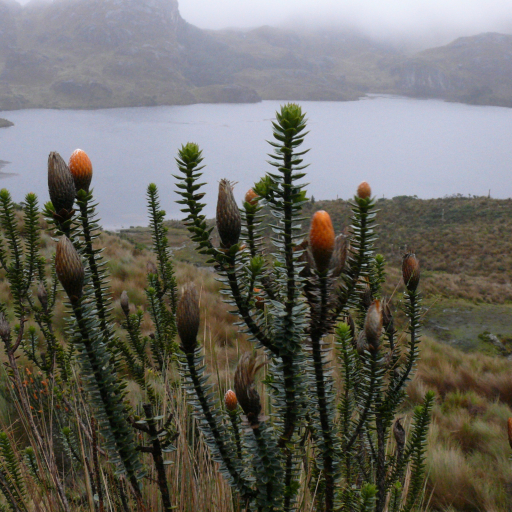
Plant Overview
Known as the "Flower of the Andes" or "Flor del Caminante" (The Traveler's Flower), the Chuquiraga jussieui is a resilient symbol of the high-altitude Paramo. This hardy evergreen shrub thrives in the harsh, wind-swept landscapes of the northern Andes, often clinging to volcanic slopes where few other plants dare to grow. To the local people, it is a sign of endurance and a vital source of traditional medicine.
🔍 How to Identify
- 🧡 The Flower Heads: It produces striking, cone-shaped flower heads that are a vibrant orange or golden-yellow, composed of stiff, papery bracts that protect the delicate florets inside.
- 🗡️ The Foliage: The leaves are small, lance-shaped, and incredibly tough, ending in a sharp, needle-like spine designed to deter grazing animals in the wild.
- 🪵 Growth Habit: It typically grows as a low, gnarled shrub, rarely exceeding 2-3 feet in height, with woody stems that can withstand freezing nights and intense tropical sun.
🏔️ Habitat & Ecology
- 🌋 High-Altitude Specialist: This plant is native to the "Paramo" ecosystem, found primarily in Ecuador and Colombia at altitudes between 3,000 and 4,500 meters. It loves rocky, volcanic soil and high UV exposure.
- 🐦 A Hummingbird’s Lifeline: It is the primary food source for the Ecuadorian Hillstar hummingbird. This bird has specifically evolved to survive the thin air and cold temperatures just to feast on the Chuquiragua's nectar.
- 🌿 Cultivation Challenge: While beautiful, it is rarely seen in home gardens outside its native range because it requires "alpine" conditions—intense light, perfect drainage, and a dramatic drop in temperature at night.
⚠️ Safety & Toxicity
- 🟢 Status: Non-toxic but physically "aggressive."
- 🌵 Details: While the plant is not poisonous and is often brewed into a traditional medicinal tea for kidney health, the leaves are exceptionally sharp. It should be handled with thick gloves to avoid painful punctures, making it a "look but don't touch" specimen for kids and pets.
✨ Fun Fact
The Chuquiraga jussieui is often called the "Traveler’s Flower" because its bright orange blooms stay vibrant even after the plant has died, acting as a permanent, glowing landmark for hikers navigating the misty, often fog-covered Andean peaks.

Detailed Care Instructions
To grow a Chuquiraga jussieui plant, also known as Chuquiraga spinosa or Chuquiragua, you can follow these steps:
- Climate Requirements: Chuquiraga jussieui is native to the Andean region of South America and thrives in high-altitude, arid climates. It prefers temperatures between 50-80°F (10-27°C) and can tolerate temperatures as low as 23°F (-5°C). Ensure that your growing conditions mimic these requirements.
- Seeds: Obtain seeds of Chuquiraga jussieui from a reputable seed supplier. These seeds are often available from specialized nurseries or online retailers.
- Soil: Chuquiraga jussieui prefers well-draining soil with a pH range of 6-7. You can mix equal parts of sandy soil and compost to create an ideal growing medium.
- Germination: Soak the seeds in water overnight to enhance germination. Afterward, plant the seeds in small pots, burying them about 1/8 inch deep in the prepared soil.
- Growing Conditions: Place the pots in a sunny location with at least 6-8 hours of direct sunlight daily. Ensure that the plants are protected from strong winds, as they can be fragile during their early stages.
- Watering: Water the seedlings consistently, keeping the soil slightly moist but not soggy. Avoid overwatering, as excessive moisture can lead to root rot.
- Transplanting: When the seedlings have grown to a reasonable size (around 3-4 inches tall), you can transplant them into larger pots or directly into the ground. Ensure proper spacing between plants, as they can grow to be 3-4 feet in height.
- Fertilization: Fertilize Chuquiraga jussieui plants once a month during the growing season with a balanced, slow-release fertilizer. Follow the instructions on the fertilizer packaging for proper usage and dosage.
- Pruning: To encourage bushy growth, you can prune the plants lightly after they have finished blooming. Remove any dead or diseased branches, promoting overall health and vigor.
- Winter Protection: If you live in a region with harsh winters, provide protection to the plants during the colder months. Mulching around the base with straw or leaves can help insulate the root system.
Chuquiraga jussieui is a slow-growing plant, and it may take a few years to reach its full size and start flowering. However, with proper care and patience, you can successfully grow and enjoy this beautiful Andean plant.

Place in a bright room that is sun drenched almost all day. Or directly in a south-facing window.

1. Identify the plant: Chuquiraga Jussieui is a species of flowering plant in the aster family. It is best to correctly identify the plant before determining its watering needs.
2. Determine the watering requirements: Chuquiraga Jussieui is a native plant of high-altitude regions in South America, particularly the Andes, where it has adapted to survive in dry conditions. It is important to consider its natural habitat when determining the watering requirements.
3. Observe the soil: The first step in watering any plant is to check the soil moisture. Insert your finger about an inch deep into the soil around the plant. If it feels dry at this depth, it is an indication that the plant needs water.
4. Avoid over-watering: Over-watering can lead to root rot and other fungal diseases, which can harm the plant. It is crucial to prevent waterlogging the soil. Ensure that the soil is well-draining and does not hold excess moisture for extended periods.
5. Watering frequency: Chuquiraga Jussieui does not require frequent watering. It is advisable to allow the soil to dry out between waterings to mimic the plant's natural habitat. A general guideline is to provide water when the top inch or so of soil is dry.
6. Determine the appropriate amount of water: When watering, provide enough water to thoroughly moisten the soil, allowing excess water to drain away. Avoid creating puddles or water collecting around the roots. It is better to underwater slightly than to overwater.
7. Adjust watering based on environmental conditions: Factors such as temperature, humidity, and sunlight can affect a plant's water needs. During hot summer months or in dry climates, it may be necessary to increase the frequency of watering. However, always monitor the soil moisture before providing additional water.
8. Consider seasonal variations: Adjust the watering routine according to the changing seasons. Generally, Chuquiraga Jussieui would require less water during cool winter months when the plant may go dormant.
9. Utilize mulch: Applying a layer of organic mulch around the base of the plant can help to conserve moisture in the soil and reduce evaporation. Mulch also assists in regulating the soil temperature, which can be beneficial for the plant's overall health.
10. Monitor plant health: Regularly inspect the plant for signs of under or overwatering. If the leaves are wilting, discolored, or the plant looks unhealthy, it may be an indication of improper watering. Adjust the watering routine accordingly and consult a horticulturist if necessary.
To properly fertilize the Chuquiraga Jussieui plant, follow these instructions:
- Choose a balanced fertilizer: Select a fertilizer that is rich in essential nutrients, such as nitrogen (N), phosphorus (P), and potassium (K). Look for a well-balanced or all-purpose fertilizer specifically formulated for flowering plants.
- Dilute the fertilizer: Follow the instructions on the fertilizer package to determine the appropriate dilution ratio. Normally, a ratio of 1 teaspoon of fertilizer per 1 gallon of water is recommended.
- Water the plant: Before applying the fertilizer, thoroughly water the plant to ensure the soil is moist. This will help prevent any potential burning effect on the roots.
- Apply the fertilizer solution: Pour the diluted fertilizer solution evenly around the base of the Chuquiraga Jussieui plant. Avoid getting the fertilizer on the leaves, as it may cause damage. Make sure to cover the entire root zone of the plant.
- Adjust fertilization frequency: The frequency of fertilizing depends on the specific fertilizer product and the plant's needs. As a general rule of thumb, it is recommended to fertilize the Chuquiraga Jussieui plant every 4 to 6 weeks during the growing season (spring and summer). Reduce the frequency to once every 8 to 12 weeks during the dormant season (fall and winter).
- Monitor for signs of over-fertilization: Keep an eye on the plant for any signs of nitrogen burn, which include yellowing or browning of the leaves, stunted growth, or wilting. If you notice these symptoms, stop fertilizing immediately and flush the soil with water to rinse out any excess fertilizer.
Remember, it is essential to closely follow the instructions provided on the specific fertilizer product you choose, as well as considering the individual needs of your Chuquiraga Jussieui plant for optimal growth and health.
The Chuquiraga Jussieui plant thrives best when cultivated in well-draining soil that promotes healthy root growth and prevents waterlogging. It is essential to choose a soil blend that is loose and light to allow proper aeration and water movement. Ideally, a mix with good drainage qualities will prevent the soil from becoming compacted and suffocating the roots.
A suitable soil medium for Chuquiraga Jussieui often includes a combination of:
- Sandy soil: Sandy soil improves drainage by allowing excess water to percolate through easily. It helps to prevent the soil from becoming waterlogged, which can lead to root rot.
- Loamy soil: Loamy soil provides a balanced mixture of sand, silt, and clay, ensuring good water retention and drainage. This type of soil offers the optimal balance of moisture content while allowing excess water to drain away.
- Gravel or perlite: Adding small pebbles, gravel, or perlite to the soil mix enhances drainage and prevents compaction. These materials create air pockets within the soil, promoting oxygen circulation around the roots.
- Organic matter: Incorporating organic matter like compost or well-rotted manure into the soil can enrich it with essential nutrients. This helps to improve soil structure, water retention capacity, and overall fertility, providing a favorable environment for Chuquiraga Jussieui.
While it is important to ensure the soil is well-draining, it should also retain sufficient moisture to prevent dehydration. Regular watering is necessary, but overwatering should be avoided as it can lead to root diseases.
Before planting Chuquiraga Jussieui, it is advisable to assess the soil pH. This plant generally prefers slightly acidic to neutral soil conditions with a pH range of 6.0 to 7.0. If the soil pH is not within this range, adjustments can be made using soil amendments like lime or sulfur to bring it to the desired level.
In summary, the ideal soil for Chuquiraga Jussieui should be well-draining, loose, and light in texture, incorporating sandy and loamy components. Additionally, the addition of gravel or perlite and organic matter will further improve drainage and provide essential nutrients for healthy plant growth.
Propagating the Chuquiraga Jussieui plant can be done through various methods. Here are a few techniques to propagate this plant:
- Seed Propagation: Collect mature seeds from the plant. Clean them by removing any debris or pulpy material. Sow the seeds in a well-draining potting mix, covering them with a thin layer of soil. Maintain moist soil and provide indirect sunlight. Germination usually takes a few weeks to a month.
- Stem Cuttings: Take stem cuttings from healthy and mature branches. Cut about 4-6 inches long sections from the tip of the stems. Remove the lower leaves, leaving only a few at the top. Dip the cut end in a rooting hormone to encourage root growth. Plant the cuttings in a moist, well-draining potting mix or perlite. Keep the soil consistently moist and provide indirect light. Roots should start forming within a few weeks.
- Division: This method can be used if the Chuquiraga Jussieui plant has multiple crowns or clumps. Dig up the plant carefully, trying not to damage the roots. Gently separate the clumps into smaller sections, ensuring each section has some healthy roots attached. Replant the divisions in well-draining soil, ensuring the crowns are at the same level as before. Water them thoroughly and provide indirect sunlight.
- Layering: Choose a long and flexible branch of the plant. Bend the branch gently to the ground, ensuring it is in contact with the soil. Bury a small section of the branch underground, leaving the tip exposed. Use a U-shaped wire or a small stone to hold the branch in place. Maintain regular watering and keep the branch secured to encourage root formation. After a few months, roots should develop. Once rooted, sever the branch from the parent plant and transplant it to a suitable container or location in the garden.
Remember to provide the propagated plants with proper care, including regular watering, well-draining soil, and appropriate lighting conditions to ensure their successful growth.








