Plant Overview
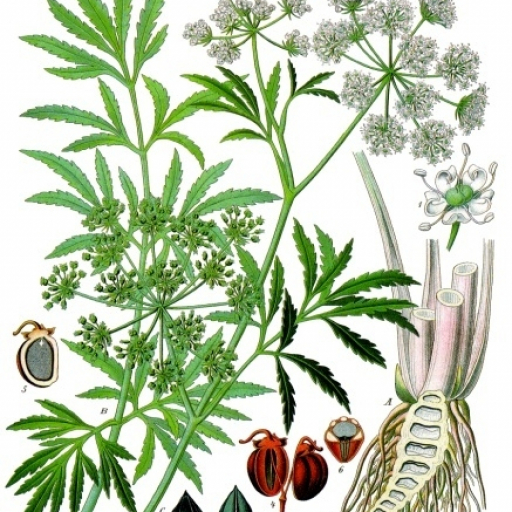
Often called Cowbane or Northern Water Hemlock, this plant is a "wolf in sheep’s clothing" of the botanical world. While it looks remarkably like wild carrots or parsnips, it is widely considered one of the most violently toxic plants in the Northern Hemisphere. Thriving in marshes and along riverbanks, its deceptive beauty has been the subject of cautionary folklore for centuries.
🔍 How to Identify
- 🌿 Chambered Roots: If the thick, tuberous root is sliced vertically, it reveals a series of distinct, hollow air chambers that look like a small ladder—a key (but dangerous) identification mark.
- 🌸 Umbrella Blooms: It produces "umbels," which are flat-topped clusters of tiny, white flowers that resemble delicate lace or a miniature explosion of stars.
- 🎋 Hollow Stems: The stems are smooth, hollow, and often feature purple or reddish streaks or spots, particularly near the base.
- 🍃 Lacy Foliage: The leaves are bright green and doubly pinnate (divided), with serrated edges that look much more "toothed" than those of common hemlock.
🌊 Habitat & Ecology
- 💧 The Water Edge: This plant is an obligate wetland species, meaning it is almost exclusively found in very wet soil, such as bogs, marshes, and the muddy banks of slow-moving streams.
- 🦋 Pollinator Magnet: Despite its toxicity to mammals, its nectar-rich flowers are a vital food source for various beetles, wasps, and even the larvae of certain specialized butterflies.
- 🌱 Seed Dispersal: Cowbane produces a massive amount of seeds that are specifically designed to float, allowing the plant to spread rapidly downstream during spring floods.
⚠️ Safety & Toxicity
- 🚫 FATAL WARNING: Cicuta virosa is extremely poisonous. Ingesting even a small piece of the root—which is the most toxic part—can lead to rapid respiratory failure and death in humans and livestock.
- 🧪 Cicutoxin Danger: The plant contains cicutoxin, a potent neurotoxin that attacks the central nervous system. Symptoms of poisoning, such as violent seizures, can begin within 15 minutes of ingestion.
- 🐾 Pet & Livestock Risk: It is a major hazard for grazing animals (hence the name "Cowbane"). Pet owners should be extremely vigilant when walking dogs near marshy areas or pond edges where this plant might grow.
✨ Fun Fact
The root of the Cowbane is said to have a sweet, parsnip-like odor when crushed. This "deadly sweetness" is what often tricks unsuspecting foragers or hungry livestock into a fatal mistake, earning it the grim reputation of being nature’s most deceptive trap.

Detailed Care Instructions
| Humidity | Normal |
| Lighting | Part Sun |
| Toxicity | Poisonous |
| Difficulty | Medium |
| Temperature | 18°C - 30°C |
| Hardiness Zones | 5 - 5 |
To grow Cicuta virosa, also known as water hemlock, follow these steps:
- Climate and Location: Check if your climate and location are suitable for growing Cicuta virosa. This plant thrives in wet areas such as marshes, meadows, or along stream banks. It prefers full sun but can tolerate partial shade.
- Seeds or Transplants: Decide if you want to start with seeds or transplants. Cicuta virosa seeds can be purchased online or collected from mature plants. Transplants can be acquired from nurseries specializing in native or wetland plants.
- Soil Preparation: Cicuta virosa prefers moist soil, so choose a location with consistently damp to wet soil. Prepare the soil by removing any weeds or other vegetation and improve drainage if necessary. The ideal soil is loamy, rich in organic matter, and slightly acidic.
- Planting: If starting from seeds, sow them in late fall or early spring. Scarify the seeds by gently filing or nicking the hard outer shell to enhance germination. Sow the seeds in a shallow trench or container, cover with a thin layer of soil, and keep the soil consistently moist.
If using transplants, dig a hole slightly larger than the root ball. Place the plant in the hole, making sure the crown is level with or just above the soil surface. Backfill with soil and gently firm it around the roots.
- Watering and Maintenance: Keep the soil consistently moist but not waterlogged. Regularly water the plant during dry spells, especially in its first year of growth. Mulching around the plant helps retain moisture and suppress weed growth. Remove any weeds that compete with the young plant for nutrients and water.
- Protection: Protect the young plants from browsing animals, as Cicuta virosa foliage can be poisonous if ingested. Use fencing or enclosures if necessary.
- Harvesting and Propagation: Harvesting Cicuta virosa is not typically recommended due to its toxicity. However, if you wish to propagate the plant, collect mature seeds in late summer or early fall when the seed heads have turned brown. Store the seeds in a cool, dry place until you are ready to sow them.
Note: It's essential to exercise caution when handling Cicuta virosa, as all parts of the plant are highly toxic and can be fatal if ingested.

Place in a bright room that is sun drenched almost all day. Or directly in a south-facing window.

To water this plant, first ensure that the soil around it is dry to the touch. This can be checked by inserting a finger into the soil up to the first knuckle. If the soil feels moist, wait a few more days before watering. When it is time to water, use a watering can or a gentle spray from a hose to water the soil around the base of the plant. Be careful not to wet the foliage as this can lead to fungal diseases. Water until the soil is thoroughly moistened, but not waterlogged. Avoid letting water accumulate in saucers or trays, as this can also lead to root rot. Watering should be done on a regular schedule, typically once or twice a week, depending on the climate and season.
- Begin fertilizing Cicuta Virosa plant at the start of the growing season, around early spring.
- Use a balanced, slow-release fertilizer with equal parts of nitrogen, phosphorous, and potassium.
- Apply the fertilizer to the soil around the plant's base, avoiding contact with the leaves and stem.
- Water the plant thoroughly after fertilizing to help distribute the nutrients throughout the soil.
- Repeat the fertilization process every six to eight weeks if necessary.
- Be careful not to over-fertilize as this can damage the plant and cause burning.
- Monitor the plant's growth and adjust fertilization as needed based on its health and appearance.
Cicuta Virosa is a plant that requires a specific type of soil to grow properly. The ideal soil for this plant should be rich in nutrients and have good drainage system. It should have a pH level between 5.5 to 6.5 which is slightly acidic.
The soil type should be loamy and well-drained. It is best if the soil has mild moisture i.e. neither too dry nor too wet. If the soil is too dry, it will lead to wilting of the plant and if the soil is too wet it can cause root rot.
The soil should also be aerated well to ensure that the roots of the plant get enough oxygen to grow. Adding organic matter such as compost or well-rotted manure to the soil will help promote the growth of beneficial microbes that will keep the soil healthy and support the growth of the plant.
Overall, it is important to ensure that the soil that is being used is of good quality and is able to provide the necessary nutrients and conditions for Cicuta Virosa to thrive.
There are several ways to propagate this plant:
- Seeds: Collect mature seeds in the fall and store them in a cool, dry place until spring. In the spring, plant the seeds in a pot with well-draining soil and keep it moist. Germination can take up to a few weeks.
- Cuttings: Take stem cuttings from the plant in the summer or fall. Cut off a stem at least 4 inches long and remove the lower leaves. Dip the cut end in rooting hormone and plant in a pot with well-draining soil. Keep the soil moist and the cutting in a warm and bright area. Roots should develop in 2-4 weeks.
- Division: In the spring or fall, dig up the plant and gently pull apart the roots into smaller sections. Replant these sections in pots or a new location in well-draining soil and keep moist until established.
Regardless of the method used, care should be taken when handling this plant as it can be toxic if ingested. Always wear gloves and do not plant near water sources or where children and pets might be present.








