Plant Overview
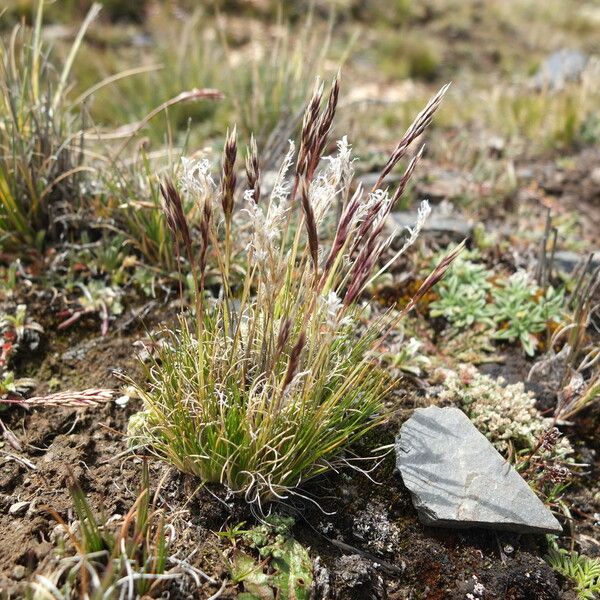
Standing tall in the thin, crisp air of the high Andes, Cinnagrostis vicunarum—commonly known as Vicuña Grass—is a true survivor of the Altiplano. This hardy bunchgrass is the primary fuel for the wild vicuñas that roam the South American mountains, earning it a reputation as the "bread of the peaks." While it might look like a humble tuft of green, it is an evolutionary masterpiece designed to withstand UV radiation and freezing nights.
🔍 How to Identify
- 🌿 Growth Habit: It forms dense, low-growing mounds known as tussocks, rarely exceeding 15–20 centimeters in height, keeping a low profile to avoid biting mountain winds.
- 📏 The Leaves: The blades are remarkably narrow, rigid, and often folded or rolled inward to prevent moisture loss in the dry Andean climate.
- 🌾 Inflorescence: During the blooming season, it produces short, compact flower spikes (panicles) that have a slightly silvery or purplish tint, tucked closely among the leaves.
🏡 In Your Garden
- 🏔️ High-Altitude Specialist: In a garden setting, this plant is best suited for alpine or rock gardens. It thrives in "poor" soil that is gritty, rocky, and fast-draining, mimicking its volcanic mountain home.
- ☀️ Sun Worshipper: Unlike many grasses that prefer dappled light, Vicuña Grass requires full, intense sun to maintain its compact shape; in the shade, it may become leggy and lose its characteristic toughness.
⚠️ Safety & Toxicity
- ✅ Non-Toxic: This plant is considered safe and is non-toxic to humans and animals.
- 🐑 Forage Friendly: It is the preferred snack for llamas, alpacas, and vicuñas. However, the stiff, dry leaves can be a bit "pokey," so wear gloves if you are dividing mature clumps to avoid minor skin pricks.
✨ Fun Fact
The vicuña, the graceful wild ancestor of the alpaca, has specialized teeth that never stop growing, allowing them to graze on the tough, silica-rich blades of Cinnagrostis vicunarum without wearing their teeth down to the gums!

Detailed Care Instructions







