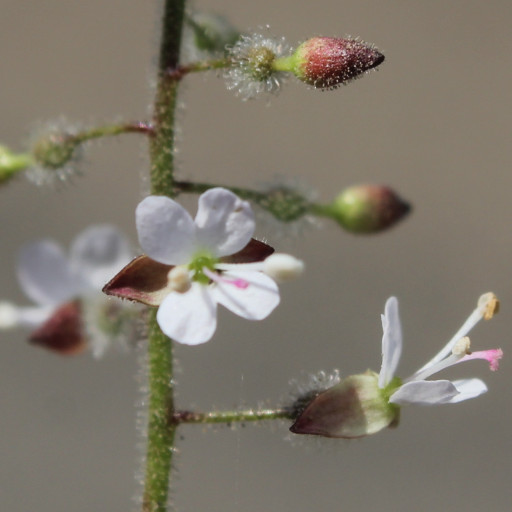
Plant Overview
Often called the Enchanter’s Nightshade, this delicate woodland resident is steeped in ancient Greek mythology. Named after the sorceress Circe, who was famous for her knowledge of magic and potions, it actually belongs to the Willowherb family rather than the "true" nightshade family. It is a quiet, ethereal plant that transforms shaded garden corners into a misty landscape of tiny white blooms.
🔍 How to Identify
- 🌿 The Foliage: The leaves are heart-shaped or ovate with slightly wavy edges, arranged in opposite pairs along a hairy stem.
- 🌸 The Bloom: Look for tiny, two-petaled white or pale pink flowers. Each petal is so deeply notched that it often appears as if there are four petals.
- 🧶 The "Hitchhikers": After flowering, the plant produces small, pear-shaped seed pods covered in tiny, hooked bristles that easily snag on animal fur or hikers' socks.
🏡 In Your Garden
- ☁️ Shadow Dweller: This plant is an expert at surviving where others fail. It thrives in deep shade and damp, nitrogen-rich soil, making it a natural choice for "problem" areas under heavy tree canopies.
- 🌱 Spreading Nature: While it looks delicate, it spreads via white underground runners (rhizomes). If you find it in your flower beds, it may be a bit of a "polite intruder"—easy to pull up, but persistent if left to its own devices.
⚠️ Safety & Toxicity
- 🟢 Non-Toxic: Unlike its namesake (Deadly Nightshade), Circaea lutetiana is not considered highly poisonous to humans or pets through touch.
- 👅 Not for Eating: While not deadly, it is not an edible herb and contains tannins that make it unpalatable. It’s best admired for its beauty rather than added to a salad.
✨ Fun Fact
The specific name lutetiana comes from "Lutetia," the ancient Latin name for Paris, which was historically known as the "City of Mud" or "Witch City" in various poetic contexts—fitting for a plant named after a sorceress!

Detailed Care Instructions
| Humidity | High |
| Lighting | Shade |
| Difficulty | Medium |
| Hibernation | Cold Period |
To grow Circaea Lutetiana (also known as Enchanter's nightshade), follow these steps:
- Choose a suitable location: Circaea Lutetiana thrives in partial shade to full shade. Select a spot in your garden that receives filtered sunlight or is shaded for part of the day. It prefers moist and well-draining soil.
- Prepare the soil: Enrich the soil with compost or organic matter to enhance its fertility and drainage. Ensure that the soil remains consistently moist but not waterlogged.
- Planting: Sow the Circaea Lutetiana seeds in early spring or fall. Lightly cover the seeds with a thin layer of soil. Space the seeds about 6 inches apart. Alternatively, you can also start the plant from cuttings or transplant a nursery-bought plant.
- Watering: Keep the soil consistently moist throughout the growing season. Water the plants regularly, especially during periods of drought or hot weather. However, avoid overwatering as it can lead to root rot.
- Mulch: Apply a layer of organic mulch around the base of the plants to help retain moisture, suppress weed growth, and regulate the soil temperature.
- Fertilization: Circaea Lutetiana does not typically require heavy fertilization. If desired, apply a balanced slow-release fertilizer according to the manufacturer's instructions in early spring.
- Pruning: Prune off any dead or damaged leaves and stems to maintain a tidy appearance. This plant tends to spread through underground rhizomes, so regular pruning can help control its growth.
- Pests and diseases: Circaea Lutetiana is generally resistant to pests and diseases. However, keep an eye out for any signs of common garden pests like aphids or spider mites, and treat accordingly if necessary.
- Propagation: After a few years, the plant may produce seed pods. Allow these seed pods to mature and dry on the plant. Harvest the seeds, and you can propagate new plants by sowing them or storing them for later use.
By following these steps, you should be able to successfully grow Circaea Lutetiana in your garden.

Place in a window with dappled sun or a spot in the middle of a room. Or directly in a window facing west or east.

Circaea Lutetiana plant should be watered regularly to keep the soil consistently moist but not waterlogged. It is important to allow the soil to dry slightly between waterings, as overly wet conditions can lead to root rot. When watering, make sure to thoroughly saturate the soil to ensure the water reaches the roots. It is recommended to water in the morning to allow the plant to fully absorb the water throughout the day. Avoid watering from overhead as this can lead to fungal issues. Instead, water at the base of the plant. Consider using a moisture meter or checking the soil with your finger to ensure that the soil is not too dry or too wet.
To fertilize this plant, begin by selecting a well-balanced, all-purpose fertilizer. Dilute the fertilizer with water according to the manufacturer's instructions. Apply the fertilizer to the soil around the plant's root zone, being careful not to allow the fertilizer to touch the plant's leaves or stem. Water the plant thoroughly after fertilizing to allow the fertilizer to absorb into the soil. Fertilize this plant once every two to three weeks during the growing season, and reduce fertilization in the winter months when the plant is dormant.
Circaea Lutetiana plant prefers a moist and well-drained soil that is rich in organic matter. The soil should be slightly acidic with a pH between 5.5 and 6.5. The plant can grow in a variety of soil types including loam, clay, and sandy soils. However, it is important that the soil is not compacted as it can impede the plant's root growth and water absorption. Circaea Lutetiana plant also prefers a soil that is not constantly wet as it can lead to root rot. Adding organic matter such as compost or leaf litter can help improve soil fertility and structure.
To propagate this plant, you can collect its seeds in late summer or early autumn and store them until spring. In the spring, sow the seeds in pots or directly in the ground. Keep the soil moist and the temperature warm. It is also possible to take stem cuttings in late summer or early autumn and root them in moist soil or water.
Common pests of the enchanter's- nightshade include Spider mites, aphids, whiteflies. Make a habit of checking your enchanter's- nightshade frequently for pests so that any infestations can be caught and managed early.








