Plant Overview
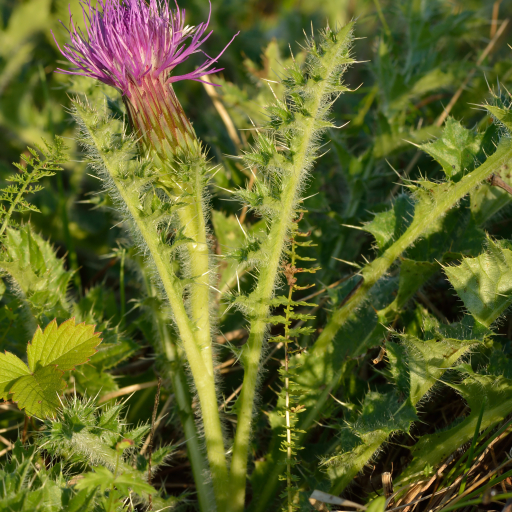
Known colloquially as the Dwarf Thistle or Stemless Thistle, this plant looks like a traditional thistle that simply decided to skip its growth spurt. Native to the chalky downs of Europe, it reigns as a miniature, prickly king of the turf. Its unique "no-neck" appearance makes it one of the easiest wild thistles to identify, as it appears to have been pressed flat by an invisible hand.
🔍 How to Identify
- 🍃 The Grounded Rosette: The leaves are dark green, deeply lobed, and incredibly spiny. They grow in a flat, circular rosette pressed firmly against the soil.
- 🌸 Centerpiece Bloom: A single, large flower head (usually 2–4 cm wide) sits directly in the center of the leaves. It is a vibrant reddish-purple or magenta.
- 🚫 Missing Stem: Unlike its tall cousins, this species has a stem so short (usually less than a few centimeters) that the flower appears to be growing straight out of the earth.
🏡 In Your Garden
- ⛰️ The Lime Specialist: This plant is a "calcicole," meaning it loves lime. If you find it appearing naturally, it is a guaranteed indicator that your soil is alkaline and likely contains chalk or limestone.
- ☀️ Shadow Hater: It cannot compete with tall vegetation. It thrives in "stressed" environments—like heavily grazed sheep pastures or very short lawns—where other plants aren't tall enough to steal its sunlight.
- 🦋 Pollinator Magnet: Despite its low profile, it is a high-value target for bumblebees and butterflies, providing a rich source of nectar right at ground level.
⚠️ Safety & Toxicity
- ⚔️ Physical Defense: While the plant is not chemically toxic to humans or pets, its spines are exceptionally sharp and stiff.
- 🐾 Pet Warning: Dogs running through the grass can easily prick their paws on the hidden rosettes. If you have curious pets, it is best to keep this plant in "wilder" areas of the garden where they don't play.
✨ Fun Fact
🧺 The Picnic Thistle: In some regions, it is nicknamed the "Picnic Thistle." Because the flower sits so low in the grass, it is often invisible to hikers until they sit down for lunch—resulting in a very sharp and localized surprise!

Detailed Care Instructions
To grow Cirsium acaulon, also known as stemless thistle, follow these steps:
- Obtaining seeds: Locate a reputable seed supplier or source plants from nurseries specializing in native and wildflower species. Ensure the seeds are fresh and viable.
- Choose a suitable location: Cirsium acaulon thrives in full sun to partial shade. Select a location with well-draining soil that is not overly fertile. Avoid areas prone to standing water.
- Soil preparation: Before sowing the seeds, prepare the soil by removing weeds and loosening it to a depth of about 6-8 inches. Add organic matter if the soil is compacted or lacks nutrients.
- Sowing seeds: Directly sow the seeds on the prepared soil surface in early spring or fall. Lightly press them into the soil, as they require light to germinate. Ensure the seeds are evenly distributed to avoid overcrowding.
- Watering: After sowing, water the area gently using a sprinkler or a watering can. Keep the soil consistently moist but not saturated. Avoid overwatering, as it can lead to rotting of seeds or seedlings.
- Germination and early care: Germination generally takes 2-4 weeks. Once the seedlings emerge, keep the soil evenly moist. Thin the seedlings if they appear overcrowded, allowing sufficient space for healthy growth.
- Transplanting: If desired, you can start seeds indoors in pots and then transplant them outdoors once they are about 4-6 inches tall. This can provide more controlled conditions for early growth.
- Maintenance: Once the plants are established, they require minimal care. Water during dry periods and remove weeds that may compete for resources. Avoid excessive fertilization, as Cirsium acaulon prefers poorer soils.
- Controlling pests and diseases: Cirsium acaulon is typically not prone to severe pest or disease issues. However, keep an eye out for common garden pests like aphids or slugs and treat as necessary using organic methods.
- Harvesting and propagation: Allow some flowers to go to seed if you wish to propagate new plants. Collect seeds when they turn brown and dry out. Store them in a cool, dry place or sow them immediately in prepared soil.
Remember to check with local gardening experts or native plant societies for specific guidance on growing Cirsium acaulon in your region, as conditions may vary.
Cirsium acaulon plant requires regular watering during its growing season, which typically begins in early spring and continues until fall. The watering frequency should be determined by the soil type, location, and weather conditions. It is best to water deeply and infrequently, allowing the soil to dry out slightly between waterings. Overwatering can lead to root rot and other plant diseases.
When watering, it is important to avoid getting water on the leaves, as this can promote fungal growth. Instead, water directly at the base of the plant, using a slow, steady stream of water. If the soil is particularly dry, it may be necessary to give the plant a long, slow soak to help rehydrate the root system.
To help conserve soil moisture, it is recommended to add a layer of organic mulch around the base of the plant. This will help to prevent water from evaporating from the soil and keep the root system cooler during hot weather.
During periods of drought or extreme heat, it may be necessary to water more frequently to prevent the plant from wilting. However, it is still important to avoid overwatering, as this can cause more harm than good. Overall, it is best to monitor the plant's moisture levels and adjust watering accordingly.
To promote growth and flowering of this plant species, apply a balanced fertilizer with equal amounts of nitrogen, phosphorus, and potassium. Use a slow-release fertilizer in the early spring or late fall. Apply the fertilizer at the base of the plant, avoiding contact with the leaves. Water the plant thoroughly after fertilizing. Avoid over-fertilizing as it can cause damage to the roots.
To propagate this plant, you will need to gather seeds or take root cuttings.
For seed propagation, collect mature seeds in the fall when the flower heads have dried and turned brown. Remove them from the plant and allow them to dry for a few days before planting.
For root cutting propagation, wait until the plant is dormant in the fall or early spring. Dig up a portion of the root system and cut it into pieces, making sure each piece has at least one growing point. Plant the root cuttings in a pot or directly in the ground and keep moist until new growth appears.
Both methods require well-draining soil and regular watering until the new plants have established themselves.








