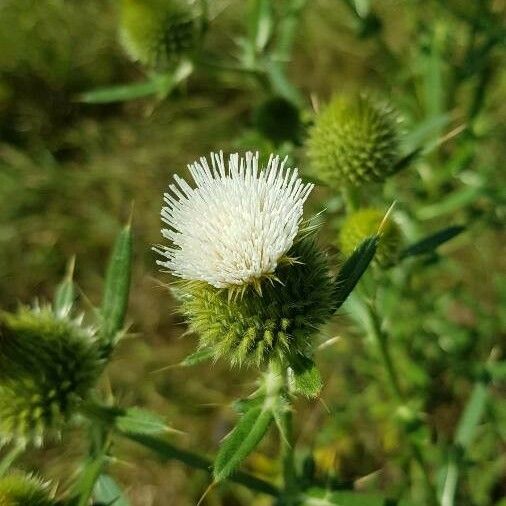
Plant Overview
Commonly known as the Bristly Thistle or the intimidating Cruel Thistle, this plant is the architectural "bodyguard" of the Mediterranean landscape. With its silver-green foliage and a crown of imposing spines, it looks like something straight out of a medieval fortress garden. While it may look fierce, it is a vital nectar source for local pollinators and a favorite for gardeners who appreciate bold, structural beauty.
🔍 How to Identify
- 🌵 The Spines: The most striking feature is the long, needle-sharp yellow spines that edge every leaf and surround the flower heads, giving it a truly "ferocious" appearance.
- ☁️ Foliage Color: The leaves are a dusty, silvery-green with a slightly woolly or felt-like texture on the underside, which helps the plant reflect harsh sunlight and conserve moisture.
- 🌸 The Bloom: It produces large, pale creamy-white to light purple flower heads that sit nestled within a protective, cage-like nest of spiny bracts.
🏡 In Your Garden
- ☀️ Sun Worshipper: Originating from the rocky slopes of Italy and the Balkans, this thistle thrives in intense heat and poor, well-draining soil. It is a perfect candidate for "xeriscaping" or gravel gardens.
- 🌱 Deep Roots: It develops a significant taproot very early in its life. This makes it incredibly drought-resistant, but it also means it hates being moved; transplanting an established Cirsium ferox is rarely successful.
⚠️ Safety & Toxicity
- ⚔️ Physical Hazard: This plant is not known to be chemically toxic, but it is physically dangerous. The spines are exceptionally sharp and can easily pierce standard gardening gloves.
- 🐾 Placement Matters: Because of the mechanical injury risk, it should be planted away from paths or areas where children and pets play. It serves as an excellent "natural fence" to deter intruders or roaming wildlife.
✨ Fun Fact
🐝 The Pollinator’s Fortress: Despite its "mean" exterior, the Bristly Thistle is a Five-Star hotel for bees and butterflies. The nectar is highly accessible to them, and the surrounding spines act as a natural security system, protecting the feeding insects from birds and other predators!

Detailed Care Instructions
To grow a Cirsium Ferox plant, also known as the Yellow Thistle or Horrid Thistle, you can follow these steps:
- Choose the right location: Cirsium Ferox prefers full sun to partial shade, so ensure that the chosen spot receives ample sunlight.
- Soil preparation: These plants generally prefer well-draining soil. Prepare the soil by removing weeds, rocks, and other debris. Consider adding compost or organic matter to improve soil fertility.
- Sowing seeds: Cirsium Ferox can be grown from seeds. Start by scarifying the seeds, which involves scratching the surface of the seed coat to promote germination. You can do this by gently filing the seed coat with sandpaper or nicking it with a knife. Soak the seeds overnight in room temperature water.
- Planting the seeds: Sow the seeds in seed trays or small pots, covering them with a thin layer of soil. Place the trays or pots in a warm location, such as a greenhouse or a window sill, and keep the soil slightly moist.
- Transplanting: Once the seedlings are large enough and the risk of frost has passed, you can transplant them into the garden or larger pots. Choose a spacing of around 12-18 inches between plants.
- Watering and maintenance: Cirsium Ferox requires regular watering, especially during dry periods. However, ensure that the soil is well-drained, as these plants do not tolerate waterlogged conditions. Mulching around the plants can help retain soil moisture.
- Pruning and support: Cirsium Ferox may require support as it grows, especially in exposed areas, due to its height. Additionally, deadheading or pruning spent flowers can promote further blooming and prevent self-seeding.
- Pest and disease control: Keep an eye out for common pests such as aphids or thrips, which can be controlled through organic insecticidal soap or neem oil. Additionally, maintaining good airflow around the plants can prevent fungal diseases.
- Winter care: Cirsium Ferox is a perennial plant, but it is not fully hardy and may require protection during extreme cold or frost. Consider covering the plant with mulch or a protective covering during the winter months.
By following these steps, you can successfully grow the Cirsium Ferox plant and enjoy its beautiful yellow flowering display.

Cirsium Ferox is a type of plant that requires regular watering in order to thrive. When you water this plant, it is important to ensure that the soil is completely saturated and that the water reaches all the way down to the roots. It is recommended that you water this plant deeply, but infrequently. This means that you should give it a good soaking once or twice a week, rather than lightly watering it every day.
In addition to giving your Cirsium Ferox plant enough water, it is also important to be mindful of the type of soil it is planted in. This plant prefers soil that is rich in organic matter and has good drainage. If the soil is too dense or compacted, it may not be able to absorb water properly, which can lead to root rot and other issues.
One way to ensure that your Cirsium Ferox plant gets enough water is to use a drip irrigation system or a soaker hose. This will allow the water to be distributed evenly and directly to the roots, without soaking the foliage or causing water to run off onto the surrounding soil.
Overall, watering Cirsium Ferox is an important part of caring for this plant. By giving it enough water and ensuring that the soil is well-draining, you can help it grow healthy and strong.
To fertilize this plant, you should use a balanced fertilizer with equal amounts of nitrogen, phosphorus, and potassium. This should be applied in the early spring before new growth appears. You can apply the fertilizer directly to the soil or mix it in with water and apply as a foliar spray. Repeat the application every four to six weeks during the growing season. Avoid applying fertilizer too close to the stem of the plant to prevent burning.
Cirsium ferox is a perennial plant that requires well-drained soils that are rich in nutrients. The ideal soil pH range for this plant is between 6.5 and 7.5. The plant grows best in soils that are fertile with organic matter and are well-drained to prevent waterlogging. The soil texture should be loamy or sandy, although the plant can tolerate soils that are slightly clayey.
It is important to ensure that the soil is not compacted, as this can hinder root growth and lead to poor plant health. Regular soil amendments with organic matter such as compost, leaf mold, or well-rotted manure can help to improve the soil quality and provide the necessary nutrients for healthy plant growth.
It is also important to ensure that the soil is moist but not too wet, as this can lead to root rot. Mulching around the plant can help to retain moisture and regulate soil temperature, which can be beneficial for the plant's health.
Overall, a well-drained, nutrient-rich soil with a pH range between 6.5 and 7.5 is ideal for growing Cirsium ferox.
To propagate this plant, take a mature stem cutting from the plant, making sure to use clean and sharp pruning shears. Choose a stem that has 2-3 nodes. Remove any leaves from the lower half of the stem. Dip the cut end of the stem in rooting hormone, then plant it in a pot filled with moist propagation mix. Keep the pot in a warm and bright area but out of direct sunlight. Water the cutting regularly, making sure to keep the soil moist but not waterlogged. After a few weeks, the cutting should start to develop roots. Once the roots are established, transplant the new plant into a larger pot or directly into the ground.








