Plant Overview
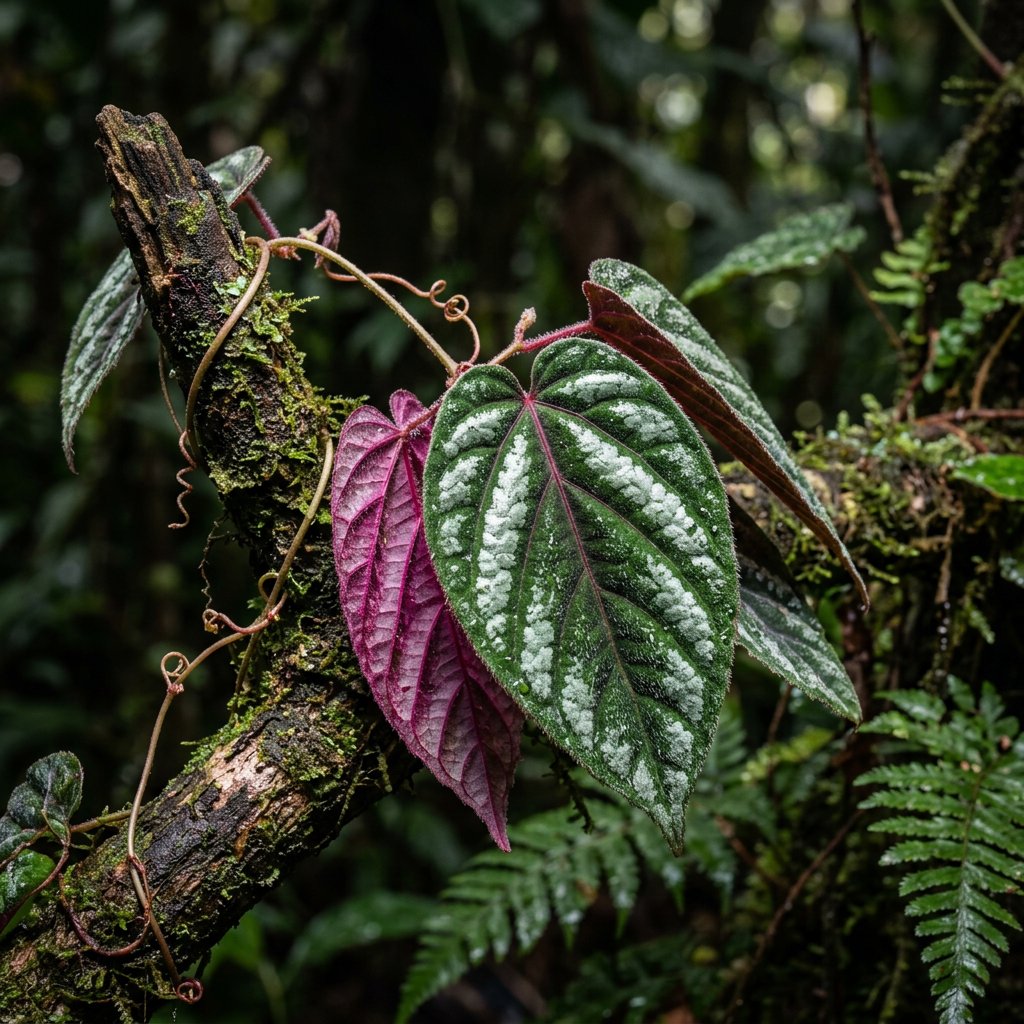
Often called the Rex Begonia Vine, the Cissus discolor is a show-stopping climber that looks like it belongs in a Victorian glasshouse. Despite its nickname, it isn’t a Begonia at all, but a member of the grape family native to the steaming tropical jungles of Java. Its iridescent, velvety leaves look like they’ve been hand-painted with silver, making it a "must-have" for collectors seeking a touch of exotic drama.
🔍 How to Identify
- 🍃 Foliage Texture: The leaves have a distinct velvety feel, featuring an elongated heart shape with a deep green base.
- 🎨 Iridescent Pattern: The upper surface is splashed with shimmering silver "islands" between the veins, while the undersides are a rich, solid burgundy-purple.
- 🧶 Vining Stems: Look for thin, wiry, deep red stems that produce small, forked tendrils used to grab onto nearby structures as the plant climbs.
🏡 In Your Garden
- ☁️ Humidity is King: Unlike hardier ivy, this plant demands high humidity (at least 60%) to prevent its beautiful edges from turning brown and "crispy." It thrives in a bathroom with a window or near a humidifier.
- 🧗 Support the Climb: Because it uses tendrils to hike upward, it is happiest when given a moss pole or a small trellis. If left to trail from a hanging basket, the leaves may grow smaller over time.
- 💡 Light Sensitivity: It mimics life on the forest floor; it loves bright, dappled light but will "bleach" or scorch if exposed to harsh, direct afternoon sun.
⚠️ Safety & Toxicity
- 🐾 Pet Safety: The Cissus discolor is generally considered non-toxic to cats and dogs, making it a great alternative to the toxic Pothos or Philodendron.
- 👄 Mild Irritation: While not poisonous, the sap contains microscopic calcium oxalate crystals (common in many houseplants) which can cause mild skin or mouth irritation if chewed or handled roughly.
✨ Fun Fact
Even though it looks nothing like a vineyard staple, Cissus discolor is a cousin of the common Grapevine! If you look closely at the way its tendrils curl around a stake, you can see the family resemblance to a Napa Valley grape plant.

Detailed Care Instructions
To grow Cissus Discolor, also known as Rex Begonia Vine or Begonia Vine, follow these steps:
- Plant selection: Choose a healthy Cissus Discolor plant from a reputable nursery or garden center, or propagate one from stem cuttings.
- Lighting: Cissus Discolor prefers bright, indirect light. Place it near a window that receives filtered sunlight, or use artificial grow lights.
- Temperature: Keep the plant in a warm environment, ideally between 65-80°F (18-27°C). Avoid exposing it to cold drafts or extreme temperature fluctuations.
- Humidity: Cissus Discolor requires high humidity levels. You can increase humidity by placing the plant on a tray filled with water and pebbles or using a humidifier. Alternatively, mist the leaves regularly.
- Watering: Ensure the soil remains consistently moist. Water the plant when the top inch of soil feels dry. Avoid overwatering, as it can lead to root rot. Provide good drainage by using a pot with drainage holes and a well-draining potting mix.
- Fertilizing: Feed the plant with a balanced, water-soluble fertilizer every two to four weeks during the growing season (spring and summer). Follow the instructions on the fertilizer packaging for proper dilution and application.
- Pruning: Pinch and prune the plant regularly to promote bushiness and prevent legginess. You can propagate new plants from the cuttings.
- Support: Cissus Discolor is a trailing vine, so provide it with a trellis, stake, or hanging basket to support its growth and prevent it from becoming tangled.
- Propagation: To propagate the plant, take stem cuttings about 4-6 inches long from the healthy, non-flowering vines. Remove the lower leaves and plant the cuttings in a well-draining mix. Water them lightly and provide high humidity until they root.
- Pests and diseases: Keep an eye out for pests like spider mites, aphids, and mealybugs. If necessary, treat them with insecticidal soap or other suitable pesticides. Avoid overwatering to prevent root rot and control the humidity to prevent fungal diseases.
Remember, Cissus Discolor is a tropical plant that requires a consistent and controlled environment to thrive. Follow these care tips, and you'll have a beautiful and healthy Cissus Discolor plant in no time.

Place in a window with dappled sun or a spot in the middle of a room. Or directly in a window facing west or east.

To water this plant, you should allow the top inch of soil to dry out slightly between waterings. When watering, use room temperature water and saturate the soil until water drains out the bottom of the pot. Avoid overwatering and allow excess water to drain away to prevent waterlogging, as this can damage the plant's roots. It is also important not to let the plant sit in standing water for extended periods. In low humidity environments, misting the leaves with water can help to keep the plant healthy.
To fertilize this plant, you should first mix a balanced fertilizer with equal parts nitrogen, phosphorus, and potassium. Then, dilute the fertilizer in water to half strength. During the plant's growing season, which typically occurs in the spring and summer months, apply the diluted fertilizer once every two weeks. However, during the dormant period in fall and winter, reduce the frequency of fertilization to once a month. Be sure to water the plant thoroughly after each fertilizer application to avoid fertilizer burn.
When planting a Cissus Discolor plant, it is important to choose a well-draining soil that is rich in organic matter. This will help to promote healthy root growth and prevent the soil from becoming waterlogged. A mix of peat moss, perlite, and vermiculite can be used as a suitable growing medium for this plant. A slightly acidic soil with a pH of around 6 to 6.5 is ideal. The soil should also be kept moist but not overly wet, as this can cause root rot and damage to the plant. Regular fertilization with a balanced fertilizer can help to promote healthy growth.
Propagation of this plant can be done through stem cuttings. The stem should be cut just below a node, and any leaves on the cutting should be removed. The cutting should be allowed to callus over for a few days before being planted in well-draining soil. Keep the soil moist and the cutting in a warm, bright area, but not direct sunlight. After a few weeks, new growth should appear.
Common pests of the begonia vine include Mealybugs, spider mites, thrips. Make a habit of checking your begonia vine frequently for pests so that any infestations can be caught and managed early.








