Plant Overview
Citharexylum cooperi, commonly known as Cooper’s Fiddlewood, is a lush tropical evergreen that brings both sound and scent to the garden. Originating from the rainforests of Central America, this elegant shrub is famous for its cascading white blossoms and its "musical" heritage. It is a favorite among landscapers who want to create a fragrant, bird-friendly sanctuary in warmer climates.
🔍 How to Identify
- 🍃 Glossy Foliage: The leaves are large, elliptical, and a vibrant deep green with a polished, waxy sheen that reflects sunlight beautifully.
- 🌸 Pendulous Blooms: It produces long, drooping clusters (racemes) of tiny, bell-shaped white flowers that release a sweet, honey-like perfume, especially in the evening.
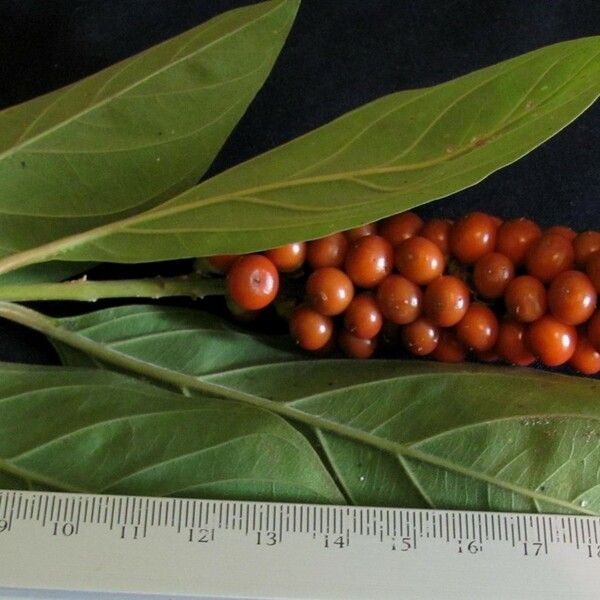
- 🍒 Color-Changing Berries: After flowering, the plant produces small, round fruits that transition from a bright, ornamental orange to a glossy midnight black as they ripen.
🏡 In Your Garden
- 🦋 A Pollinator Party: This plant is a high-traffic zone for nature; the nectar-rich flowers are irresistible to butterflies and bees, while the ripened berries act as a natural feeder for songbirds.
- 🌳 Versatile Structure: Because it can be pruned into a formal hedge or allowed to grow into a multi-stemmed small tree, it is perfect for creating "living walls" or privacy screens.
- 🌞 Light & Soil Nuance: While it craves bright light to produce the best floral show, it is sensitive to "wet feet." It requires soil that drains quickly to avoid root stress, particularly in humid environments.
⚠️ Safety & Toxicity
- 🐾 Mildly Toxic: While birds eat the berries with no ill effects, the fruit and leaves can cause stomach upset (nausea or vomiting) in humans, dogs, and cats if ingested in significant amounts.
- 👶 Keep Out of Reach: Because the bright orange berries can look like candy to small children, it is best planted in areas where curious toddlers aren't tempted to sample the "garden snacks."
✨ Fun Fact
The name Citharexylum is a literal translation of the Greek words for "Lyre Wood." Historically, the sturdy yet flexible wood from trees in this genus was highly sought after for crafting the frames of stringed musical instruments!

Detailed Care Instructions








