Plant Overview
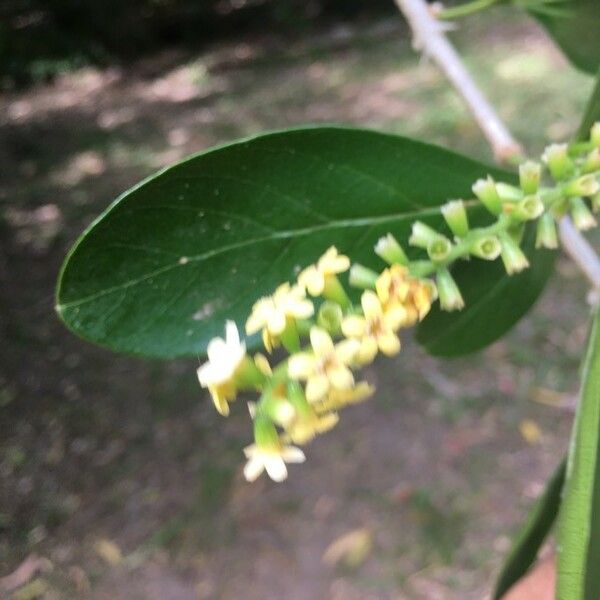
Known as the Tarumá or the Montevideo Fiddlewood, this elegant South American native is a true storyteller of the wetlands. In its homeland of Uruguay and Argentina, it is often found guarding the edges of rivers, offering a pendulous display of fragrant white flowers that dance in the breeze. While it looks delicate, it is a sturdy survivor that bridges the gap between a wild woodland tree and a refined garden specimen.
🔍 How to Identify
- 🍃 Glossy Foliage: The leaves are bright green, elliptical, and have a polished sheen that reflects sunlight, often turning slightly bronze in cooler weather.
- 🌸 Fragrant Racemes: It produces long, drooping clusters of tiny white flowers that emit a sweet, honey-like scent, especially noticeable in the late afternoon.
- 🍒 Colorful Berries: After flowering, the tree is adorned with small, round fruits that transition from a bright orange-red to a deep, dark purple or black when ripe.
- ⚔️ Hidden Spines: Younger branches and certain varieties often sport small, sharp axillary spines—a gentle reminder of its rugged wild origins.
🏡 In Your Garden
- 💧 Water Enthusiast: Unlike many ornamental trees, the Tarumá loves "wet feet." It is perfect for those low-lying spots in your yard where water tends to settle or near a pond edge.
- 🦋 Wildlife Magnet: If you want a garden buzzing with life, this is your tree. Its nectar is a primary food source for local butterflies, and the colorful berries are an irresistible buffet for songbirds.
- 🌳 Growth Nuance: It has a somewhat irregular, airy growth habit. It doesn't like to be crowded, so give it space to spread its weeping branches to truly appreciate its architectural form.
⚠️ Safety & Toxicity
- 🌵 Physical Caution: While not considered chemically toxic to humans or common pets, the primary safety concern is its thorns. Be careful when pruning, as the small spines can be easy to miss.
- 🐾 Pet Safety: There are no widespread reports of toxicity regarding the berries or leaves for dogs and cats, but as with any ornamental fruit, it is best to discourage ingestion to avoid digestive upset.
✨ Fun Fact
The name Citharexylum comes from the Greek words kithara (lyre/zither) and xylon (wood). This refers to the historical use of the wood from trees in this genus to craft sounding boards for musical instruments!

Detailed Care Instructions
Watering of this plant should be done carefully by avoiding overwatering or under-watering. It is recommended to check the moisture of the soil before watering. The best way to do this is by sticking your finger in the soil up to the first knuckle. If the soil feels dry, it's time to water.
This plant requires a moderate amount of water, so it should be watered every 7-10 days, depending on the weather conditions and the humidity level in the environment. It is important to ensure that the water penetrates deep into the soil to encourage root growth.
When watering, it is best to water the soil directly rather than sprinkling water on the leaves to prevent any fungal diseases from occurring. It is also advisable to water the plant early in the morning or late in the evening to avoid evaporation and heat stress.
During the winter period, the frequency of watering should be reduced as the plant becomes dormant. In addition, it is important to avoid watering the plant during rainy seasons as this can lead to waterlogging of the soil.
The ideal soil for the Citharexylum Montevidense plant is well-draining and fertile. It should be loamy and rich in organic matter. The soil pH should be slightly acidic to neutral (around 6.0 to 7.0). This species of plant prefers moist soil, but it cannot tolerate waterlogged soil. Therefore, it is essential to ensure that the soil has proper drainage. It is recommended to use a potting mix that is specifically designed for shrubs and trees or a mixture of peat, sand, and compost. The plant should be regularly fertilized with a balanced fertilizer to ensure healthy growth. Additionally, it is important to monitor the soil moisture and water the plant when the top inch of soil feels dry.








