Plant Overview
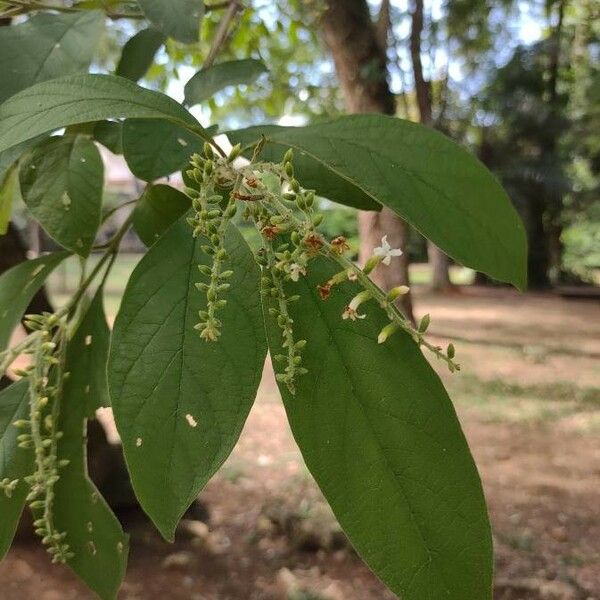
Known affectionately as the Pau-viola (Guitar Tree) in its native South America, this elegant tree is a favorite for reforestation projects and bird lovers alike. Its name comes from the traditional use of its lightweight, resonant wood to craft stringed instruments like the viola caipira. In full bloom, it transforms into a visual masterpiece, draped in long, weeping chains of fragrant white blossoms that seem to glow against its lush green canopy.
🔍 How to Identify
- ☁️ The Flowers: Produces spectacular, pendulous "racemes" (long clusters) of tiny, star-shaped white flowers that hang downward like floral waterfalls.
- 🍃 The Foliage: Features large, elongated oval leaves with a slightly leathery texture; they often turn a beautiful reddish-orange hue before falling during the dry season.
- 🍒 The Fruit: Look for small, fleshy berries that transition through a sunset of colors—starting green, turning bright orange, and finally ripening to a glossy black.
🏡 In Your Garden
- 🕊️ The Bird Magnet: If you want a garden filled with song, this is the tree to plant. The berries are a primary food source for dozens of tropical bird species, who will visit daily once the fruit ripens.
- 💧 Thirst for Life: In the wild, it loves "wet feet" and is usually found near riverbanks. If planting at home, ensure it has consistent moisture, especially during its first two years, or it may drop its leaves in protest.
- 🚀 Fast Growth: This is a "pioneer" species, meaning it grows incredibly quickly to provide shade for slower-growing plants. It’s perfect for homeowners who want to establish a "mature" looking garden in just a few seasons.
⚠️ Safety & Toxicity
- ✅ Status: Generally non-toxic and safe for home landscapes.
- 🐾 Details: There are no recorded toxic effects for cats, dogs, or horses. However, while birds find the berries delicious, they are not considered edible for humans and may cause mild digestive discomfort if swallowed by curious children.
✨ Fun Fact
The genus name Citharexylum is actually a literal Greek translation of the word "Fiddlewood" (kithara meaning lyre/harp and xylon meaning wood), honoring the tree's ancient connection to music and instrument making.

Detailed Care Instructions
To successfully grow a Citharexylum Myrianthum plant, also known as the Butterfly Bush, follow these steps:
- Location: Choose a location that receives full sunlight. The plant will thrive in areas with at least 6-8 hours of direct sunlight daily.
- Soil: Ensure that the soil is well-draining, as the plant does not tolerate waterlogged conditions. Loamy soil that is rich in organic matter is ideal.
- Planting: Dig a hole slightly larger than the root ball of the plant. Place the plant in the hole and backfill it with soil, firming it gently around the roots. Ensure that the plant is planted at the same depth it was growing in the nursery container.
- Watering: After planting, thoroughly water the plant to settle the soil around the roots. Maintain a regular watering schedule, keeping the soil moist but not waterlogged. Deep watering once a week is usually sufficient, but adjust according to the weather conditions. During hot and dry periods, the plant may require more frequent watering.
- Mulching: Apply a layer of organic mulch around the base of the plant, keeping it about 2-3 inches away from the stem. This helps conserve moisture, control weeds, and regulate soil temperature.
- Fertilization: Fertilize the plant in the spring, using a balanced slow-release fertilizer according to the package instructions. Avoid over-fertilizing, as it can result in excessive foliage growth instead of desired flowering.
- Pruning: Prune the plant in late winter or early spring before new growth begins. Remove any damaged, diseased, or crossing branches. Additionally, you can shape the plant to maintain a desired size or promote branching.
- Pest and Disease Control: Citharexylum Myrianthum is generally resistant to pests and diseases. However, regular inspections should be done to detect and promptly treat any issues such as aphids, spider mites, or powdery mildew. Follow appropriate organic or chemical control methods as needed.
- Propagation: You can propagate Butterfly Bush through softwood cuttings in late spring or early summer. Take 4-6 inch cuttings from healthy stems, remove the lower leaves, and dip the cut end in rooting hormone. Plant the cuttings in a well-draining potting mix and keep them moist until roots develop.
By following these guidelines, you should be able to successfully grow and enjoy your Citharexylum Myrianthum plant.
To water the Citharexylum Myrianthum plant, you need to follow a few specific guidelines:
- Determine the watering schedule: The watering frequency and amount largely depend on the plant's stage of growth, size, location, and environmental conditions. As a general rule, allow the top one inch (2.5 cm) of soil to dry out before watering again.
- Choose the right watering method: It is recommended to use a watering can or a hose with a nozzle attachment to provide a gentle and targeted flow of water directly to the plant's base. Avoid using high-pressure water streams or sprinklers, as this can damage the delicate leaves and flowers.
- Water during the appropriate time: The best time to water the Citharexylum Myrianthum plant is early in the morning or late in the evening. This helps the water to be absorbed by the roots before the sun's intensity increases and minimizes the risk of water evaporation.
- Water thoroughly but avoid overwatering: When watering, ensure that the entire root zone of the Citharexylum Myrianthum plant receives moisture. This can be achieved by applying water until it begins to seep out from the drainage holes at the bottom of the pot or by watering the surrounding soil if it's in the ground. However, be cautious not to overwater, as excessive moisture can lead to root rot.
- Monitor the moisture level: Regularly check the moisture level of the soil by sticking your finger about an inch (2.5 cm) deep into the soil. If it feels dry at this depth, it's time to water again. However, if it feels moist, it's best to wait a little longer before watering.
- Adjust watering according to the seasons: During summer or periods of higher temperatures, the Citharexylum Myrianthum plant may require more frequent watering as evaporation rates increase. Conversely, during cooler months, the water demand decreases, so adjust the watering frequency accordingly.
Remember, these instructions are general guidelines, and it is essential to observe the plant's specific needs and adjust your watering routine accordingly.
To effectively fertilize the Citharexylum Myrianthum plant, follow these instructions:
- Select a balanced, water-soluble fertilizer suitable for shrubs or flowering plants.
- Dilute the fertilizer according to the package instructions, typically mixing 1 tablespoon of fertilizer with 1 gallon of water.
- Water the plant thoroughly before applying the fertilizer to ensure the soil is moist.
- Pour the diluted fertilizer solution around the base of the plant, avoiding direct contact with the foliage.
- Ensure even distribution by circling the plant while applying the fertilizer.
- Use caution not to over-fertilize, as excessive nutrients can harm the plant. If in doubt, apply a slightly weaker solution.
- Repeat the fertilization process every four to six weeks during the growing season, typically spring through summer.
- Adjust the fertilization frequency and strength based on the plant's growth and health.
- Regularly monitor the plant for signs of nutrient deficiencies or excesses, such as yellowing or browning leaves, and adjust the fertilization accordingly.
- During the dormant season, limit or cease fertilization to allow the plant to rest.
Remember to always follow the specific recommendations provided with the fertilizer product you choose, as different brands may have varying instructions.
Citharexylum myrianthum is a type of plant that thrives best in well-draining soil. It prefers a soil type that is loamy in texture, with good water retention capabilities while still allowing excess water to drain away easily. The pH of the soil should ideally be slightly acidic to neutral, ranging from 6.0 to 7.0.
To create an ideal soil mix for Citharexylum myrianthum, you can incorporate a combination of organic matter and inorganic substances. Organic matter, such as compost or well-rotted manure, can enhance the soil's fertility and improve its water-holding capacity. Adding a layer of organic mulch around the plant's base can also help retain moisture and regulate soil temperature.
In terms of the inorganic components, you may include a proportion of perlite, vermiculite, or sand to promote good drainage and prevent the soil from becoming waterlogged. This helps prevent root rot and other soil-borne diseases. Amending the soil with small amounts of granular organic or slow-release fertilizer can provide extra nutrients to support healthy growth.
Prior to planting Citharexylum myrianthum, ensure that the soil is thoroughly prepared by loosening it to a depth of around 12 inches (30 cm) using a garden fork or spade. Remove any weeds or debris from the area as well. Once the plant is in place, provide an adequate water supply to settle the soil and help the roots establish themselves. Additionally, regular watering and monitoring of soil moisture levels are essential for the ongoing care of this plant.
Remember to follow any specific instructions or recommendations provided by a local nursery or gardening expert for the most accurate soil requirements based on your specific location and climate.
Citharexylum Myrianthum is a unique ornamental plant that can be propagated using several methods such as seeds, stem cuttings, and layering. Here is a detailed explanation of how to propagate this plant:
- Seeds: Start by collecting mature seeds from a healthy Citharexylum Myrianthum plant. It is best to collect the seeds in the fall when they are ripe. Sow the seeds in a well-draining soil mixture, covering them lightly with soil. Keep the soil consistently moist and place the seed tray in a warm and bright location, but away from direct sunlight. Germination may take several weeks, so be patient. Once the seedlings have grown a few inches tall and have several sets of leaves, they can be transplanted into individual pots or directly into the garden.
- Stem cuttings: Select a healthy, non-flowering stem from the Citharexylum Myrianthum plant. Using a clean, sharp knife or shears, take a cutting that is around 4-6 inches long. Remove any leaves from the lower half of the cutting and dip the cut end into a rooting hormone powder to encourage root growth. Prepare a rooting medium of equal parts perlite and vermiculite, and insert the cutting into the medium, gently firming the soil around it. Place the pot or tray in a warm and bright location, preferably with indirect sunlight. Mist the cutting regularly to maintain humidity and keep the soil slightly moist. After a few weeks, the cutting should begin to root. Once roots have developed, carefully transplant the cutting into a larger pot or directly into the garden.
- Layering: Layering is another method of propagating Citharexylum Myrianthum. Select a low-growing, flexible stem that is still attached to the main plant. Dig a small trench next to the stem and gently bend the selected section toward the trench. Make a small wound or scrape off a small section of the stem's outer layer to encourage root formation. Bury the wounded section of the stem in the trench, leaving the tip exposed, and secure it in place with a small stake if necessary. Cover the wound and the buried stem with soil, gently firming it around the area. Keep the soil consistently moist and wait for roots to develop. Once roots have formed, sever the new plant from the parent, and transplant it into a larger pot or directly into the garden.
Remember to provide proper care, such as regular watering and appropriate sunlight levels, to help the propagated Citharexylum Myrianthum plants thrive.








