Plant Overview
Known as the quintessential icon of Mediterranean summers, the Lemon Tree is actually a natural ancient hybrid between a citron and a bitter orange. These trees have traveled from South Asia to become the world's most popular citrus, celebrated for their "zesty" personality and incredible versatility. Whether it is the star of a backyard orchard or a fragrant companion on a sunny patio, the lemon tree is a symbol of freshness and longevity.
🔍 How to Identify
- 🍃 Glossy Foliage: The leaves are elliptical, dark green, and have a waxy coating. If you crush a leaf between your fingers, it releases a sharp, refreshing citrus aroma.
- 🌸 Blushing Blooms: The flowers are star-shaped and white, but they often feature a distinctive purple or pink tint on the underside of the petals before they fully open.
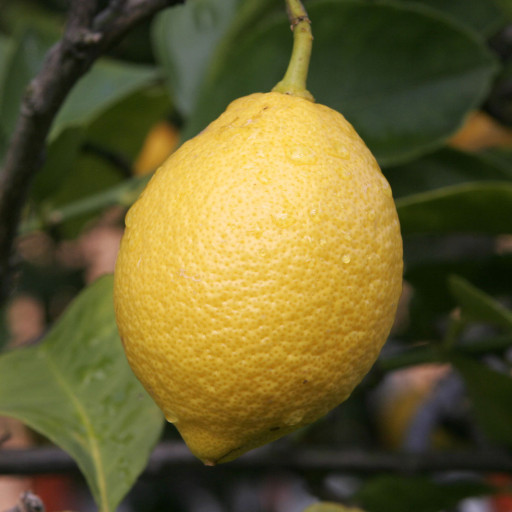
- 🍋 Pointed Fruit: Unlike the rounder orange, lemons are oval-shaped with a characteristic "nipple" (mammilla) at the apex and a textured, oil-rich rind.
🏡 In Your Garden
- ☀️ The Light Requirement: Lemons are essentially "solar-powered." They require at least 6 to 8 hours of direct sunlight to produce the sugars necessary for sour fruit. In cooler climates, they are often grown in pots so they can be moved indoors for the winter.
- 💧 Drainage is Non-Negotiable: These trees hate "wet feet." They thrive in slightly acidic, gritty soil that allows water to pass through quickly. Root rot is their most common enemy in home gardens.
- ✂️ Strategic Pruning: Because lemons can be heavy, pruning is essential to strengthen the "scaffold" of the tree. Removing "water sprouts" (fast-growing vertical shoots) helps the tree focus energy on fruit production rather than just height.
⚠️ Safety & Toxicity
- 🐾 Toxic to Pets: While the fruit juice is generally safe, the skin, leaves, and bark contain essential oils (limonene) and psoralens that are toxic to dogs, cats, and horses. Ingestion can cause vomiting or photosensitivity.
- 🌵 Hidden Thorns: Be careful when reaching into the canopy! Many lemon varieties, particularly the 'Lisbon' or younger 'Meyer' trees, have sharp thorns hidden along the branches to protect their fruit from herbivores.
✨ Fun Fact
Unlike most fruit trees that have a specific harvest window, a lemon tree can be "ever-bearing." On a single tree, you might see tiny flower buds, open blossoms, small green "buttons," and ripe yellow fruit all at the very same time!

Detailed Care Instructions
| Humidity | Normal |
| Lighting | Full Sun |
| Toxicity | Poisonous |
| Difficulty | Medium |
| Hibernation | Cold Period |
| Temperature | 21°C - 32°C |
| Hardiness Zones | 9 - 12 |
To grow a Citrus × Limon plant (also known as a lemon tree), follow these steps:
- Obtain a healthy lemon tree sapling or seeds: You can buy a sapling from a local nursery or online, or you can collect seeds from a lemon fruit. If using seeds, make sure they are fresh and fully mature.
- Choose the right container or location: Lemon trees can be grown in containers or in the ground, depending on your climate. If growing in a container, ensure it has good drainage and is large enough for the roots to grow. If planting in the ground, select a sunny spot with well-draining soil.
- Prepare the soil: Lemon trees prefer slightly acidic soil with a pH level between 5.5 and 6.5. Amend the soil with compost or well-rotted manure to improve its fertility and drainage.
- Plant the sapling or seeds: If using a sapling, dig a hole slightly larger than the root ball and place the sapling in it. If using seeds, plant them about half an inch below the soil surface. Water the soil after planting.
- Watering: Keep the soil consistently moist but not waterlogged. Water the plant deeply once a week, providing more water during hot, dry periods. Allow the soil to dry slightly between watering to prevent root rot.
- Fertilizing: Lemon trees are heavy feeders and benefit from regular fertilization. Use a citrus-specific fertilizer or a balanced fertilizer with a ratio of 10-10-10. Follow the manufacturer's instructions for application rates and frequency.
- Pruning: Prune your lemon tree regularly to maintain its shape, promote air circulation, and remove dead or diseased branches. Pruning can be done in late winter or early spring before new growth appears.
- Sunlight requirements: Lemon trees need full sunlight to grow and produce fruit. Place the plant in a spot where it receives at least 6-8 hours of direct sunlight per day.
- Pest control: Monitor the lemon tree for pests such as aphids, scales, or citrus leaf miners. Use organic pest control methods or consult a professional if necessary.
- Harvesting: Depending on the cultivar and growing conditions, lemon trees may start producing fruit within 3-5 years. Harvest the lemons when they are fully yellow and firm. Twist or cut them from the tree, and they should be ready to use.
Remember to research the specific variety of Citrus × Limon you are growing, as different cultivars may have slightly different care requirements.

Place in a bright room that is sun drenched almost all day. Or directly in a south-facing window.

To properly water this plant, it is important to first understand its water needs. This plant prefers well-draining soil and requires consistent watering. Avoid overwatering, as this can lead to root rot and damage the plant.
To water the plant, use a watering can or hose to slowly pour water into the soil. Aim for the soil around the root ball, not the leaves or stem. Water until the soil is moist but not drenched.
During hot or dry weather, the plant may need more frequent watering. Check the soil regularly to ensure it stays moist, but not waterlogged. It is also important to provide adequate drainage, to prevent standing water around the root system.
In addition to regular watering, this plant may benefit from occasional fertilizing with a citrus-specific fertilizer. Follow the instructions carefully and do not over-fertilize, as this can harm the plant.
- Choose a high-quality citrus fertilizer that contains nitrogen, phosphorus, and potassium, as well as trace minerals like iron, manganese, and zinc.
- Apply fertilizer in the early spring, just before new growth begins. Avoid fertilizing in the fall or winter, as this can promote new growth that is more susceptible to frost damage.
- Follow the instructions on the fertilizer package, adjusting the amount based on the age and size of your plant. In general, mature trees require more fertilizer than young or small plants.
- Apply fertilizer evenly around the base of the tree, extending out to the drip line, which is where rainwater would naturally fall from the branches.
- Water the tree deeply after fertilizing to help distribute the nutrients and prevent burning the roots. Be sure to water slowly and deeply, rather than frequently and shallowly.
- Spread a layer of organic mulch around the base of the tree to help retain moisture and discourage weed growth. Avoid piling mulch directly against the trunk, as this can promote rot.
- Monitor the tree for signs of over- or under-fertilization, such as yellowing leaves, stunted growth, or leaf drop. Adjust your fertilization schedule or amount as needed to keep your tree healthy and productive.
The ideal soil for Citrus × Limon plants is a well-draining mixture with a slightly acidic pH. It should be rich in organic matter and composed of a combination of sand, loam, and peat moss. The soil should have good moisture retention while also allowing for proper drainage to prevent the roots from becoming waterlogged. Avoid using heavy clay soils that do not drain well. It is also recommended to add a slow-release fertilizer to the soil before planting to provide the necessary nutrients for the plant's growth.
To propagate this plant, take a cutting from a healthy and mature plant. Make sure the cutting is around 6 to 8 inches long and has at least 3 to 4 nodes. Use a sharp and sterile razor or scissors to make the cut, and ensure that it is made at an angle. Remove any leaves from the lower half of the cutting and dip it into rooting hormone powder. Place the cutting into a pot with well-draining soil, and water it lightly. Cover the pot with a plastic bag or wrap to create a greenhouse effect, and place the pot in a warm, bright area but away from direct sunlight. Ensure the soil remains moist, and mist the cutting regularly. In a few weeks, the cutting should start to develop roots. Once the roots grow to around one inch or longer, remove the bag or wrap and place the pot in a brighter location. Gradually increase sunlight exposure to avoid shock.
Common pests of the lemon include Scale insect, mealybugs, spider mites, aphids. Make a habit of checking your lemon frequently for pests so that any infestations can be caught and managed early.








