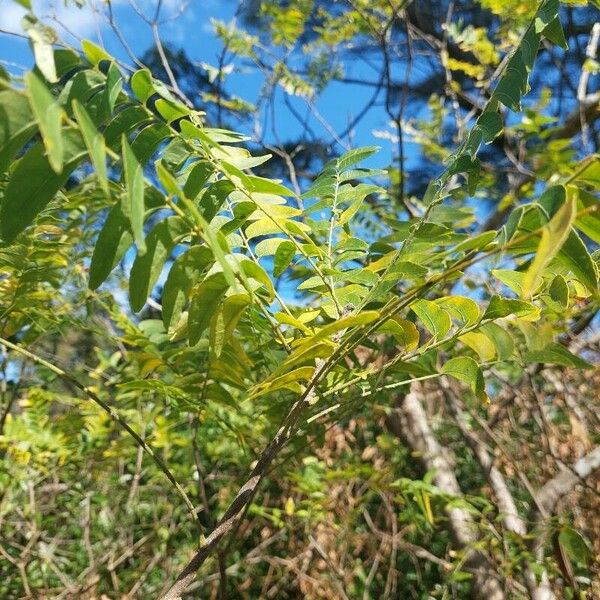
Plant Overview
Known as the Pink Lime or False Curry Leaf, Clausena excavata is a resilient, aromatic shrub native to the sun-drenched forests of Southeast Asia. While it belongs to the same family as lemons and oranges, it is most famous for its pungent, resinous scent that fills the air when the leaves are brushed. In traditional folklore, it is often treated as a "living pharmacy," held in high regard for its diverse roles in ancient herbal medicine.
🔍 How to Identify
- 🌿 Leaf Pattern: It features long, pinnate leaves composed of 15 to 30 small leaflets. Each leaflet is slightly asymmetrical at the base, giving the foliage a feathered, elegant appearance.
- 👃 The "Sniff Test": If you crush a leaf, it releases a sharp, spicy, and medicinal aroma. Some describe it as a mix of anise and lime, while others find it intensely musky.
- 🍒 Translucent Berries: The plant produces clusters of small, oblong fruits that turn a beautiful, translucent pink or soft purple when fully ripe.
🏡 In Your Garden
- ☀️ Sun Enthusiast: This plant craves bright, direct light. If kept indoors or in deep shade, it will become "leggy" and thin as it stretches toward the nearest light source.
- 🦋 Butterfly Buffet: It is a vital host plant for several species of Swallowtail butterflies. Planting one is a sure way to invite vibrant pollinators into your yard.
- 🪴 Drainage is Key: While it enjoys humidity, it is very sensitive to "wet feet." Use a gritty, well-draining soil mix to prevent the roots from suffocating in standing water.
⚠️ Safety & Toxicity
- 🟡 Cautionary Use: Although it is used in traditional medicine (folk remedies), it is not a culinary herb like the standard Curry Leaf (Murraya koenigii). Do not use it in cooking without expert guidance.
- 🐾 Pet & Child Safety: The concentrated essential oils and alkaloids in the leaves and berries can cause digestive distress if swallowed. It is best to keep this plant out of reach of curious nibblers.
✨ Fun Fact
In some Southeast Asian cultures, the plant is called the "Siam Weed" or "Stinky Grass" because its scent is so powerful it was once believed to ward off evil spirits and persistent pests!

Detailed Care Instructions
To grow Clausena Excavata, also known as the Wampee plant, follow these steps:
- Climate: Clausena Excavata is native to tropical and subtropical regions, so it thrives in warm and humid environments. Ensure that your climate matches these conditions.
- Soil: This plant prefers well-draining soil that is rich in organic matter. Choose a potting mix that contains peat moss, perlite, and compost. If you are planting it in the ground, ensure proper drainage and loosen the soil by mixing in organic matter.
- Light: Clausena Excavata thrives in full sun, so choose a sunny location for planting. It requires at least 6 hours of direct sunlight every day for healthy growth.
- Watering: Keep the soil consistently moist but not waterlogged. Water the plant deeply and allow the top inch of soil to dry before watering again. Avoid overwatering, as it can lead to root rot.
- Fertilization: Feed your Clausena Excavata plant with a balanced slow-release fertilizer during the growing season, typically during spring and summer. Follow the package instructions for the right dosage.
- Pruning: Regular pruning helps promote bushier and healthier growth. Trim away any dead or damaged branches and maintain the desired shape of the plant. Pruning also helps control the size of the plant and prevents it from becoming too leggy.
- Propagation: Clausena Excavata can be propagated through seeds or by taking stem cuttings. If using seeds, soak them in warm water for 24 hours before planting. For stem cuttings, take a 6-8 inch cutting from a healthy plant and remove the lower leaves. Plant the cutting in a well-draining potting mix and keep it in a warm and humid environment until roots form.
- Pest and disease control: Monitor your plant regularly for pests like aphids, mealybugs, and scale insects. Treat any infestations promptly with insecticidal soap or neem oil. Watch out for common fungal diseases like powdery mildew and treat them with appropriate fungicides.
Remember to provide proper care, attention, and maintenance for your Clausena Excavata plant to ensure optimal growth.

Place in a bright room that is sun drenched almost all day. Or directly in a south-facing window.

Some plants require more regular watering than others, which should be done every few days. It's critical to maintain the soil moist all of the time. The water requirements of the same plant placed in pots with varying sizes will differ. Because the water in the smaller pot evaporates faster than the water in the larger pot, it will require more watering. Regardless of pot size, the surface should constantly be maintained moist.
To successfully fertilize Clausena Excavata plant, follow these instructions:
- Choose a balanced, water-soluble fertilizer suitable for woody plants or shrubs.
- Dilute the fertilizer according to the instructions provided by the manufacturer.
- Apply the diluted fertilizer around the base of the plant, taking care not to directly contact the foliage.
- Gently work the fertilizer into the soil using a garden fork or your hands, ensuring it is evenly distributed.
- Water the plant immediately after fertilizing to help the nutrients penetrate the soil.
- Repeat the fertilization process every 4-6 weeks during the growing season, typically from spring through summer.
- Avoid excessive fertilization, as this can lead to nutrient imbalances or burn the plant's roots.
- Monitor the plant's response to the fertilization, being cautious of any signs of over-fertilization or nutrient deficiencies.
- Adjust the fertilization frequency or formula if necessary, based on the specific needs of your Clausena Excavata plant.
- Remember to read and follow all manufacturer instructions and guidelines for the fertilizer you choose to use.
Clausena excavata, commonly known as the Wampi plant or the Green Wild Lime, is a versatile and hardy plant native to Southeast Asia. When selecting soil for Clausena excavata, it is important to consider its natural habitat characteristics to provide optimal growing conditions for this plant.
- Well-Draining Soil: Clausena excavata thrives in well-draining soil to prevent waterlogging, as it does not tolerate excessive moisture. Choose a soil mix that promotes good drainage to ensure the roots do not stay continuously wet.
- Loamy Texture: The ideal soil for Clausena excavata is typically loamy, which means it contains a balanced mixture of sand, silt, and clay. Loamy soil offers excellent water retention, nutrient content, and airflow essential for the plant's healthy root development.
- Slightly Acidic to Neutral pH: Clausena excavata prefers a slightly acidic to neutral pH level ranging from 5.5 to 7.0. Optimal pH levels ensure that the plant can effectively absorb essential nutrients from the soil.
- Rich in Organic Matter: Adding organic matter such as compost or well-rotted manure to the soil helps enhance its fertility and nutrient content. This can provide Clausena excavata with the essential nutrients it needs for vigorous growth and overall health.
- Sandy or Sandy Loam Soil: Clausena excavata can adapt to different soil types but particularly thrives in sandy or sandy loam soil. These soil types offer good drainage while still retaining enough moisture for the plant's needs.
- Texture and Structure: It is essential to use a soil mix with a loose texture and good structure. This promotes healthy root growth, allows adequate airflow, and prevents compaction that may hinder the plant's development.
Remember to regularly monitor the soil moisture levels and water Clausena excavata accordingly. Overwatering or allowing the soil to become too dry can negatively impact the plant's growth. Additionally, consider local climate conditions and adjust watering practices accordingly.
Overall, providing well-draining, loamy soil rich in organic matter with a slightly acidic to neutral pH will create an ideal growing environment for Clausena excavata, ensuring its healthy growth and development.
To propagate Clausena Excavata plants, you can follow these steps:
- Select the appropriate time: The ideal time to propagate Clausena Excavata is during the spring or early summer when the plant is actively growing.
- Gather the necessary supplies: Collect a sterilized sharp knife or pruning shears, rooting hormone powder, a suitable potting mix, and small pots or containers.
- Identify suitable branches: Look for healthy and flexible branches that are not too woody or too young. Choose branches that have nodes (points where leaves emerge) as they are ideal for rooting.
- Prepare the cuttings: Using the sterilized knife or pruning shears, cut a 4-6 inch section of the healthy branch just above a node. Make the cut at a 45-degree angle to increase the surface area for rooting.
- Remove excess foliage: Remove any leaves from the lower half of the cutting, leaving a few leaves at the top for photosynthesis.
- Apply rooting hormone: Dip the cut end of the cutting into a rooting hormone powder to stimulate root development. Gently tap off any excess powder.
- Plant the cuttings: Fill small pots or containers with a well-draining potting mix. Make a small hole in the soil using your finger or a pencil and insert the cutting into the hole, burying it at least halfway deep. Press the soil around the cutting to ensure good soil-to-stem contact.
- Provide suitable conditions: Place the pots in a warm, bright location, but avoid direct sunlight. Maintain a temperature of around 70-85°F (21-29°C) to promote root growth. It is essential to keep the soil consistently moist but not waterlogged.
- Encourage root development: To increase the humidity around the cuttings, cover the pots with a clear plastic bag or use a propagation tray with a transparent lid. This helps to create a greenhouse effect and retain moisture.
- Monitor and care for cuttings: Check the cuttings regularly for moisture and remove any mold or fungus that might form. Mist the leaves if they become too dry and remove any dead or dying leaves.
- Transplant to larger pots: After a few weeks to a couple of months, when the cuttings have developed a healthy root system, you can transplant them into larger pots or directly into the garden. Gradually acclimate the plants to the new environment by exposing them to longer periods of direct sunlight.
By following these propagation steps, you can successfully propagate Clausena Excavata plants and enjoy their beauty in your garden or home.








